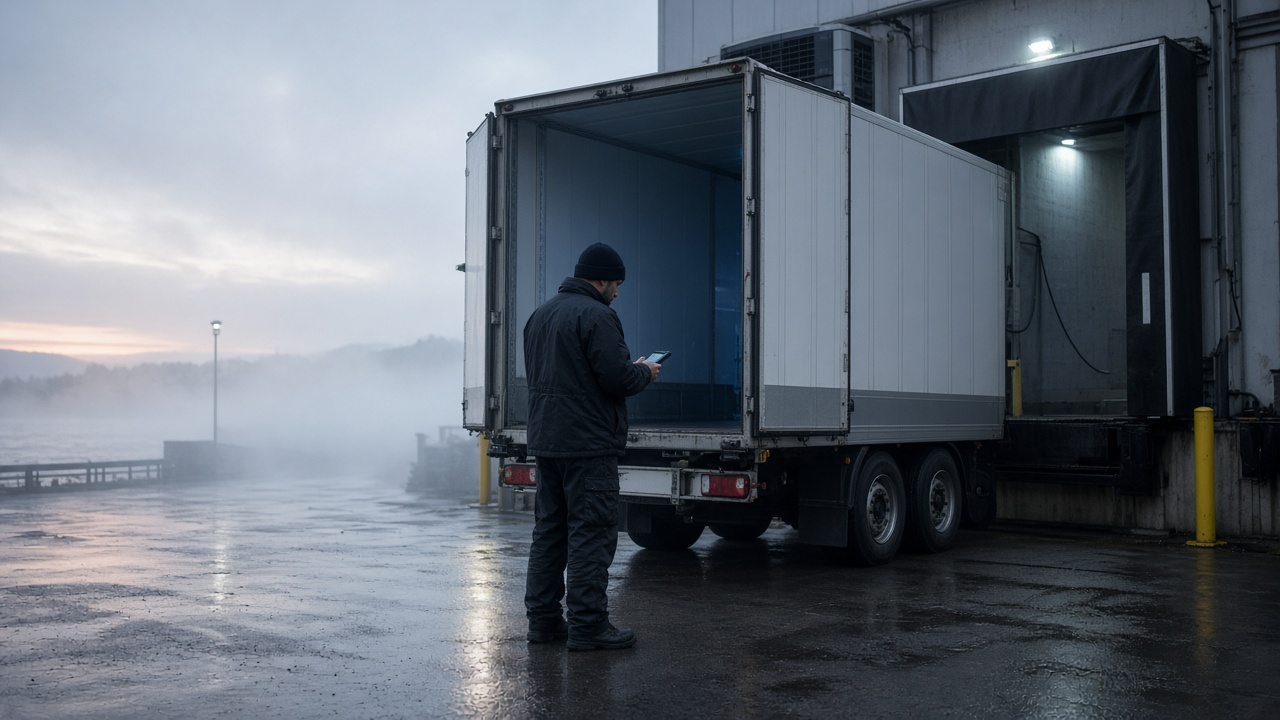
A Chiba-based cold-chain operator won a Ministry of Economy, Trade and Industry logistics digitization subsidy to retrofit forty reefer trailers with temperature telematics and door-event loggers, beating two national integrators on harbor-corridor maintenance windows and Narita-adjacent calibration labs. Deployments start in October along Tokyo Bay routes serving frozen seafood and pharmaceutical clients that audit every degree spike.
What the subsidy covers
METI budgeted roughly 92 million yen across hardware, three years of cellular backhaul, and quarterly probe calibrations. Trailers must stream box temperatures at five-minute intervals with tamper-evident door sensors; data lands on Chiba Prefecture industry servers used for subsidy compliance and client SLA dashboards. The operator’s bid reused telematics modules from a pilot with a Narita freezer forwarder, adding shock mounts after vibration killed probes on bay bridge expansion joints.
Why this operator won
Evaluators scored local spare-parts depots in Ichikawa and overnight technician rosters higher than headline sensor precision. The company pledged four-hour response when loggers flag defrost cycles running long during summer humidity—SLAs larger integrators would not sign without surcharges. Venture debt from a regional bank and retained earnings funded matching capital METI requires; no private-equity board sits above the founder family.
Ownership and dilution
The business remains founder-controlled; subsidy covenants cap executive dividends until telemetry uptime hits twelve consecutive months above ninety-eight percent. Bank lenders received observer rights on maintenance spending, not equity—dilution risk sits in future equipment leases if seafood volumes slump.
The business in one sentence
Haul chilled cargo with provable temperature chains so grocers and pharma clients renew contracts instead of fining mystery warm spots.
Field logistics
Installations slot between dawn harbor pulls when trailers return empty. Door loggers sync over LTE; drivers carry backup USB exporters if bay interference drops packets—a lesson from July tests near container cranes. Japan Frozen Food Association guidelines inform alert thresholds; pharma lanes use tighter bands that can trigger redundant truck swaps even when product may still be safe.
What if the next round does not exist
Subsidy plus internal cash covers retrofits without a venture round; expansion to eighty trailers depends on 2027 seafood export volumes, not angel hype. If METI follow-on grants fail, the operator could license telemetry dashboards to smaller Chiba haulers—a side business plan executives mentioned to prefecture reviewers but have not marketed.
Risks
Cellular dead zones along coastal industrial roads still drop bursts; software buffers hold four hours before clients see gaps. Competitors may underbid maintenance after the subsidy ends—founders told InfoHandle they are building an in-house probe-calibration bench to keep marginal costs down. Driver unions asked whether door sensors become discipline tools; contracts limit data use to temperature and door events, not cab audio.
Client impact
Grocers gain portal access to trailer histories before accepting pallets—reducing manual thermometer drills at store bays. For taxpayers, the bet is whether a mid-size Chiba hauler can keep METI-grade telemetry running when salt air corrodes connectors designed in inland labs. Contract signing publishes on METI’s subsidy portal next week, including penalties for missed calibrations.
Governance note
Founders retained veto rights on vendors that offshore data processing—a condition frozen-food clients insisted on after overseas cloud scares. Prefecture industry observers may audit random trailer logs during unannounced dock visits starting January.
Harbor corridor timeline
First ten trailers must complete thirty-day clean runs before subsidy tranches invoice; engineers scheduled bay-bridge shake tests on empty reefers before loading live tuna racks. If October typhoons delay installs, METI allows a one-month extension with documented crane weather holds—paperwork the operator’s project office already templates.
Driver training
Drivers attend half-day sessions on logger acknowledgments so door-open alerts during legitimate dock work do not train dispatchers to ignore warnings. The operator pays hourly wage continuity during training—a cost METI matching funds partially cover when sessions run on subsidy install weeks.
Export corridor bets
Narita-adjacent calibration labs let the operator certify probes without sending trailers to Honshu integrators—a travel saving that mattered when evaluators compared bids. Seafood exporters watching the pilot may demand telemetry certificates on 2027 contracts if bay routes show fewer disputed warm loads than legacy paper charts.