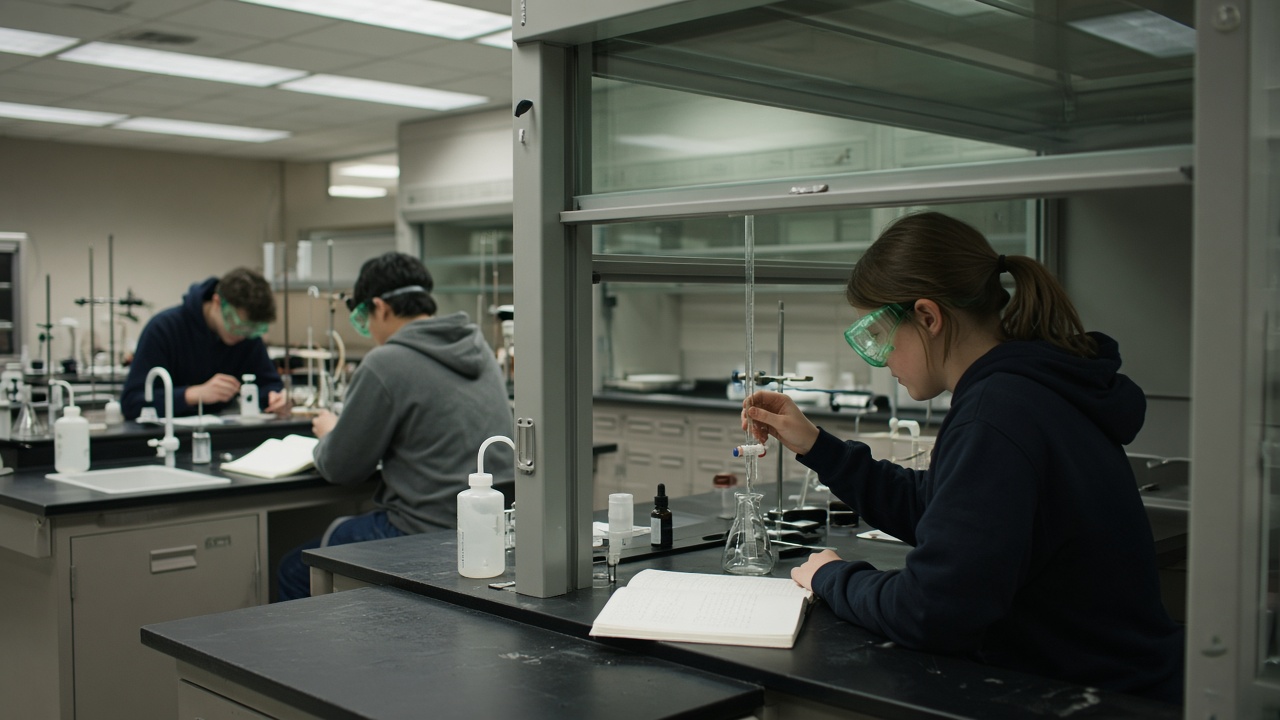
Deakin University will require students in selected second-year chemistry practicals to upload timestamped lab-notebook scans before leaving campus after an academic misconduct investigation found identical raw data submitted across lab groups. The policy starts in Trimester 1 2027 for Waurn Ponds and Burwood cohorts, with demonstrators checking scan metadata against bench assignment lists.
What the probe found
The university did not name students, but staff reports described shared photos of handwritten results pages that could not match individual titration runs observed on the day. Bridie McKenzie's read: the issue is not AI essays—it is whether Tuesday morning bench work is provably yours when grades hinge on duplicate numbers.
Deakin's science faculty briefed sessional demonstrators on acceptable scan formats—single PDF per session, file names tied to student IDs, no cropped pages. Cloud drives must be university accounts so deletion timestamps are auditable.
What changes Tuesday morning
Students still use paper notebooks; the shift is mandatory upload within two hours of lab finish. Miss the window and you sit a zero for that prac until a misconduct panel reviews—harsh, but the faculty said late uploads were how prior groups laundered copied sheets.
Group work is not banned, but each student submits individual scans even when partners share reagents. Department heads told unit chairs to redesign rubrics so calculations in notebooks matter more than a single final number that can be texted around.
Union and student response
The Deakin Student Association asked for grace periods when campus Wi-Fi fails—common in older science wings. The university promised offline queueing with demonstrator sign-off, but rejected calls to drop scans entirely. National Tertiary Education Union branches on campus want paid training for casual demonstrators who now police uploads alongside safety checks.
Broader sector context
TEQSA has pushed providers to document integrity measures without prescribing notebook apps. Other Victorian universities already use electronic lab notebooks in some engineering units; Deakin chose scans to avoid vendor lock-in while the misconduct case worked through faculty boards.
What to watch
Faculty council votes on extending scans to first-year chemistry after a pilot semester. If upload compliance stays above ninety percent, organic and biochemistry pracs may follow. The test is whether demonstrators spend less time on misconduct hearings—and whether students treat notebooks as legal records, not scrap paper tossed after the final.
Faculty governance
Academic board papers released to staff unions show the misconduct case moved through faculty hearing stages before the scan policy was announced—timing meant current students are grandfathered on honour-system notebooks until Trimester 1 2027. Sessionals on fixed contracts asked whether upload policing falls outside paid hours; Deakin said demonstrator guides were updated but did not publish a dollar figure for extra training time.
Technology choices
Electronic lab notebook vendors pitched Deakin during the probe; the university chose phone-camera scans to avoid semester-long IT rollout risk. Cybersecurity staff reviewed cloud retention policies so scans do not live on personal Google drives—a failure mode seen at other campuses when students default to convenient apps.
Appeals and penalties
Students who dispute scan timestamps can appeal to faculty integrity officers with bench witness statements from demonstrators. Penalties for confirmed sharing range from zero marks on pracs to unit fails; expulsion remains rare for first offences unless fraud intersects with professional accreditation units.
Research integrity office
Deakin's research integrity unit briefed science deans that undergraduate notebook fraud can foreshadow postgraduate data issues; the scan rule is positioned as early habit formation rather than punishment-only policy. HDR students are exempt for now because separate thesis repositories already timestamp uploads.
Library services expanded scanning stations near science buildings so students without smartphones can use flatbed scanners before the two-hour deadline—capacity tested during mid-semester prac peaks.
Peer universities
Monash and RMIT chemistry schools told InfoHandle Network they are watching Deakin's pilot but have not committed to identical scan rules—each campus negotiates integrity tech with different vendor budgets. TEQSA's next sector briefing may cite Deakin as a case study if misconduct referrals fall measurably.