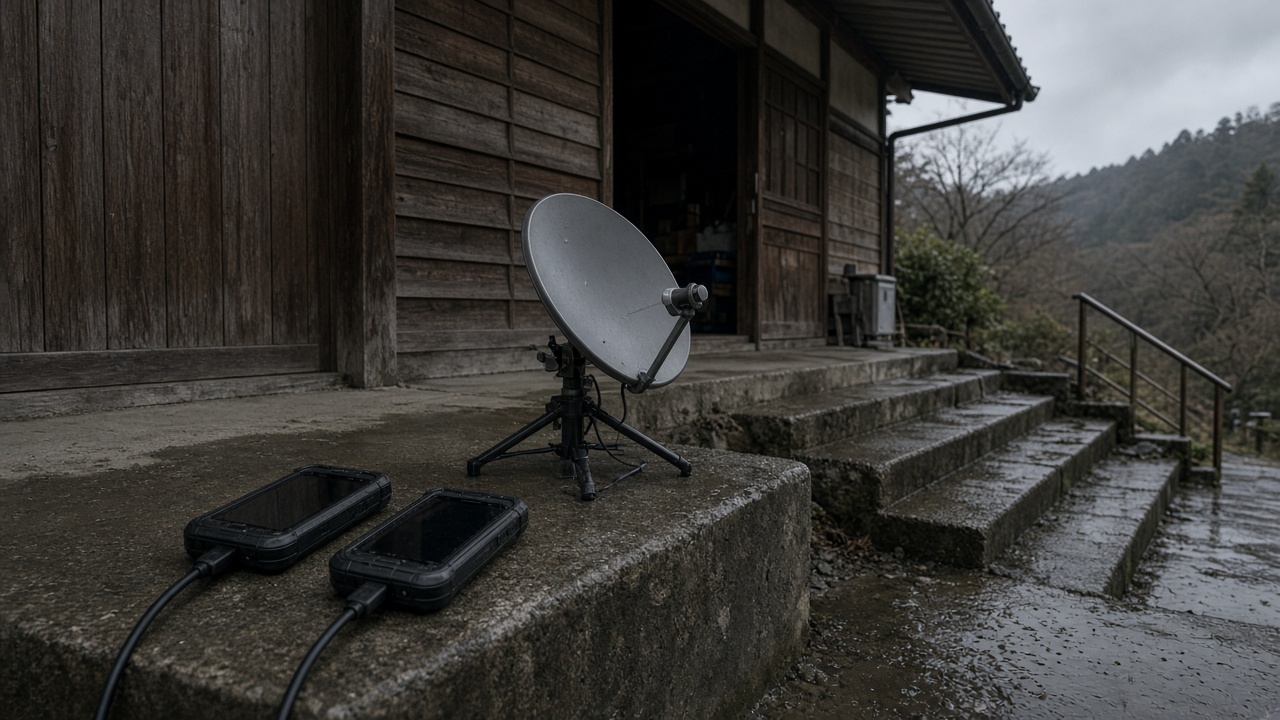
Fujitsu Ltd. released a handset firmware revision this week for rugged Android units used in Shikoku disaster-mesh pilots, fixing relay handoffs that dropped when phones briefly lost Quasi-Zenith Satellite System augmentation during canyon hikes and coastal fog. Ehime and Tokushima municipalities had planned September evacuation drills with mesh-only SMS fallbacks; two towns pushed drills to October while Fujitsu validates the build on production Michibiki ephemeris feeds.
What broke in August drills
The pilots pair consumer-grade rugged phones with a Fujitsu mesh stack that forwards short messages hop-by-hop when cellular towers fail. Internal test logs describe a race: when QZSS-assisted time sync jittered more than 120 milliseconds, mesh nodes marked neighbors as stale and tore down sessions before backup LTE attach completed. Field staff in mountainous Nishiuwa saw green link LEDs while message queues drained to zero—exactly the failure mode disaster offices fear during landslide road cuts.
Fujitsu traced the bug to a shared positioning library also used in logistics scanners; Shikoku humidity and multipath were not in the original bench profile. The company halted over-the-air pushes nationwide for that branch while Shikoku units stayed on an earlier image that lacks Michibiki fast-reacquire but keeps mesh stable.
What the new build changes
Version notes sent to integrators promise a two-stage rejoin: phones keep mesh forwarding alive while QZSS fixes settle, then reconcile timestamps against network time protocol when LTE returns. Michibiki augmentation now tolerates short gaps without flushing neighbor tables—a behavior Fujitsu engineers said mirrors lessons from Hokkaido snow-country trials but had not shipped to Shikoku hardware SKUs.
Municipal buyers receive signed images through the same portal used for police radio maintenance. Fujitsu requires staged soak tests in open-air shelters before production push; Ehime’s Matsuyama operations center scheduled overnight runs mimicking typhoon power flicker.
Municipal stakes
Disaster-mesh funding sits inside broader digital resilience grants; auditors ask whether mesh adds redundancy or duplicates LTE broadcast alerts. Town halls argued mesh matters for volunteer fire leaders who coordinate door knocks when loudspeakers fail. Delaying drills costs training hours before autumn typhoon season peaks, but sending residents mixed signals during a faulty drill is worse—Ehime officials chose the slip.
Support contracts bundle Fujitsu field engineers with local systems integrators in Matsuyama and Tokushima City. Hotline volume spiked after the August freeze because the same team handles tablet rollouts for school lunch ordering; municipalities requested dedicated mesh escalation numbers Fujitsu promised by month end.
Regulatory context
Ministry of Internal Affairs encourages satellite augmentation for last-mile alert timing but does not certify handset mesh stacks. QZSS operators publish open ephemeris; Fujitsu must still test against live almanac updates whenever Michibiki maneuvers. MIC disaster-communications pages list satellite backup as complementary to cell broadcast, not a replacement—language town councils cite when explaining why they bought phones instead of only sirens.
What integrators should do
Hold September drills on the pre-August image unless Fujitsu signs a soak pass for your shelter site. Log mesh heartbeat topics separately from citizen SMS payloads so silent relays trigger tickets before residents notice. Keep LTE SIMs active for fallback; mesh drills should announce that cellular may still work to avoid panic.
Fujitsu targets wide Shikoku deployment after October 3 if canyon and coastal soak tests pass twice. Rivals pitch hybrid LTE-M gateways, but towns that already bought rugged handsets want the promised QZSS-aware mesh, not a radio swap mid-grant. For residents, the visible change is a delayed drill—not a new app. For technicians, the lesson is familiar: positioning libraries tuned for warehouses stumble when Michibiki meets humid gorges.
Broader rollout watch
Kochi Prefecture integrators paused orders pending Ehime’s root-cause summary, which could bunch Q4 deliveries if the fix lands on schedule. Fujitsu shares were steady Friday; investors treat municipal resilience pilots as a thin slice of systems revenue. If the revision holds, Shikoku becomes the reference site other prefectures cite when applying for the next disaster-ICT subsidy round.
Field checklist
Before October pushes, snapshot mesh neighbor tables and export QZSS fix logs from at least one canyon site and one coastal fog site. Fujitsu’s portal will reject OTA schedules missing those uploads—a paperwork step towns should assign before typhoon weekends stack up.