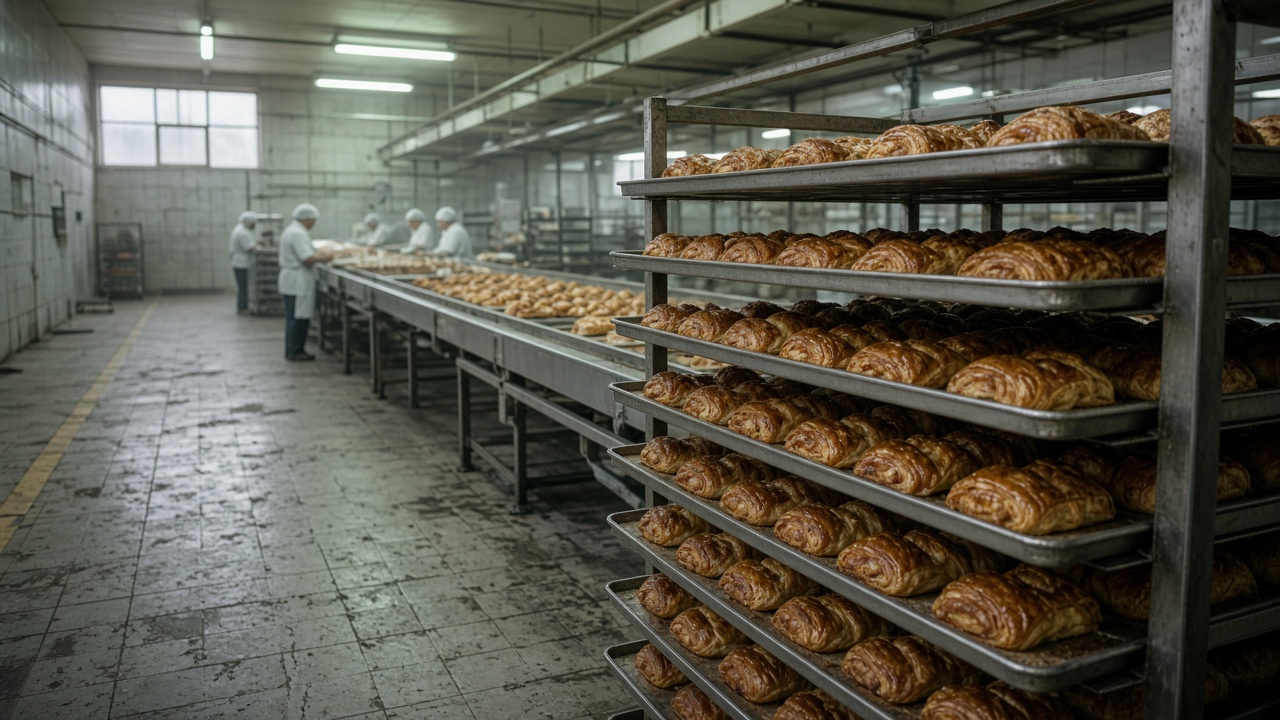
Greggs plc said it will extend voluntary shift-bidding at its twelve regional bakeries through the end of October after like-for-like sales in the first five weeks of September rose 6.8 percent, ahead of the 4.2 percent median in a Bloomberg broker poll. The extension, disclosed in a London Stock Exchange statement before the market opened, keeps the internal roster system that lets production staff bid for overtime and early starts rather than relying solely on manager allocation.
What the filing commits to
Chief executive Roisin Currie told investors the bidding pilot, launched in June at the Balliol Park site in Newcastle and mirrored at Manchester and Leeds bakeries, will not revert to fixed rotas while demand for hot food and coffee remains elevated into the autumn school run. The RNS does not quantify labour cost per tray, but finance director Matt Lee said gross margin held “within the guided band” despite higher bakery wages and energy tariffs that rose on 1 September across the North East grid.
Greggs employs roughly 2,400 staff in manufacturing and logistics; about 1,100 now interact with the bidding app each week. Union officials at the Bakers, Food and Allied Workers Union said they were consulted on the extension on Thursday and secured a commitment that minimum rest periods between shifts would stay at eleven hours even when bidding windows overlap weekend production for festive lines.
Why bidding stayed after the sales beat
September’s beat was driven by savoury lines and the new hot chicken baguette, which Greggs said is running in 1,450 shops after a staged rollout. Management argued bidding reduces absenteeism on high-volume nights because staff who choose shifts show up more reliably than those assigned under legacy rotas. Internal dashboards shared with the board show fill rates on Friday bakery nights improved four percentage points since bidding began, though Greggs cautioned the sample is short.
Analysts at Barclays noted the sales figure does not break out price versus volume; Greggs raised menu prices by low single digits in April. Currie said transaction counts still grew, implying volume held, but the statement does not publish basket size. Investors will get a fuller picture with the third-quarter trading update expected in mid-October.
Shop-floor mechanics
Bidding opens forty-eight hours before each production block. Staff see available slots on a phone app tied to payroll numbers; managers retain veto power on safety-critical roles such as oven operators. Workers who consistently pick unpopular overnight bakes earn loyalty points convertible to extra holiday, a perk Greggs said it will review if bidding becomes permanent nationwide.
At the Leeds bakery, team leaders told InfoHandle the extension means Christmas mince pie lines can staff up without agency labour, which cost more last year when agency rates spiked. Agency use is not disclosed in the RNS, but Currie said the company’s “preference is colleague labour where skills exist.”
What the board did not say
The release does not mention potential automation at a proposed southern bakery, a project Greggs flagged in its June capital markets day slides. Nor does it update net new shop openings; the chain still guides to 120–140 for the year. Property costs in London and the South East remain a drag on franchisees, but company-managed estate performance improved with the sales beat.
Greggs shares rose 2.1 percent in early trade on the FTSE 250, outperforming food retail peers. The stock had slipped in August on wage inflation fears; Friday’s statement reframed labour spending as tied to volume rather than leakage.
Regulatory and safety context
Food Standards Agency audits at two Greggs bakeries in 2025 noted strong allergen controls; the September statement references “ongoing compliance work” without new enforcement. Health and Safety Executive data on bakery incidents is not cited. Greggs said it will publish an updated modern slavery statement with more supplier bakery detail in November.
Pension trustees were told bidding data will feed into workforce planning for the 2027 triennial valuation, because overtime patterns affect defined contribution matching. That detail was in an investor deck uploaded to the corporate site, not the RNS itself.
What happens next quarter
If October like-for-like sales hold above five percent, analysts expect Greggs to make bidding standard at remaining bakeries in Scotland and the Midlands. If inflation-weary consumers pull back, managers could shorten windows again—something the RNS leaves as operational discretion. Franchisees will watch whether hot food attachment in shops requires even more central production capacity.
For workers, the immediate change is calendar clarity: bidding sheets for Halloween-themed bakes post on Monday. For investors, the story is whether labour flexibility is a durable margin tool or a one-season fix tied to a strong September week count.