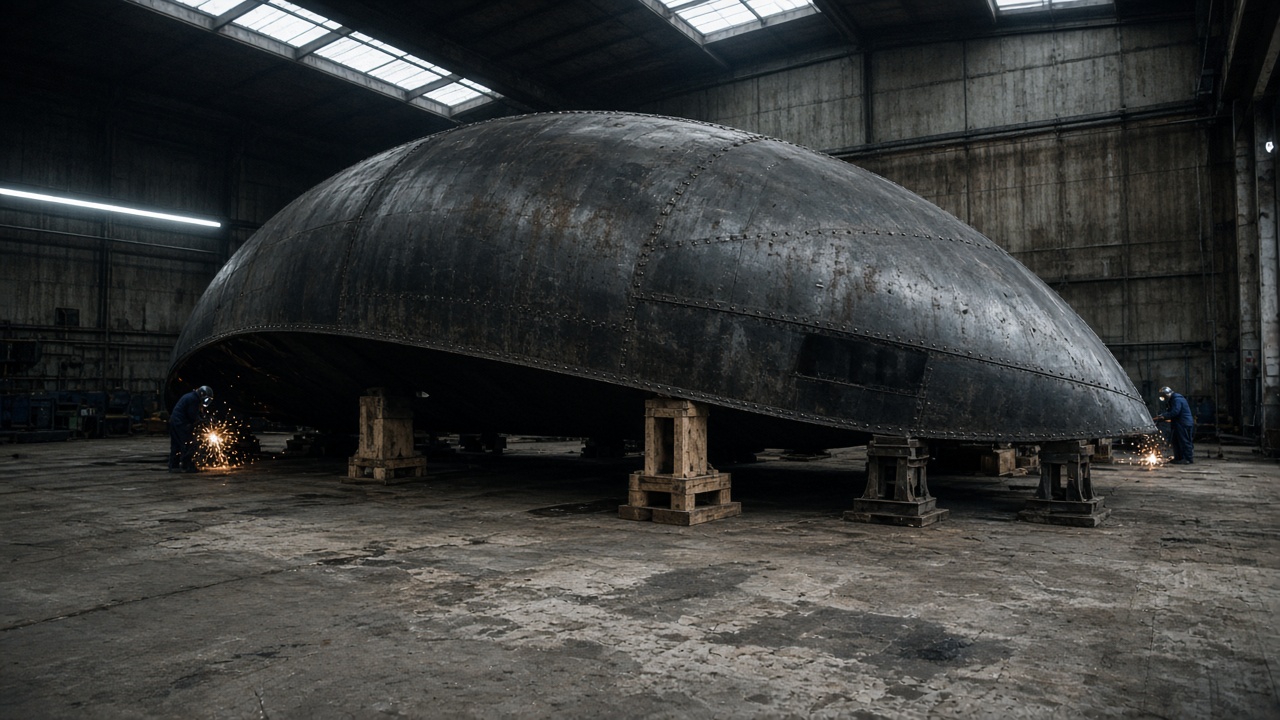
Hanwha Ocean circulated a block delivery calendar to Polish navy liaisons and Geoje shipyard unions this week, mapping which KSS-III Batch-II hull sections leave Okpo before winter and how overtime windows align with Warsaw’s Orka programme milestones. The document, described to InfoHandle by a yard planner and a union safety steward, is the most granular timetable Hanwha has shared since it added sovereign financing to its export bid in June.
Calendar mechanics
Under the schedule, the first export-bound pressure-hull ring blocks—fabricated from specialty steel plate already staged on the quay—are due to complete quality holds by late November, with modular outfitting packages following in quarterly tranches through 2028. Hanwha’s public offer promises a first boat within six years of contract signature and three boats within roughly eight years; the internal calendar assumes a decision in Warsaw before spring 2027, a timeline Polish media still treat as uncertain amid European rival bids.
Each block carries a coded release gate: ultrasonic weld inspection, dimensional survey, and a joint Korean–Polish sign-off before modules ship by heavy-lift vessel to Gdynia for final assembly partnerships Hanwha has sketched with PGZ/Nauta. The yard planner said delays on any single block ripple two quarters downline because shared crane rails serve both domestic KSS-III Batch-II work and the export line.
What workers heard
Union stewards said night-shift welding teams were told overtime would be capped unless Polish observers are on site, a condition tied to technology-transfer clauses in Hanwha’s industrial package. Workers had expected broader overtime after Hanwha unveiled financing sweeteners in Warsaw; instead, management linked premium pay to verified export hours, a nuance investors rarely see in headline bid stories.
Jihoon Kim’s desk reviewed safety bulletins showing increased fire-watch staffing during autumn humidity spikes—routine for enclosed hull sections but politically sensitive after past yard accidents. Stewards said they will ballot members if Polish inspection trips slip, because delayed sign-offs freeze bonus pools tied to export milestones.
Poland’s programme context
Poland seeks three submarines under Orka as part of a wider NATO-facing buildup after Russia’s 2022 invasion of Ukraine. Hanwha competes with European yards from Germany, Italy, and Sweden; Reuters reported in June that Hanwha added comprehensive financing to stay competitive. Janes noted Hanwha’s updated April timeframe and a leased KSS-I “gap filler” for crew training as early as 2028.
Defence Industry Europe quoted Hanwha vice president Steve Jeong emphasizing flexible financing to preserve Polish strategic autonomy. Korea Herald pegged the programme near 8 trillion won ($5.6 billion) with up to $100 million for a Polish MRO center. None of those public lines specify block-level dates; the Geoje calendar fills that gap for suppliers and unions even if Warsaw has not yet awarded the contract.
Seoul market lens
Hanwha Ocean shares on the Kospi react more to commercial ship orders than to defence headlines, but Orka is strategically loud for Korea’s export narrative. Investors watch whether block steel orders flow through POSCO specialty plate and whether lithium-ion battery modules for air-independent propulsion stay on domestic sourcing rules. A slip in the November quality-hold date would not hit current-quarter earnings, but it would weaken Hanwha’s “on-time K-defense” story in Warsaw negotiations.
Hanwha Ocean declined to comment on the internal calendar when contacted Friday. Polish defence ministry press officers did not respond before publication. For Geoje, the practical question is whether autumn overtime stays tied to Polish observers—or whether domestic Batch-II work absorbs the slack if Orka award drifts into 2027.
Subcontractors on the block line said steel plate traceability packets now include Polish-language summaries, a small but telling sign Hanwha expects Warsaw auditors on the floor even before a contract. Crane operators were warned that any unscheduled lift during inspection weeks requires dual sign-off, slowing throughput but reducing rework risk on export welds. If the calendar holds, the first modules could be visible on Okpo’s quay cameras by early December—otherwise, Hanwha’s financing pitch in Europe will carry slides without steel behind them.