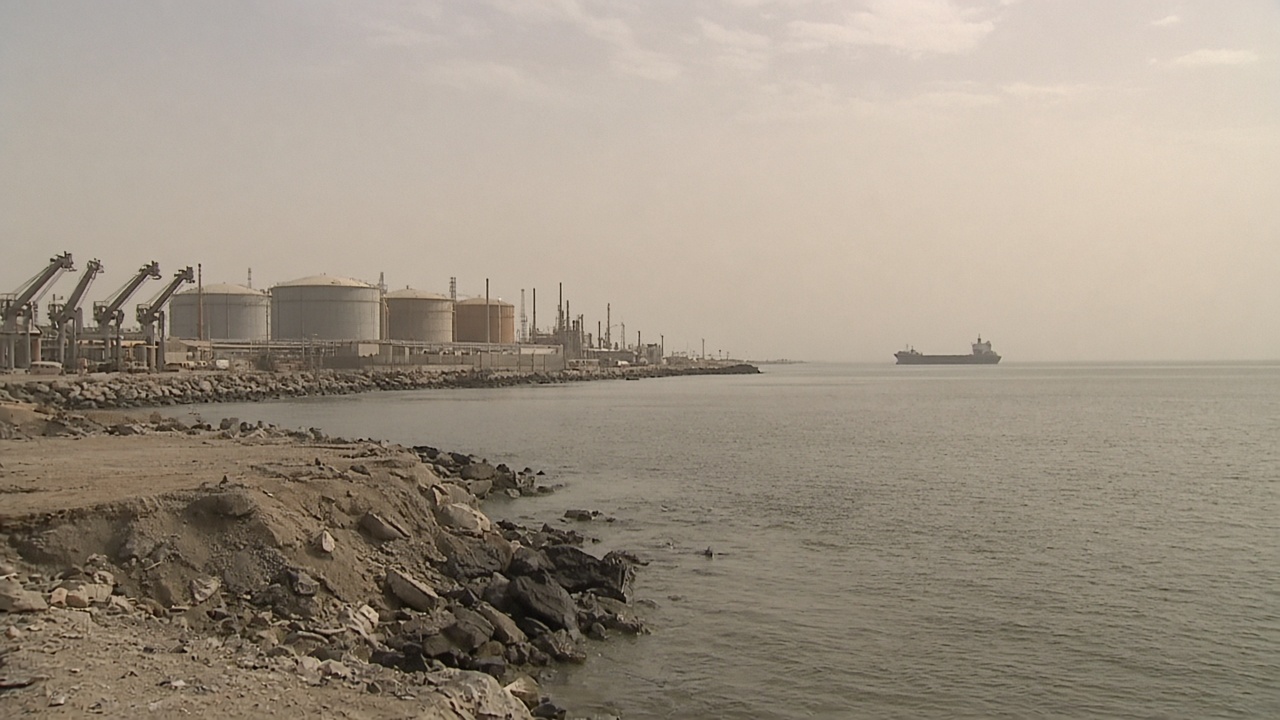
Yemen’s Houthi movement paired its first missile barrage against Riyadh in months with battlefield gains on the Red Sea coast, a combination that threatens a second chokepoint for global energy trade even as Iran keeps most traffic out of the Strait of Hormuz. The group said it fired ballistic and cruise missiles and drones at sensitive sites in the Saudi capital and at Aramco facilities in Yanbu; Riyadh said it intercepted the weapons, but photographers documented smoke near fuel infrastructure in the capital.
What the Houthis claimed
Military spokesman Yahya Saree said on Telegram that two operations used “a large number” of ballistic and cruise missiles and drones, the first targeting Riyadh and the second Aramco’s Yanbu complex on the Red Sea. AFP journalists heard explosions in the capital on Saturday, and images circulated of a burning fuel tank bearing Aramco markings. The Saudi-led coalition later confirmed that a ballistic missile toward Riyadh was destroyed in flight.
The strikes landed days after Riyadh accused the Houthis of targeting Mecca, a charge the group denied as a “worn-out lie.” Either way, the timing piles pressure on a Saudi government already conducting intensified air campaigns in Yemen after a ceasefire collapsed in June.
Why Bab el-Mandeb now matters
Reuters reported Sunday that the Houthis’ recent advances along Yemen’s coastline place their forces closer to the Bab el-Mandeb strait, the narrow passage between the Red Sea and the Gulf of Aden. Shipping lines use the route when they cannot sail through Hormuz; if Houthis can threaten Bab el-Mandeb the way they did commercial traffic in 2023–24, Saudi and Gulf exports that bypass Hormuz by pipeline to Yanbu could still face interdiction risk at sea.
Al-Monitor summarized the predicament for U.S. Gulf allies: cities that came under Iranian fire after the February war, economies hammered by closed Hormuz lanes, and now a renewed Houthi front that can reach Riyadh and the Red Sea export chain. The State Department warned American citizens to reconsider travel through the region, citing potential for rapid escalation after the Houthi hostilities.
Washington and Tehran trade threats
President Donald Trump said Iran would fail economically or face leadership “wiped out” if it did not make a deal, while Iranian military officials promised harsh retaliation for any new U.S. attack. The exchange followed months of stalemate after a June ceasefire memorandum expired, with attacks rising around Hormuz and neither side offering concessions that match the other’s public demands.
Iran’s security chief Mohsen Rezaei listed conditions for ending the war — including an end to fighting in Lebanon, release of frozen funds, and lifting the U.S. naval blockade — in remarks carried by Al Jazeera on Sunday. The White House has not accepted that package, and U.S. diplomats continue to warn citizens in Iraq, Bahrain, Oman, Saudi Arabia, and neighboring states to maintain heightened vigilance.
Energy markets read the map
Traders already price Brent above $100 on Hormuz disruption alone. A credible Houthi threat to Bab el-Mandeb would complicate workarounds that move Saudi crude west by pipeline and load tankers on the Red Sea. Insurance underwriters have widened war-risk premiums for vessels calling at Gulf ports; any confirmed attack near Yanbu or in the strait would likely extend those exclusions to Red Sea sailings.
Saudi officials have not detailed Sunday’s damage assessments at Yanbu. For NATO and Asian importers, the immediate question is whether escorted convoys or naval patrols expand south from Hormuz to cover Mandeb — a resource-intensive step navies have avoided while hoping Yemen’s civil war stayed localized.
What happens next
Riyadh is expected to answer the barrage with more airstrikes in Houthi-held territory, a cycle that has failed to dislodge the group before. For shipping insurers and charterers, the next 48 hours hinge on whether any vessel reports a near miss in the strait and whether Saudi Arabia reopens Yanbu terminals at full capacity. Until then, the documented facts are the intercepted-missile claims, the smoke in Riyadh, and Houthi fighters sitting closer than they have in years to the sea lane that still carries a slice of the world’s oil when Hormuz is closed.