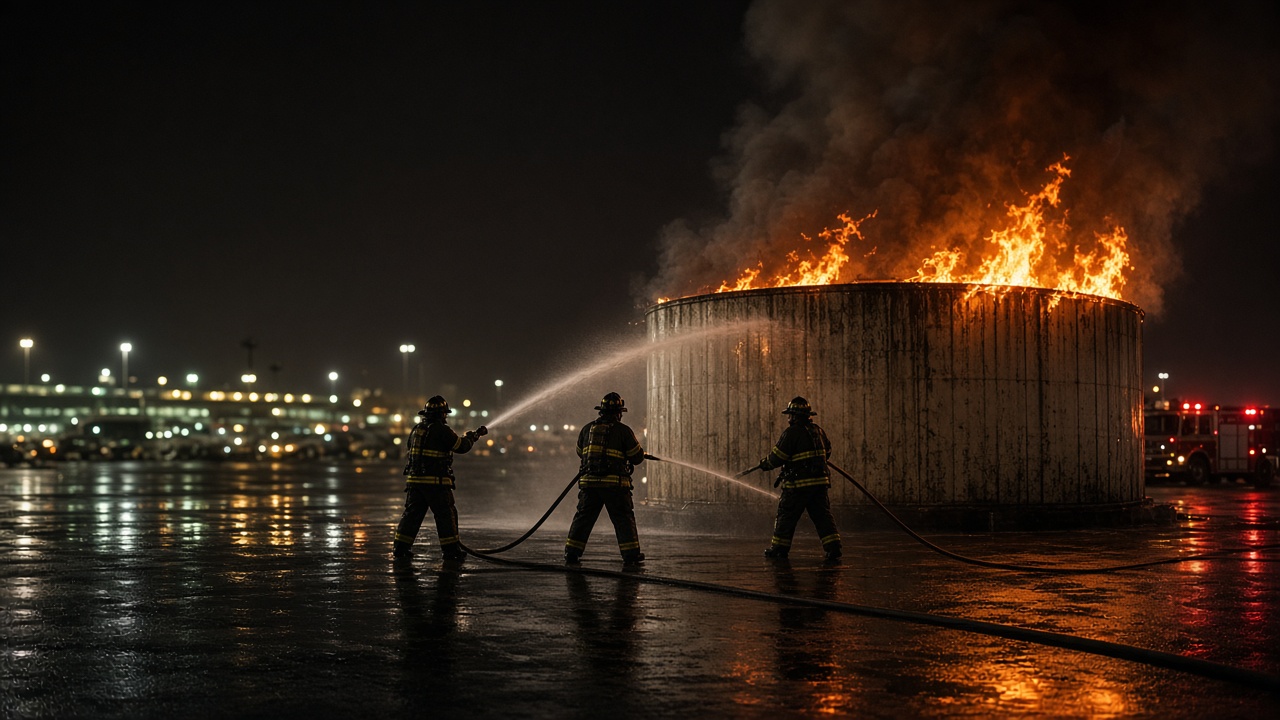
A ballistic missile launched by Yemen’s Houthis toward Riyadh was intercepted and destroyed Saturday evening, Saudi Arabia’s coalition said, in the first strike threatening the kingdom’s capital since fighting with the group reignited. Loud blasts shook parts of the city twice that day; AFP journalists reported an Aramco-branded fuel tank on fire near King Khalid International Airport. The U.S. State Department warned hours earlier that hostilities between Saudi Arabia and the Iran-backed Houthis could “escalate rapidly,” urging Americans outside the Middle East to reconsider travel through the region.
What each side claimed
Houthi military spokesman Yahya Saree said the group carried out two operations using ballistic missiles, cruise missiles, and drones. One volley, he said, targeted “sensitive sites” in Riyadh; another aimed at Aramco facilities in Yanbu on the Red Sea coast. Saudi officials confirmed the capital intercept on social media but did not detail debris fields. The Houthis’ statement followed Riyadh’s accusation earlier in the week that the group had targeted Mecca—an allegation the Houthis denied as a “worn-out lie.”
For Saudi residents, the practical shift is geographic: strikes that had concentrated on border areas, Petroline pumping stations, and Red Sea shipping lanes now carry the psychological weight of capital air-defense sirens. Insurance underwriters who raised war-risk premiums after Medina-area drone damage will treat Saturday’s airport-adjacent fire as another data point for aviation schedules.
U.S. warning and travel posture
The State Department’s Saturday alert did not attribute the Riyadh blast to a specific launcher, but it framed the Yemen front as capable of widening fast while the United States remains entangled in separate hostilities with Iran. Advisories already place much of the Gulf at Level 3 Reconsider Travel, with ordered departures of some U.S. government personnel dating to spring.
Carriers have spent September publishing delay notices on Jeddah and Riyadh rotations, adding detours that burn extra fuel on Europe-bound widebodies. Saturday’s events give corporate travel desks another reason to route executives through hubs west of the Red Sea—even when intercepts succeed and casualties stay unreported.
Energy and the wider war
Aramco has struggled to restore full flows on the East-West Petroline since drone strikes southeast of Medina earlier in the month. A Yanbu loading pause concentrated tanker traffic and kept Brent elevated. Houthis targeting both Riyadh’s airport perimeter and western export infrastructure pressures two choke points at once: domestic fuel logistics in the capital and Red Sea export capacity that Asian buyers rely on when Hormuz risk rises.
Iran’s leadership, meanwhile, told Qatari mediators it had sent conditions for ending its war with the United States—including lifting a naval blockade on Iranian ports—according to statements carried Sunday. That diplomatic track runs parallel to, not instead of, the Houthi-Saudi exchange; Tehran’s ties to the group mean Riyadh treats every capital intercept as part of a broader Iranian pressure campaign.
What comes next
Saudi air-defense officials did not say which system intercepted the missile or whether debris fell in populated districts. Houthi leaders have signaled they will keep striking until Riyadh halts airstrikes inside Yemen. With the U.N. General Assembly opening in New York this week, U.S. diplomats face simultaneous crises: Gulf intercepts, Petroline repairs, and Iran’s public terms for de-escalation.
For markets and travelers, the near-term question is not whether Saudi interceptors work—they did Saturday over Riyadh—but whether repeated attempts normalize capital-targeting as a weekly event in a region already priced for seven months of U.S.-Iran confrontation.