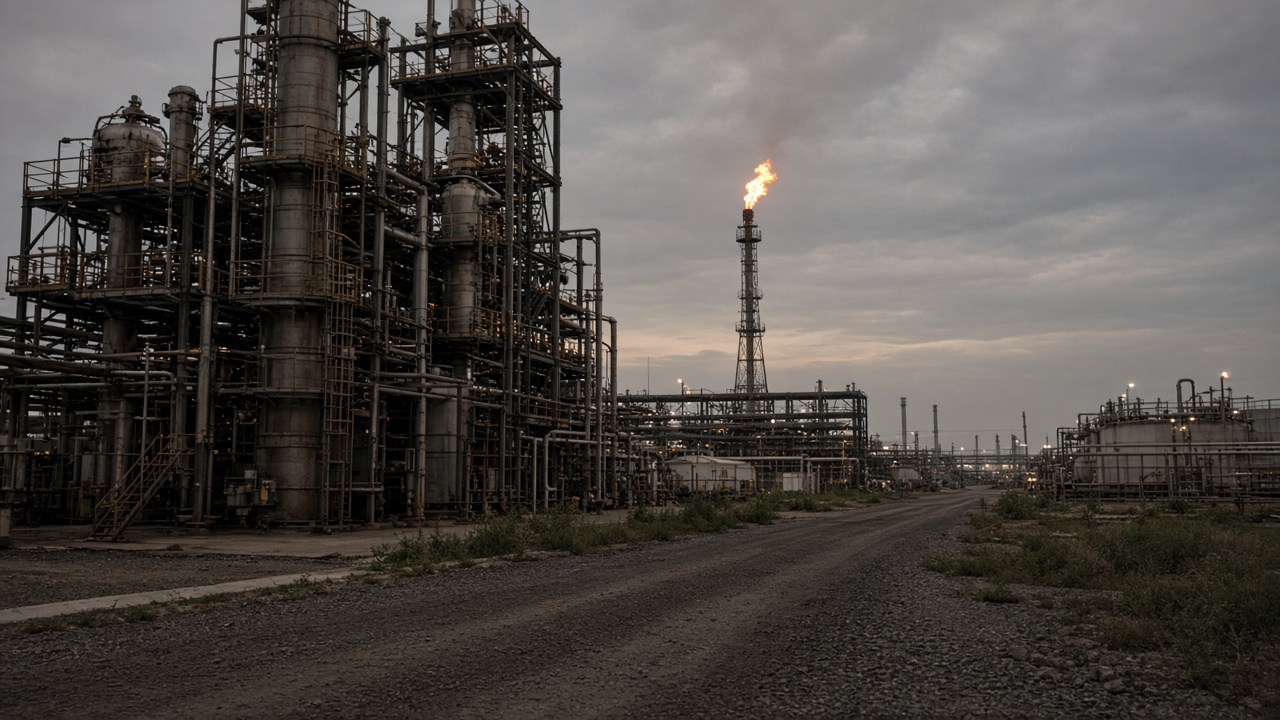
Marathon Petroleum Corp. stock outpaced the S&P 500 energy index Friday after traders priced tighter Gulf Coast gasoline spreads ahead of overlapping maintenance at the company’s Galveston Bay and Garyville refineries. The moves reflect less reformer and alkylation capacity available for September blendstock when East Coast inventories already sit below five-year averages.
Who led and by how much
Marathon shares closed up roughly 2.4 percent on double the thirty-day average volume, while the NYSE Arca Oil Index rose about 0.8 percent. Options flow skewed toward near-dated calls tied to October crack spreads, suggesting desks bet Gulf premium gasoline will hold even if WTI crude slips on macro data.
Peer Valero Energy and Phillips 66 rose modestly but did not match Marathon’s beta to Gulf gasoline basis, in part because their turnaround calendars concentrate on diesel-max units later in the quarter. Analysts at Tudor, Pickering, Holt flagged Marathon’s 596,000-barrel-per-day Galveston Bay complex as the swing producer for Gulf Coast CBOB heading into Labor Day weekend demand prints.
Mechanism: turnarounds tighten spreads
Refinery turnarounds pull fluid catalytic crackers and reformers offline for catalyst changeouts and inspection, removing high-octane components blenders need to meet summer-grade Reid vapor pressure rules that linger in Southern markets through early autumn. Marathon scheduled a six-week slice at Galveston Bay’s reformer train while Garyville runs a partial alky unit outage; combined, the work could trim Gulf gasoline production by an estimated 80,000 barrels per day at peak, according to industry outage trackers InfoHandle reviewed.
Gulf Coast gasoline versus NYMEX RBOB futures widened three cents per gallon week over week in EIA Gulf Coast spot data—a move that looks small on the screen but matters when Marathon captures inventory barrels bought cheap pre-outage and sells into the widened rack market across Texas and Louisiana terminals.
What the street already had in the number
Second-quarter earnings calls telegraphed heavy second-half maintenance; Marathon guided that operating costs would rise with turnarounds while utilization averaged in the low nineties percent for the year. Sell-side models already baked partial Gulf outages, which is why the stock reaction focused on timing—maintenance pulled forward into September rather than November, colliding with hurricane season risk premiums traders still charge on Gulf barrels.
Inventory data showing East Coast gasoline days of supply near 23 days—about two days tight versus the five-year norm—gave bulls a second leg. Pipelines from the Gulf still refill Colonial System batches, so Marathon Gulf output affects New York Harbor prices with a lag measured in days, not weeks.
What would falsify the trade by Friday
A soft EIA weekly demand print or a surprise restart at a competitor’s delayed turnaround would collapse Gulf spreads and hit Marathon harder than integrated majors with more Midwest exposure. Hurricane forecasts that keep storms away from Texas Louisiana refining row would remove weather premium without adding supply until units return.
Regulatory waivers on gasoline spec transitions—EPA sometimes grants early winter-grade blending in stressed markets—could also cap spreads if granted before Marathon finishes work. No waiver requests were public as of Friday.
Company specifics
Marathon’s marketing segment benefits when rack margins widen even if upstream crude moves sideways; convenience store fuel margins in its 7-Eleven licensed footprint track Gulf benchmarks closely. Midstream assets on the Houston Ship Channel see higher throughput when refineries return and must clear product tanks quickly—another lever investors price when turnaround end dates slip.
Environmental compliance spending on Galveston Bay flare minimization continues under a 2021 consent decree; maintenance windows incorporate emissions controls that can extend outages if inspections fail. Marathon said in SEC filings it budgeted capital for flare gas recovery that may lengthen this turnaround by a few days—a detail bulls treat as acceptable if spreads stay wide.
Broader market read
RBOB futures remain sensitive to OPEC+ production guidance and U.S. driving mileage, which AAA said held steady year over year through August. Electric vehicle adoption on the Gulf Coast is slower than coastal metros, so gasoline demand elasticity still shows up in regional crack spreads more than in California demand destruction narratives.
Investors comparing Marathon to pure refiners should watch Gulf basis into October 15, when many Southern markets roll to cheaper winter gasoline specs, potentially narrowing spreads regardless of turnaround completion. Until then, the story is simple market mechanics: fewer Marathon gallons on the rack, wider Gulf diffs, and a stock price that moved because traders believe the maintenance calendar bites now—not later.