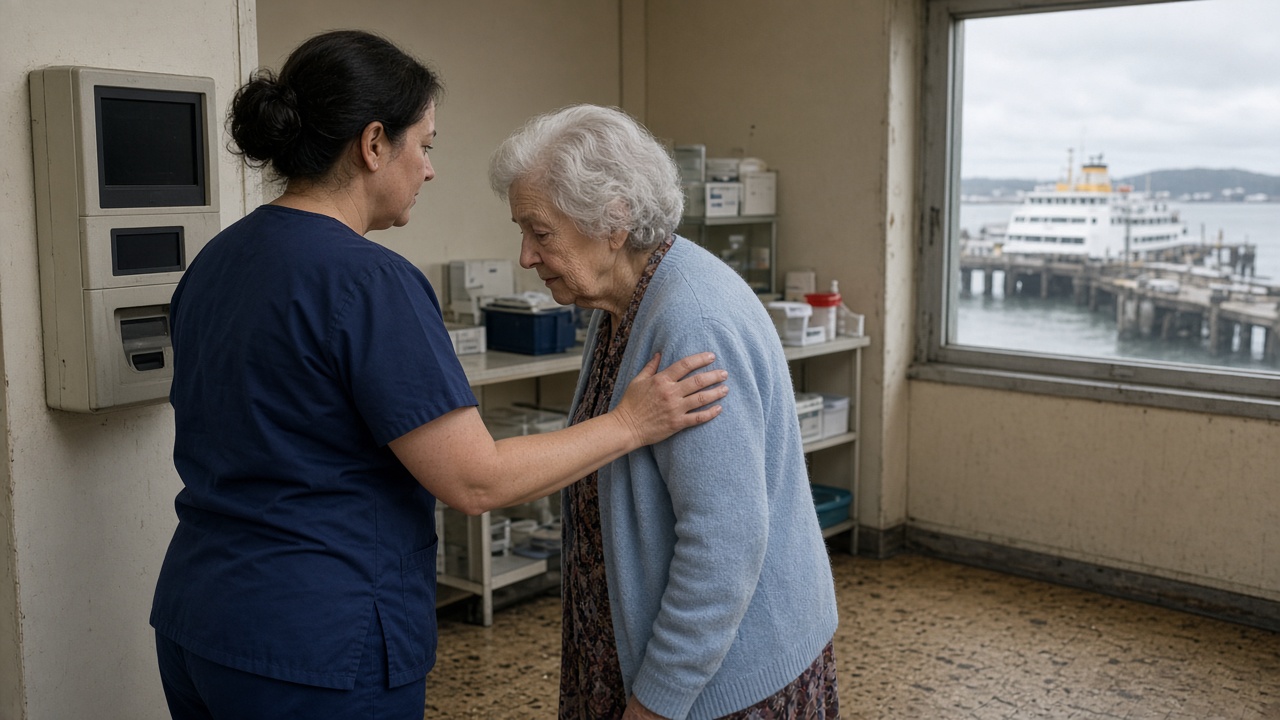
Taiwan’s National Health Insurance Administration told offshore island health stations to open additional insured telehealth blocks for internal medicine and dermatology referrals after Mid-Autumn ferry delays left hundreds of chronic patients waiting more than ten days for mainland specialist slots, according to a circular county health directors received Friday and reviewed by InfoHandle. The change is operational, not a new benefit: it reallocates existing video billing codes toward island clinics that already struggled with holiday staffing gaps.
What clinics gained
Stations on Penghu, Kinmen, and Matsu may book two extra half-day video sessions per week through October, routed to contracted hospitals in Kaohsiung, Taichung, and New Taipei. Nurses at township posts conduct vitals and upload blood-pressure logs before physicians join by secure link. Patients still travel for imaging or procedures the NHI does not reimburse remotely, but stable hypertension, lipid, and eczema cases can adjust prescriptions without riding a sold-out ferry.
The NHIA capped each island site at forty video visits weekly to prevent mainland hospitals from absorbing the capacity meant for urban backlogs. Officials said audits will flag charts where telehealth substitutes for overdue lab work more than twice in a quarter.
Why the holiday mattered
Penghu health bureau data shared with reporters showed outpatient visits jumped 22 percent the week after Mid-Autumn as families returned from mainland trips with delayed checkups. A Kinmen station manager said two physicians took leave simultaneously—a common Golden Week pattern—leaving only emergency stabilization on site. Ferry operators added sailings, but seat lotteries still stranded patients who needed mainland endocrinology within seven days.
Telehealth does not solve transport for blood draws. County labs extended morning hours on Wednesdays, when refrigerated ferries carry specimens to central Taiwan processors.
Who is still left out
Migrant fishers without a fixed NHI registration clinic cannot use the island blocks unless they transfer records—a paperwork step many skip. Orchid Island leaders said broadband drops below usable speeds when two simultaneous video sessions run at the only health post, echoing complaints from the NHIA’s typhoon telehealth pilot. Psychiatric medication reviews and controlled substances remain in-person only.
Evidence and limits
The agency cited 2024 internal reviews showing no statistically significant difference in blood-pressure control between island patients seen quarterly in person versus every other visit by video, provided home monitors were calibrated. Cardiology societies asked patients not to treat video slots as emergency triage: chest pain and stroke symptoms still require the nearest open ER, often by helicopter when seas are rough.
What readers should not do
Do not skip ferry trips for mandatory imaging because a video visit feels easier; delayed mammograms and retinal exams are not interchangeable with prescription renewals. Do not share login tablets between households—county IT logged several privacy incidents after holiday crowds shared health-station kiosks. Treat the expanded blocks as a backlog bridge until ferry schedules normalize, not a permanent substitute for quarterly lab panels that monitor kidney function on common diabetes drugs.
Island clinics will post which mainland hospitals answer video calls each morning on county websites. For households, the practical checklist mirrors storm season: charge phones, confirm pharmacy hours near the pier, and photograph current pill labels before boarding.