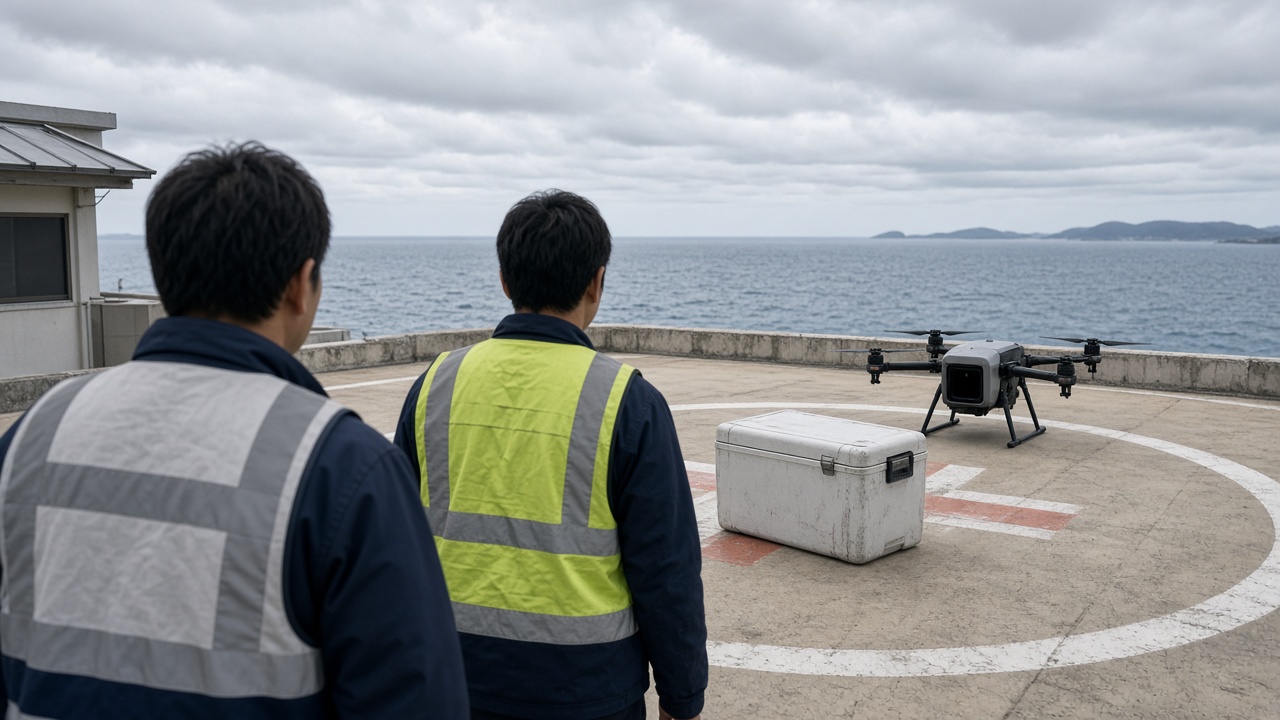
Okinawa Prefecture authorized two beyond-visual-line-of-sight drone corridors Friday for type-O blood flights to clinics on Iheya and Aguni islands after Silver Week ferry cancellations left hospital refrigerators below three-day transfusion buffers. The order lasts ninety days, requires Okinawa Red Cross packing protocols, and sets a September 30 cabinet briefing where MLIT will decide whether similar BVLOS lanes expand to other remote prefectures before typhoon season ends.
Calendar and control
Prefectural disaster aviation office chairs the corridor board; operators are two domestic logistics startups already flying prescription drones in Miyako trials. Flights may run 06:00–18:00 when wind gusts stay under eight meters per second—stricter than hobby rules but looser than visual-only medical pilots faced last year.
Opposition prefectural assembly members abstained on the emergency vote, arguing ninety days bypasses normal public comment. The ruling coalition cited MHLW blood-supply advisories that Okinawa’s island chain faces unique ferry dependence; abstainers did not block implementation.
Vote math versus reality
The corridor order needed only governor signature after assembly notification—it is not a new statute. Still, whip counts matter for funding: Okinawa’s fiscal 2026 supplementary request includes four hundred million yen for drone ports if MLIT nationalizes the template. LDP coalition partners want credit before upper-house by-election messaging; civil libertarians want sunset clauses so cameras on flight paths do not persist after blood stocks normalize.
One district effect
Aguni’s clinic serves roughly eight hundred permanent residents plus Silver Week tourists who strain ferry seats. A single missed evening sailing last week dropped type-O units to one cooler; obstetrics staff postponed a scheduled C-section until a helicopter charter arrived from Naha at triple normal cost. Drone corridors cut that charter dependence if weather cooperates—exactly the story Okinawa’s governor told cabinet liaisons Thursday.
Operational limits
Drones carry at most four blood units per flight under Red Cross weight rules—not whole hospital restocks. BVLOS does not mean autonomous; chase vehicles maintain radio links on two island hops. MLIT inspectors will log near-miss reports publicly, a transparency concession opposition demanded.
What changes after September 30
If MLIT approves national extension, expect phased corridors in Nagasaki and Kagoshima island chains with similar ferry gaps. If not, Okinawa’s ninety-day order expires unless the assembly converts it into ordinance—a heavier lift that requires public hearings opponents already scheduled for October.
For residents, the practical note is unchanged: donate blood on main islands when ferries run. The politics here is whether Okinawa’s emergency becomes Japan’s template for remote healthcare logistics—or stays a one-season experiment tied to Silver Week schedules.
Privacy and airspace
Flight paths avoid overflying residential courtyards where possible, but corridor maps still cross public beaches; prefectural staff said flight logs will redact patient identifiers while publishing altitude and time stamps for assembly oversight—a compromise privacy advocates accepted for the ninety-day pilot.