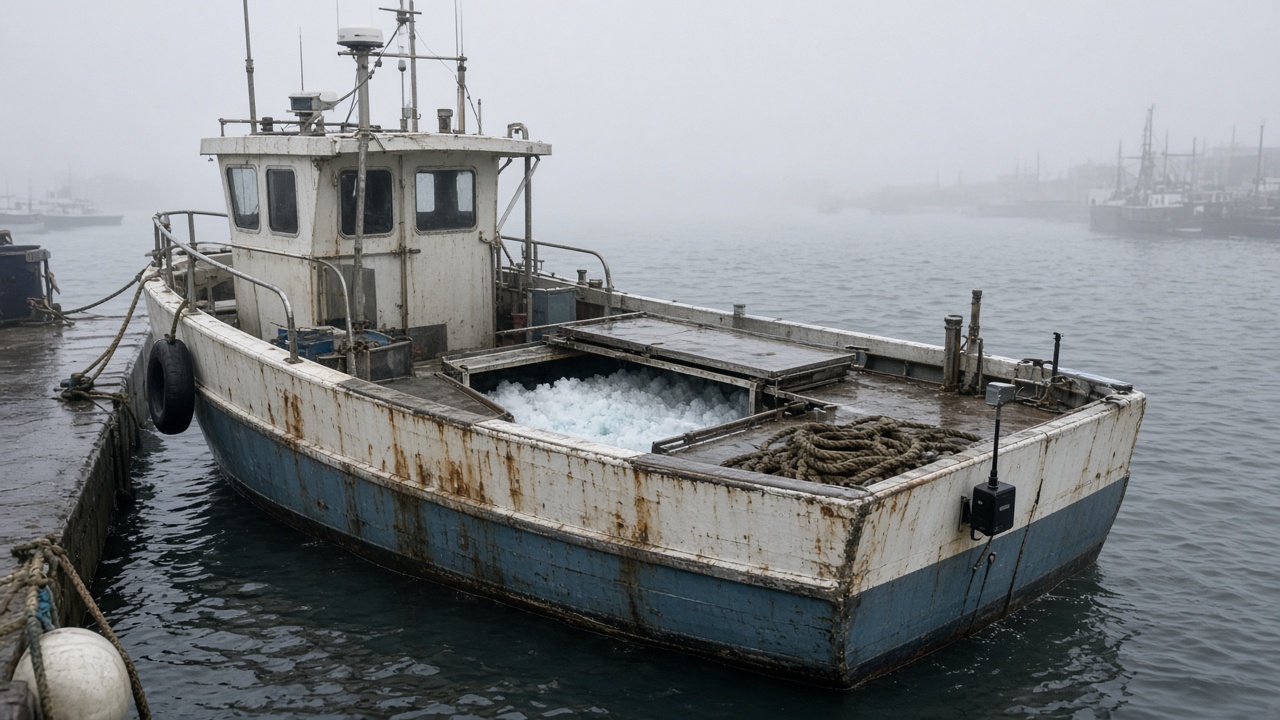
Plymouth Fishery Co-operative won a £480,000 UK Seafood Fund award to install ice-hold temperature sensors and landing-log tablets on 42 day boats operating from Sutton Harbour and Millbay, according to grant paperwork filed with the Marine Management Organisation and reviewed by InfoHandle. The project gives merchants and restaurant buyers a digital chill-chain record from the moment catch comes aboard until boxes cross the Plymouth fish market scales.
What the co-op bought
Each vessel gets a Bluetooth probe mounted inside the insulated hold, a rugged deck gateway that stores readings when mobile signal drops offshore, and a landing app that timestamps species weights against vessel ID. Data flows to a co-op-operated server in Plymouth rather than a US cloud, because French and Spanish buyers asked for GDPR-aligned certificates during post-Brexit export checks.
Grant funds cover 70 percent of hardware; owners pay the rest through a five-year maintenance levy deducted from auction commissions. Boats under ten metres qualify first, reflecting the co-op’s membership skew toward sole traders targeting local bass and pollock quotas.
Why ice holds matter now
Day boats lack onboard refrigeration plants; they rely on slurry ice that can warm if crews lengthen strings to cover fuel costs. Retailers including a southwest supermarket chain rejected landings last winter when core temperatures exceeded 4°C on manual probe checks disputed by skippers. Sensors are meant to remove argument—if the curve spiked, buyers see the graph.
Seafish research cited in the grant application estimates 8 percent of southwest day-boat value is lost to chill-chain disputes at auction. The co-op hopes digital logs trim that loss enough to offset sensor fees.
Who owns what after the grant
The co-operative holds title to gateway devices; individual skippers own holds and probes as fixtures. If a member leaves the co-op, they must buy out the gateway or return it—a clause that caused grumbling at a members’ meeting Thursday until officers explained insurance discounts for verified logs.
Board seats remain weighted toward active fishermen; the grant does not dilute voting shares, but a technology subcommittee gains veto on vendor swaps.
Regulatory and export context
DEFRA’s seafood scheme replaced part of the old European Maritime and Fisheries Fund domestically. Inspectors can request sensor exports during port health visits under retained EU hygiene rules. Spanish buyers at Coruña still want paper duplicates; the co-op prints QR-linked summaries for lorry drivers.
MMO landing declarations already flow electronically; linking temperature data is the next step toward single-click export health attestations Plymouth City Council wants before expanding chilled warehouse capacity on the waterfront.
What happens if the raise—or grant—fails
This is grant funding, not equity, but the co-op tied a private cold-store expansion loan to hitting sensor adoption targets. If fewer than 30 boats install by March, a regional credit union warned it will revisit covenants on the cold-store build. Officers said 19 skippers signed install schedules before publicity embargoes lifted.
Fuel price spikes remain the existential risk: sensors do not catch fewer fish. The grant includes a hardship pause for members who miss levy payments after engine failures.
Competition and buyers
Newlyn and Brixham auctions run rival chill-tracking pilots with different vendors. Plymouth’s edge is co-op scale on the south coast combined with Ministry of Defence catering contracts that asked for sensor proof in tenders issued this summer.
Local restaurants marketing “same-day landed” menus plan to display hold-temperature badges on QR menus—a marketing idea some skippers love and others call free advertising for middlemen.
Timeline
Installations start after the autumn equinox storm window, with full fleet coverage targeted before the Christmas monkfish rush. Training sessions run at the fish market café because elderly skippers refused webinar-only onboarding.
For Plymouth’s day-boat fleet, the grant is less about gadgets than about trust at the scales: a shared record that stops chill-chain arguments from eating margin before fish reach the plate. If the graphs hold up under buyer scrutiny, the co-op may finally charge a premium for verified landings—if not, the sensors become another piece of kit rusting next to unused AIS screens.