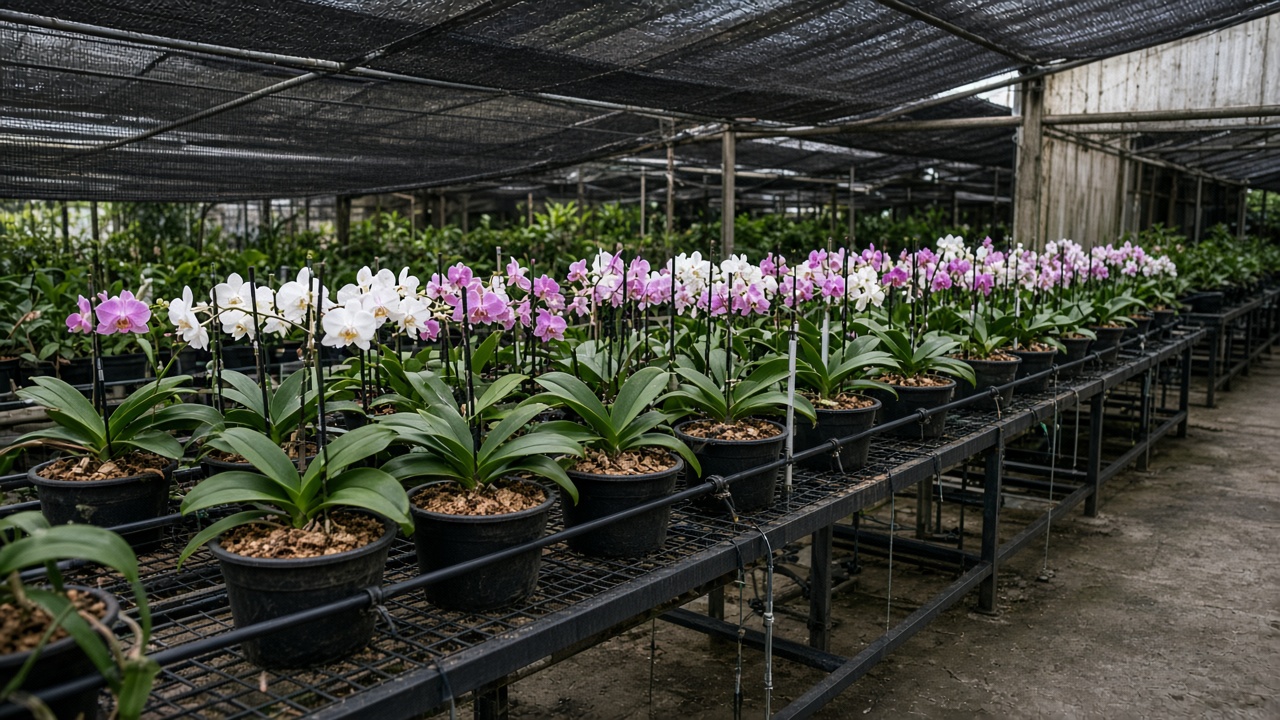
RootSignal Agritech Co., a Tainan soil-sensor startup, closed a NT$55 million seed round to install mesh networks in orchid greenhouses serving export packers who must document irrigation and media moisture for Japanese supermarket auditors and EU phytosanitary checks, according to a term sheet summary the company filed with the Tainan city startup desk and investors briefed on Friday. The raise is not a valuation headline chase—it buys hardware inventory, field engineers, and compliance exports importers already request in email, not portals.
What the seed actually bought
The round was led by a Kaohsiung ag-tech microfund with co-investment from two orchid export families who also signed pilot purchase orders. Founders diluted from sixty-eight percent to forty-nine percent on a fully diluted basis; an employee pool refill to ten percent was included. No debt tranche; growers wanted capex on sensors, not interest payments during the next typhoon season.
RootSignal sells probes, LoRa gateways, and a dashboard that outputs PDF trace rows keyed to greenhouse bay and shipment lot—not consumer gardening apps. Subscription pricing is per bay per month with a hardware deposit growers can buy out after twenty-four months.
Who got diluted and who gained power
Export-family investors received observer rights, not board control; the lead fund holds one director seat focused on finance, not agronomy. Founders keep CEO and CTO roles with vesting reset only on misconduct triggers, not on missing revenue targets—a concession growers insisted on after watching startups pivot away from orchids.
The business in one sentence
RootSignal proves greenhouse soil moisture and irrigation events for orchid exporters who lose margins when buyers reject lots over inconsistent media conditions.
Why orchids, why now
Tainan County clusters ship phalaenopsis and oncidium cultivars worth hundreds of millions of U.S. dollars annually; Japan accounts for the largest share. Retail auditors increasingly ask for sensor logs, not handwritten greenhouse journals. COA export guidance encouraged digital traceability after 2024 rejections tied to inconsistent packing moisture, not pests.
RootSignal's pilots in Guantian showed probe drift below two percent over a humid summer when calibrated quarterly—data the startup publishes as maintenance requirements, not marketing guarantees.
Round versus rescue
This is growth seed, not a down-round recap. Prior angel notes converted at a fifteen percent discount; no warrants tied to token schemes or SPAC rumors. If Japanese buyers tighten specs again, RootSignal needs the cash to certify gateways for salt-air coastal houses—capex the founders said they deferred until post-seed.
What if the next round does not exist
At roughly six hundred bays under contract if pilots convert, subscription revenue covers field staff but not national expansion. Without Series A in eighteen months, RootSignal likely stays a southern Taiwan specialist—still a real business serving exporters, not a unicorn slide. Founders told investors break-even at eight hundred bays with current pricing.
Competition and governance
System integrators sell generic IoT kits; RootSignal differentiates on orchid media recipes and COA-aligned export PDFs. Grower-investors could conflict if pricing rises; the shareholder agreement caps subscription increases to CPI plus three percent annually for pilot co-investors.
Exporter takeaway
Sensors do not replace phytosanitary inspection; they reduce arguments about whether a bay was overwatered before cut. Jordan Ellis's desk watches these raises for structure, not blossom photos: family-office lead, grower co-invest with orders, modest dilution, and a path to profitability without pretending every greenhouse becomes a data center. RootSignal's next test is typhoon season uptime—if gateways survive flooded ditches, the seed round becomes a footnote; if not, the cap table still has twelve months to fix hardware before growers revert to paper logs.
Bureau of Foreign Trade seminars this summer highlighted traceability as a soft barrier in EU retail, not just tariffs; RootSignal's PDF layout mirrors samples shown in those workshops. Taiwan Orchid Growers Association listed the startup as a recommended vendor for new export members, a marketing boost that does not guarantee retention.
Founders declined to disclose valuation; city startup desk filings only require round size and use-of-funds, which here are eighty percent hardware and field labor—a ratio investors in ag-tech consider unusually honest.