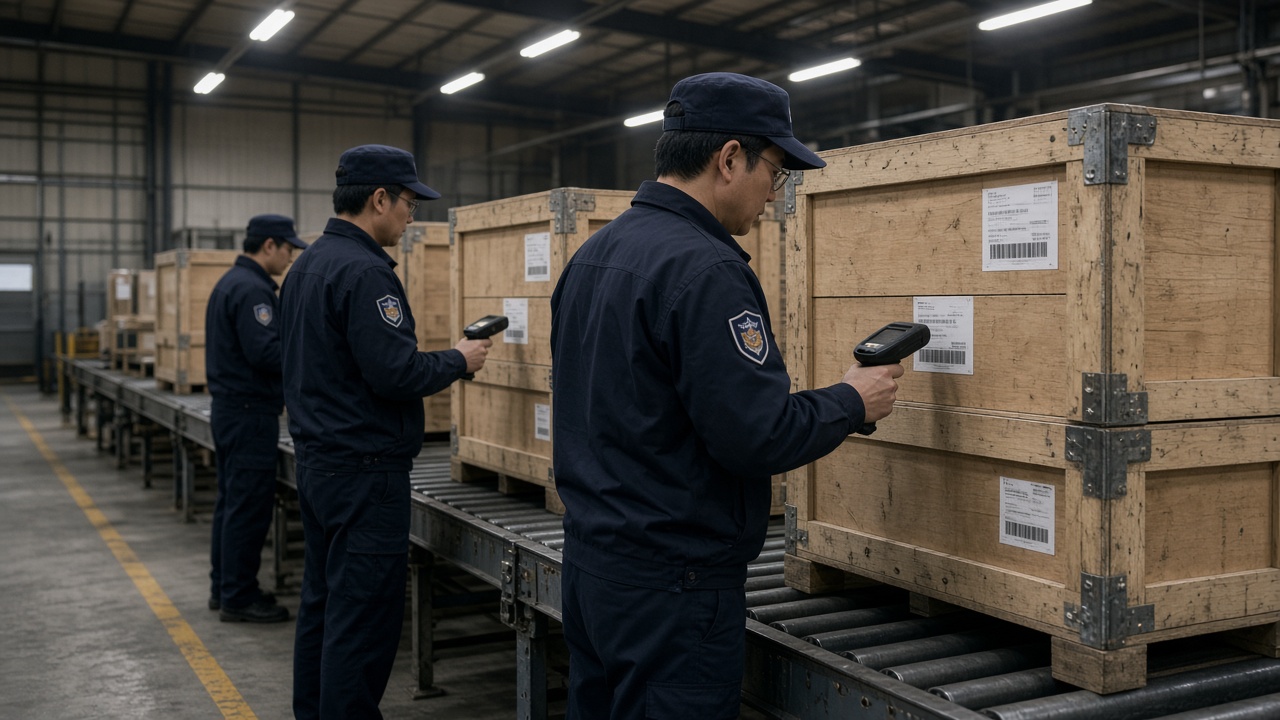
Taipei Port customs officials and PortLedger Technologies Co., a two-year-old Kaohsiung logistics software startup, started a pilot that writes spare-parts dwell events to a permissioned blockchain so semiconductor tool importers and vendors agree on custody timestamps, according to a joint filing on the customs innovation portal and term sheets investors saw ahead of a seed extension. The pilot does not clear shipments faster by itself—it gives disputing parties a shared ledger when a lithography tool spare shows days in bonded storage and someone must pay demurrage or trigger warranty clauses.
What the round and pilot actually are
PortLedger closed a NT$42 million seed extension led by a Taichung industrial-supply family office with participation from two angel syndicates focused on port IT, people familiar with the cap table said. The company had raised NT$18 million pre-seed in 2025; new money buys sales staff at Keelung and Taichung branches, not a token launch. Customs pays no equity; it supplies test lanes and API access under a memorandum that expires in March 2027.
Blockchain here means a Hyperledger Fabric network operated by customs, PortLedger, and three importer IT departments—not a public coin. Each scan of a crate QR at gate in, X-ray hold, and gate out appends a signed event; hashes anchor daily to prevent silent edits.
Who owns what after dilution
Founders retain roughly fifty-one percent voting power post-extension if all milestones vest; the lead family office holds fifteen percent with a pro-rata right, not a board majority. Employee option pool refreshed to twelve percent. Prior angels were not fully ratcheted; they accepted a modest valuation step-up tied to pilot KPIs rather than revenue guarantees—classic seed mechanics when the customer is a government pilot.
The business in one sentence
PortLedger sells subscription access to dwell analytics and dispute exports for importers tired of faxing custody logs when a spare part sits in bonded storage during tool downtime.
Why spare parts matter
Leading-edge fabs run with tight spare pools; a delayed ion source or pump module can idle a tool longer than ocean transit time. Importers argue with vendors over whether delay happened before or after customs release; customs data lived in separate systems from forwarder portals. A shared ledger does not replace law—it narrows arguments to timestamps both sides signed.
Taipei Port handles high-value tooling feeds for northern fabs; dwell fees are smaller than wafer output loss but viciously contested in contract arbitration.
Governance and PR valuation risk
Startup press releases sometimes cite "millions saved" without baseline dwell metrics. PortLedger's customs filing lists measurable targets: reduce disputed dwell cases by twenty percent in the pilot lane, not "eliminate blockchain fraud." If the next round does not arrive, the company still has paid pilots through 2027 service fees—runway the founders disclosed at twelve months post-extension assuming three enterprise logos.
Customs retains authority to halt the ledger if cybersecurity audits fail; PortLedger cannot monetize citizen data because no citizen data enters the chain.
Competitive landscape
Global forwarders offer proprietary visibility portals; PortLedger bets Taiwan importers want locally hosted nodes and Chinese-language support engineers on call when a typhoon closes berths. Larger ERP vendors could add blockchain modules; the startup's wedge is customs API depth built during the pre-seed pilot in Kaohsiung.
What if the next round does not exist
PortLedger becomes a niche SaaS vendor serving spare-parts desks—a viable outcome if three fabs' logistics teams renew annual contracts. Without extension capital, hiring pauses and sales focus stays on Taipei-Keelung; the ledger network would shrink to customs-only nodes, still useful but not a venture-scale story.
Importer takeaway
Participants must staff someone to scan events; lax floor discipline breaks the chain faster than hackers. For startups watchers, the lesson is dull and useful: PortLedger raised on a narrow customs pain point with measurable KPIs, not on replacing fiat currency. For fabs, the question is whether a signed timestamp prevents the next demurrage email war—early pilots suggest yes often enough to pay the subscription.
Legal counsel for one importer said contracts must reference the ledger as evidentiary, not sole proof of title; blockchain timestamps supplement, not replace, bills of lading. Typhoon contingency clauses still govern force majeure even when scans pause.
Founders declined to share ARR; customs published aggregate dwell statistics quarterly regardless of vendor success—a public backstop if the startup stalls.