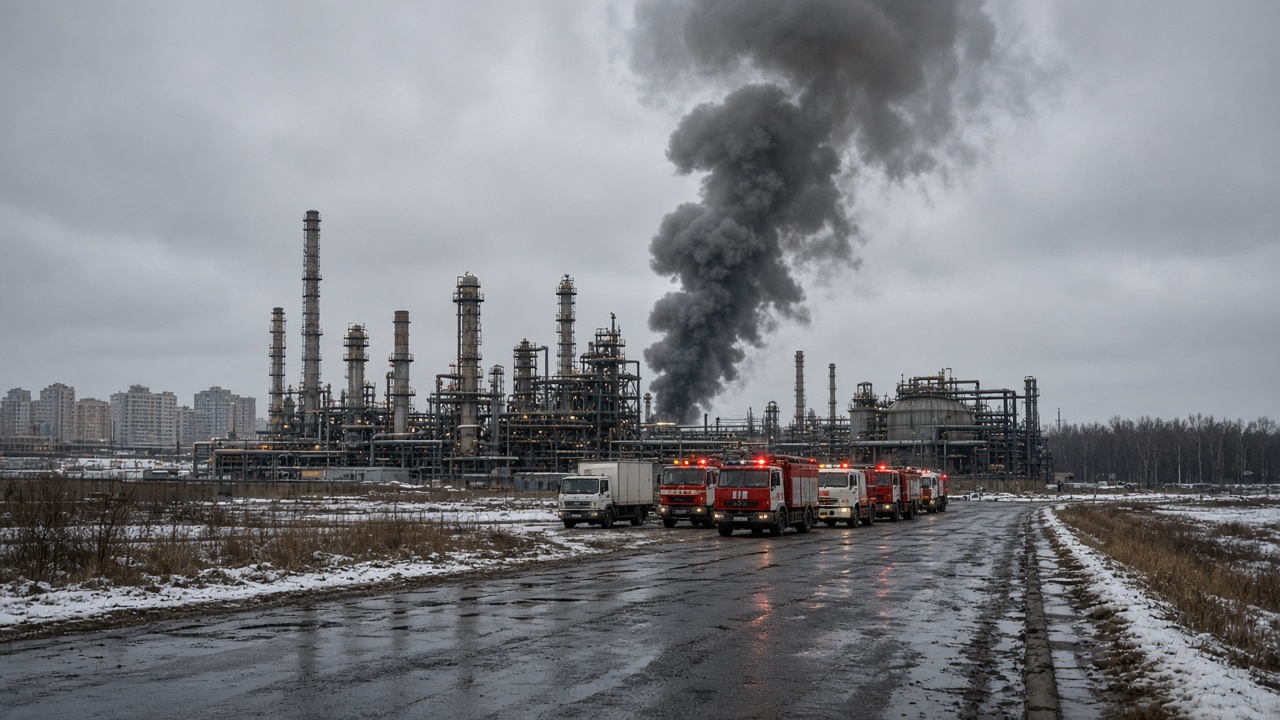
Ukraine fired more than 1,000 drones at Russia overnight, Russian officials said Sunday, in a barrage Moscow’s mayor called the largest ever aimed at the capital as the country’s three-day parliamentary election entered its final hours. Mayor Sergei Sobyanin said air defenses destroyed hundreds of drones en route to Moscow, yet some still struck a facility at the Moscow Oil Refinery and a 21-storey residential building. At least two people were killed in the wider region, according to Moscow Governor Andrey Vorobyov, while Ukraine’s military said Russia launched 138 drones of its own across Ukrainian territory the same night.
What Moscow reported
Russia’s Defense Ministry said its forces shot down roughly 1,100 Ukrainian drones nationwide, including tracks over annexed Crimea and the Black Sea. Sobyanin put intercepts even higher—more than 1,600—with about 450 bound for the city itself. He linked the timing to the election’s last day, calling the attack “clearly planned” to disrupt voting. Central Election Commission chair Ella Pamfilova said a drone strike on a civilian bus in Russian-held Kherson region killed two people, including an election official, though that incident sits outside the Moscow salvo.
Photographs published by news agencies showed smoke rising from refinery equipment inside the capital’s ring road. Sobyanin said emergency crews were on site and that no refinery casualties had been confirmed. Ukrainian President Volodymyr Zelenskyy acknowledged the refinery strike in a post on X, without detailing launch sites.
Election context
Sunday closes Russia’s first wartime Duma ballot since the 2022 full-scale invasion. Opposition figures are largely barred or abroad; United Russia is expected to retain dominance. Putin has cast the vote as proof of public backing for the war, making any visible disruption in Moscow politically sensitive even when front-line territory absorbs far heavier fire.
Independent monitors cannot verify turnout claims in occupied Ukrainian districts where voting also occurred. Western governments dismissed the exercise as choreographed. For Kyiv, hitting energy infrastructure inside Russia remains a lever to shrink export revenue that funds the war—at the risk of escalating reprisals against Ukrainian cities.
Energy and diplomacy
The Moscow Oil Refinery is a symbolic as well as industrial target: a fire visible from commuter districts underscores that sanctions and drone campaigns are reaching inside the capital, not only border regions. The strike lands days after U.S. President Donald Trump said Kyiv and Moscow had agreed not to target each other’s energy sites—a claim neither capital has consistently honored.
Washington separately notified Congress on Friday of a potential $2.68 billion air-defense package for Ukraine, a sale case that would still need to clear congressional review. Sunday’s exchange shows why Kyiv wants interceptors and counter-drone radars: Russia’s overnight drone wave, while smaller than Ukraine’s, still forced air-alert routines across multiple oblasts.
What is still unknown
Russian and Ukrainian drone counts often diverge, and neither side has published a full inventory of what reached hardened targets versus decoys. CNN and Al Jazeera could not independently verify every impact site Sunday morning. NATO allies will watch whether refinery damage tightens domestic fuel supply or remains a contained blaze, and whether election officials use the Kherson bus deaths to argue for harsher mobilization steps after polls close.
For readers tracking escalation, the operational headline is dual: Ukraine scaled a capital strike on Russia’s election finale, and Moscow answered with another cross-border drone package—signaling that both capitals still treat each other’s energy and urban nodes as fair game despite episodic U.S. mediation claims.