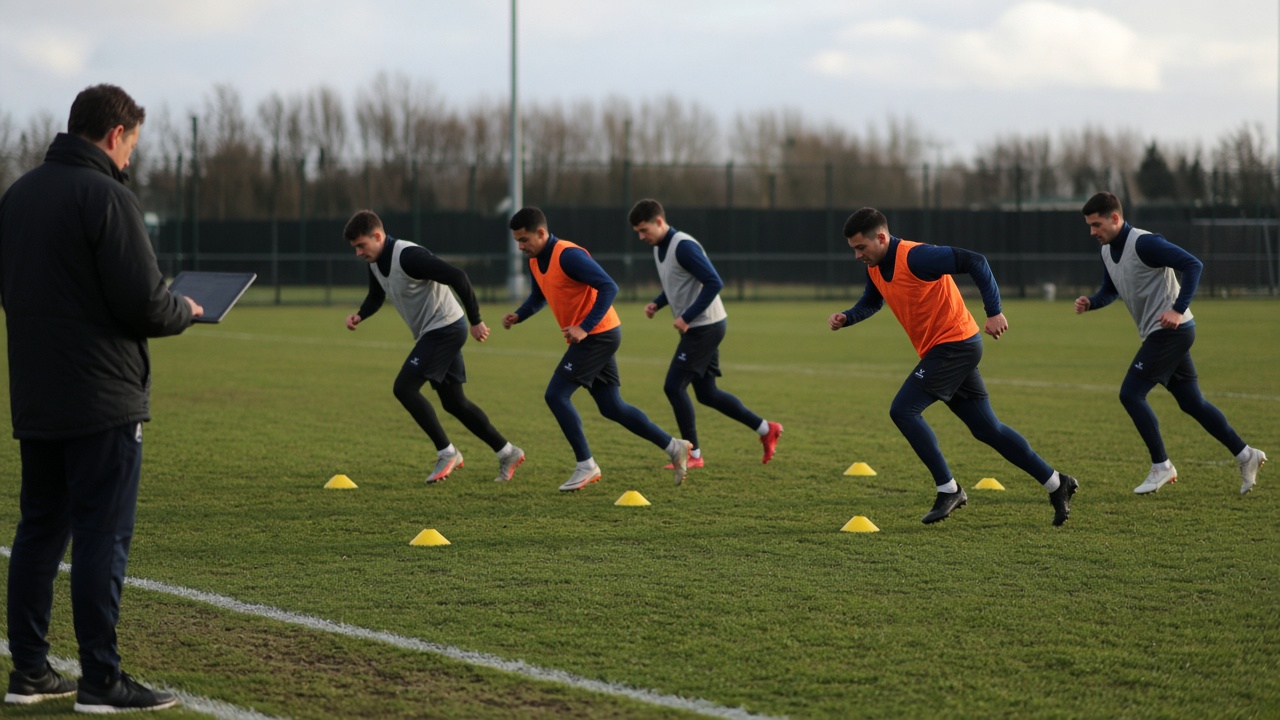
Vissel Kobe’s performance staff limited weekly on-pitch minutes for three squad members returning from anterior cruciate ligament reconstructions after GPS and force-plate dashboards showed asymmetry spikes during Silver Week training blocks. Head coach Takayuki Yoshida said Friday the caps are precautionary—not new injuries—and aim to keep players available for AFC Champions League group matches while J1 promotion of youth minutes continues.
What the data showed
Wearable trackers logged higher deceleration loads on repaired knees during small-sided games even when players reported no pain. Medical liaisons compared metrics to club benchmarks set during last season’s successful return of a veteran midfielder; current flags tripped earlier in the rehab curve, prompting staff to pull individuals from full scrimmages and substitute pool sessions with controlled passing grids. J League medical committee guidance encourages clubs to share anonymized return-to-play templates, though competitive secrecy limits public detail.
ACL recoveries in professional football typically span nine to twelve months depending on graft type and meniscus work; rushing reintroduction raises retear rates documented in sports medicine literature. Kobe’s staff emphasized they are not hiding injuries from opponents—matchday rosters will list availability per league rules—but training openness for media days will show capped players in non-contact bibs.
Tactical impact
Kobe sits mid-table in J1 with concurrent continental fixtures stretching squad depth. Rotation caps mean younger wingers get rehearsal time in Champions League travel squads while senior names manage cumulative minutes. Yoshida’s press comments stressed tactical shape unchanged; the issue is individual load ceilings, not a system overhaul.
AFC Champions League scheduling adds midweek travel to hotter climates; sports scientists model sleep and hydration alongside mechanical load. Caps may lift after international break friendlies if asymmetry normalizes in lab tests clubs run with isokinetic machines—not visible to fans but standard before clearing full tackling drills.
What supporters should watch
Supporters should expect substituted appearances—twenty to thirty minute cameos—rather than ninety-minute marathons for flagged players until dashboards greenlight full deceleration work. Ticket holders asking about single-player marketing nights should note club policy prioritizes availability over hero narratives. Fantasy league managers face opacity; Kobe rarely publishes wearable metrics publicly.
Opponents will still press high; capped players may train separately to work on straight-line sprinting before rejoining pressing drills. That is standard post-ACL management, not a signal of locker-room discord.
Next hearings
League disciplinary channels are not involved; this is internal sports science. If a capped player re-injures, J League medical reviews return protocols as they do for concussions. Youth academy coaches said caps also protect teenagers promoted to train with the first team; mixing rehab veterans and eager rookies in the same pressing drill caused minor contact scares last month that triggered this week’s dashboard review.
For now, the desk read is institutional caution: Kobe trades a week of full-intensity reps for a month of continental availability—a calculus clubs with Asian fixtures increasingly share when wearables move from novelty to contract language.