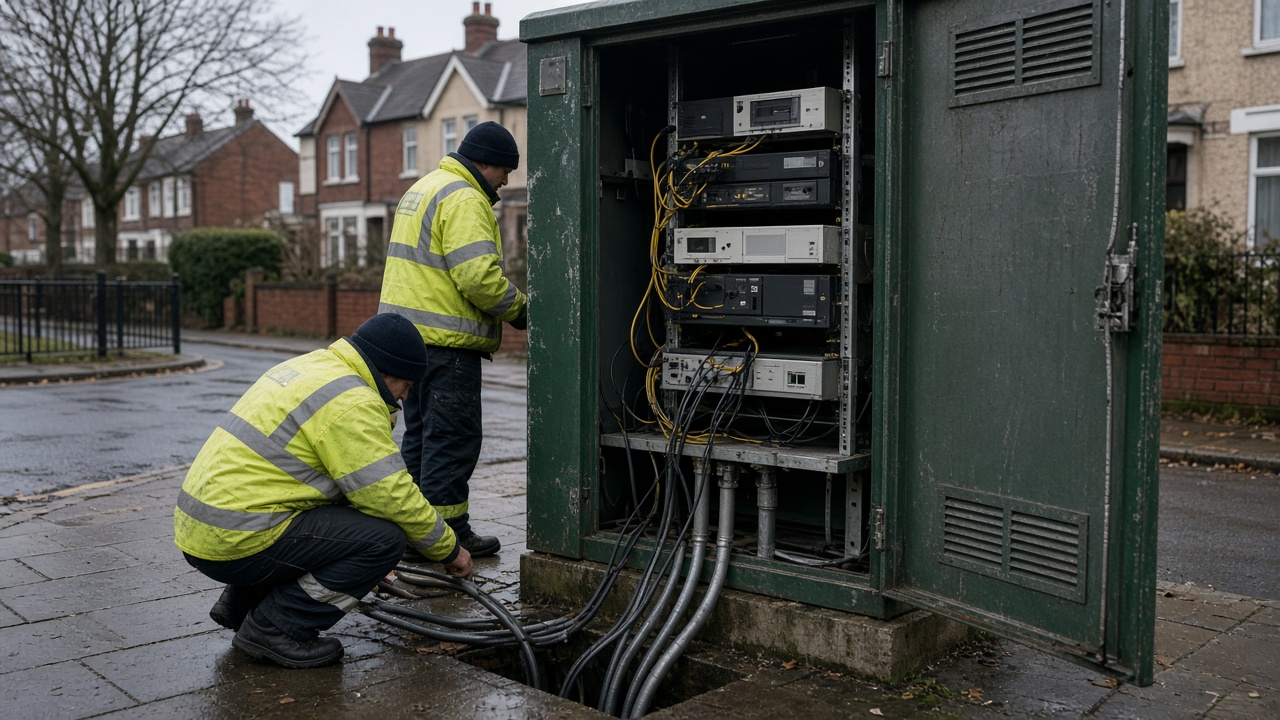
Field engineers for the merged Vodafone Three entity began refarming mid-band 5G spectrum inside Birmingham telephone exchange pods from Friday night, according to internal change windows circulated to wholesale partners and reviewed by InfoHandle. The work is the first live spectrum integration in England’s West Midlands since the Competition and Markets Authority cleared the combination with binding coverage and standalone 5G commitments, and it will set the template for how quickly dual-brand subscribers see capacity gains without voice-call drops during overnight maintenance.
What changed in the pods
Teams opened six exchange pods clustered around the Aston and Digbeth backhaul rings, moving Three’s 3.4 GHz carriers onto a shared radio scheduler while Vodafone’s legacy 3.5 GHz blocks were retuned to a common channel plan. Technicians replaced filter modules on Ericsson and Nokia radios that had been provisioned separately before the deal closed, then ran drive tests along the A38 Queensway corridor to confirm handover timers.
A network operations note seen by InfoHandle warned that some Birmingham postcodes would see brief 5G-only outages between 01:00 and 04:00 BST while software loads propagated. Consumer care scripts told agents to offer Wi-Fi calling rather than promising fixed restoration times, because pod work can overrun when rusted cabinet bolts shear in older BT Openreach co-location frames.
Why Birmingham went first
Regulators picked the West Midlands as an early integration market because both carriers already shared dark fibre on the Birmingham Ring and because Ofcom’s coverage audit last spring flagged patchy indoor 5G in student housing near Aston University. Merging spectrum here tests interference between street cabinets and in-building repeaters without touching London’s denser legacy 3G anchors yet.
Wholesale MVNO partners that ride Three’s core asked for 72-hour notice before any refarm that alters QCI tags for enterprise APNs. Vodafone’s enterprise desk agreed to freeze SLA reports for affected business lines until Sunday afternoon, when post-cut KPIs are meant to stabilise.
Commitments the teams are measured against
The CMA’s final order requires the combined group to deliver nationwide standalone 5G to 99 percent of populated UK landmass by 2034 and to cap certain consumer tariffs for three years. Spectrum refarming is the plumbing behind those promises: until carriers align bands, they cannot reuse radios efficiently or shut duplicate transmission sites.
Ofcom’s mobile spectrum team told operators in August to file fortnightly integration dashboards. Birmingham’s cut is the first row in that spreadsheet with real customer traffic, not lab simulations. Analysts at CCS Insight said West Midlands refarms typically touch 400,000 active SIMs when both brands are counted—enough for call-centre spikes if handovers fail.
What subscribers should notice
Vodafone-branded phones that previously camped on DSS-assisted 5G may show fuller bars in indoor car parks along the Jewellery Quarter once the shared mid-band block goes live. Three customers could see slightly higher upload speeds on evening video calls because uplink slots are pooled. Voice over LTE and Wi-Fi calling remain the fallback if 5G bearers drop during the rest of September’s pod schedule.
Retail staff at Bullring kiosks were briefed not to sell “new network” upgrades solely because of refarming; the change is invisible on bills. Business customers with static IP SIMs in warehouse scanners were told to reboot modems once after the cut window.
Competition and landlords
BT/EE and Virgin Media O2 are watching Birmingham KPIs to time their own re-farming in overlapping bands. Commercial landlords with in-building DAS contracts asked whether the merged entity would honour separate Vodafone and Three revenue shares; a joint FAQ sent to facilities managers said existing DAS leases roll into one billing entity in October.
City council digital inclusion officers requested open data on postcode-level downtime. The operators promised aggregated heat maps without site-level coordinates, citing security concerns about street cabinet vandalism.
Next cuts on the calendar
Internal roadmaps list Coventry and Wolverhampton exchange pods for the week of 29 September, then a pause during Conservative Party conference travel disruptions. If Birmingham’s error rates stay below 0.3 percent dropped-call spikes through the weekend, programme managers will accelerate Manchester and Leeds clusters before year-end.
For Britain’s third-largest mobile operator by subscribers, the Birmingham weekend is less a marketing moment than a maintenance milestone: proof that two national radio networks can share spectrum without repeating the 2010 T-Mobile and Orange integration outages that clogged switchboards for weeks. Field teams will know by Monday whether the CMA’s confidence was justified—or whether more pods stay bolted shut for another month.