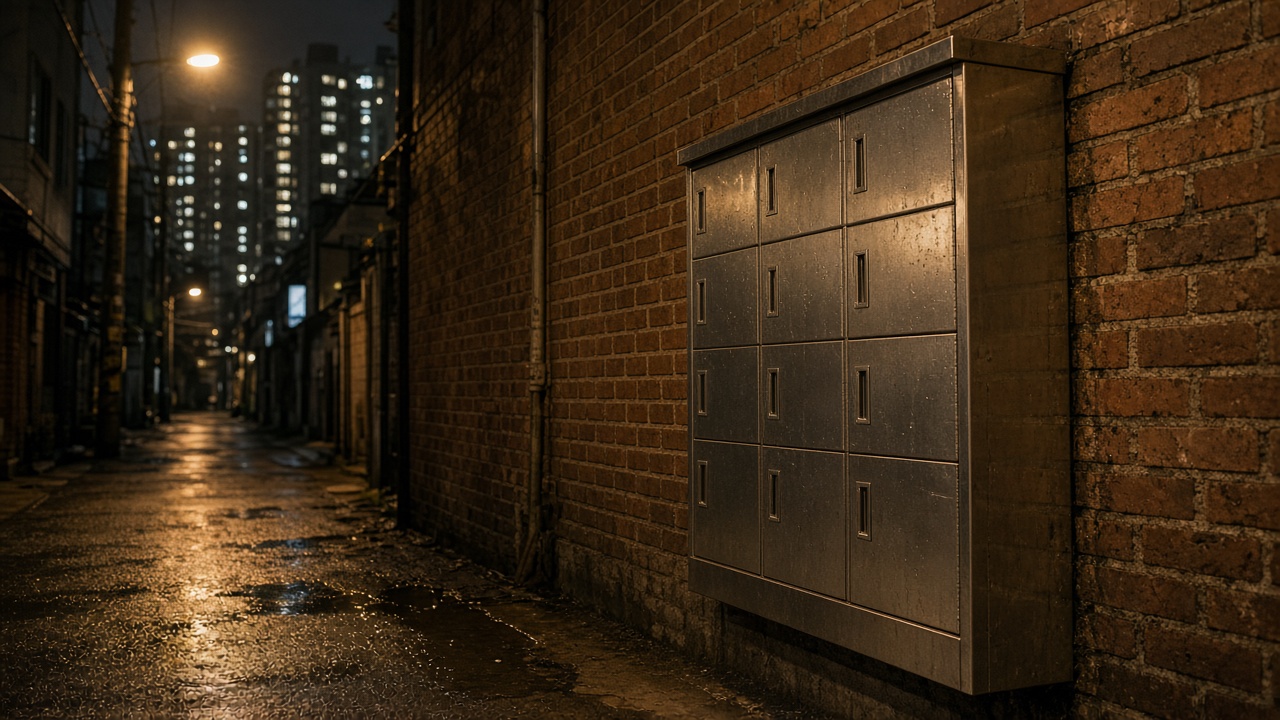
Vroong said it raised a growth tranche led by Shinhan Securities to roll out insulated prescription lockers in Gangnam’s residential alleys, giving patients a pickup option when one-hour rider deliveries miss building security curfews or when telehealth platforms need overnight drops. The funding extends Mesh Korea’s pivot from pure motorcycle dispatch to micro-logistics real estate it began testing with pharmacy-in-warehouse concepts reported during the pandemic.
Why lockers, why Gangnam
DoctorNow and rival telehealth apps spiked evening prescriptions for dermatology and chronic-care refills, but high-rise guards in Gangnam often stop couriers after 10 p.m. even when tenants ordered medicine legally. Vroong CFO Yoon-seo Chae said lockers let riders deposit sealed bags in temperature-controlled compartments, ping patients, and move to the next stop without waiting at lobby desks. Pilot cabinets in Seocho and Songpa held 2–8 Celsius for 18 hours in August heat-wave tests.
Alley placements exploit land too narrow for full micro-fulfillment centers yet dense enough for foot traffic from lawyers and clinic staff working late. Vroong negotiates easements with building owners, sharing locker screen revenue and delivery fees.
How the round fits 2025 capital
Shinhan Securities already injected roughly 40 billion won into Vroong across March and September 2025 rounds when broader delivery agencies faced order slowdowns. This tranche earmarks hardware—compressors, IoT locks, insurance—and integration with Vroong’s dispatch brain so lockers appear as nodes alongside restaurants. Investors bet that B2B franchise volume and prescription partnerships diversify revenue beyond meal peaks.
Competitors Baemin and Coupang focus on grocery lockers in transit hubs; Vroong argues medicine needs stricter chain-of-custody logs and pharmacist release rules under Ministry of Health and Welfare guidance. Lockers do not replace pharmacists: drugs arrive pre-bagged from partner pharmacies Vroong already serves on DoctorNow routes.
Operations and compliance
Each unit records handoff scans from riders and pickup codes for patients, storing hashes for dispute investigations. Cold-chain alarms route to Vroong’s nationwide control tower that already monitors corporate catering runs. Failure modes include power outages in older alleys; Vroong stocks battery backups sized for six hours, enough for overnight drops.
Pharmacy law still requires patient verification on controlled substances; lockers block narcotic schedules and flag antibiotics needing counseling. Telehealth lawyers reviewed signage telling patients to call pharmacists for questions—a hedge against claims that lockers encourage unsupervised use.
Neighborhood politics
Gangnam district offices asked about noise from compressor cycles; Vroong switched to quieter units after resident petitions in Nonhyeon. Storefront merchants worried lockers steal wall space; Vroong offers revenue share on locker advertising slots capped at health PSAs. Parking enforcement remains tense—riders on motorcycles still double-park during deposits, and local police said they will ticket repeat offenders even if lockers cut total dwell time.
Unit economics
Lockers cost more than restaurant handoffs but less than repeated failed delivery attempts that trigger refunds. Vroong estimates payback under fourteen months if cabinets handle twelve drops nightly, a threshold met in Songpa pilots. Shinhan’s investment committee cited those metrics plus Vroong’s majority share in corporate delivery brokerage despite industry contraction.
Maintenance crews swap filters monthly; Gangnam air quality makes condenser coils dirty faster than suburban hubs. Vroong hired two field techs dedicated to pharmacy hardware, upskilling motorcycle mechanics who know the alleys.
Expansion path
Thirty cabinets are slated for Gangnam and nearby Seocho by Chuseok, then replicate to Bundang if insurance partners approve. Vroong may open APIs so hospital discharge planners reserve locker slots when sending patients home with wound-care kits. Failure would strand capital in steel boxes, but Chae said unused lockers revert to general parcel mode—a flexibility meal-only competitors lack.
For residents, the visible change is a humming cabinet next to the fried-chicken shop, blinking when a prescription awaits. It is less glamorous than drone delivery, but it solves the last ten meters Korean telehealth kept losing to locked lobby doors.
Insurance and liability
Underwriters asked Vroong to carry higher product-liability limits on temperature excursions; Shinhan’s capital will partly fund that premium. Patients who miss pickup windows trigger automatic pharmacy callbacks before bags return to depots, reducing spoilage claims that worried early telehealth insurers.