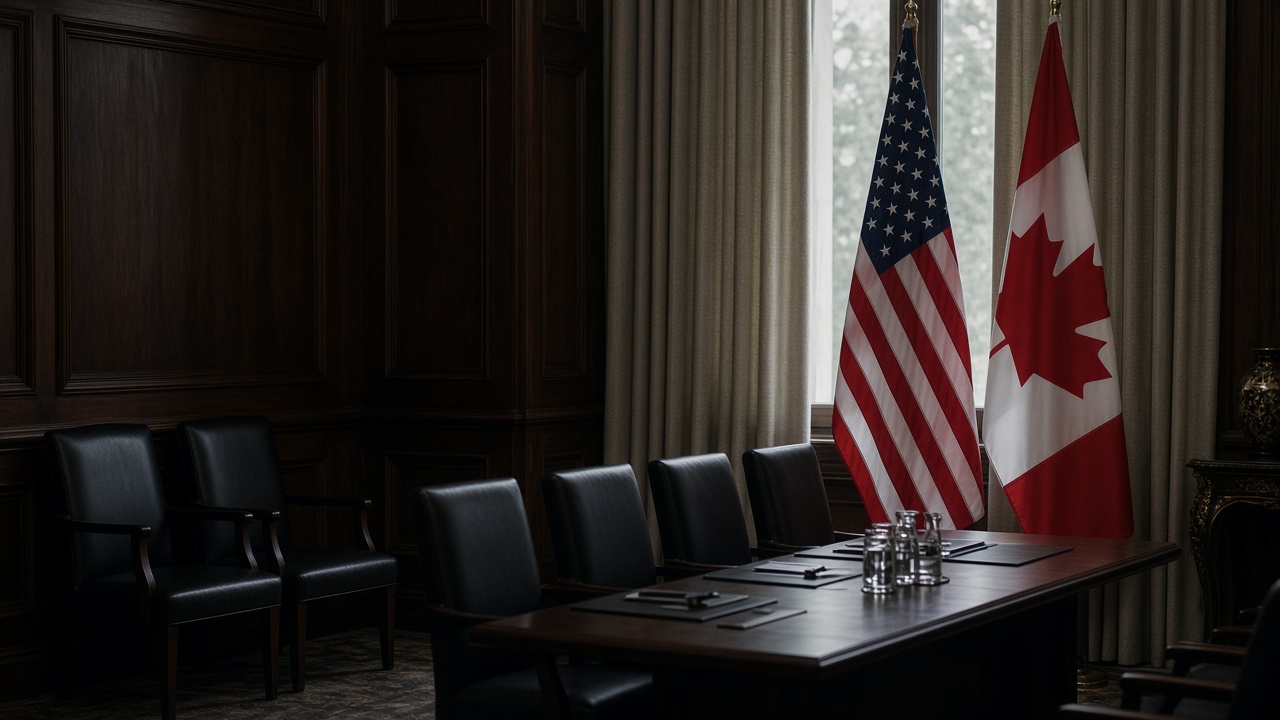
Chinese leader Xi Jinping is heading to Washington for a summit with President Donald Trump on Wednesday, a meeting U.S. and Chinese officials have framed as a test of whether last year’s trade truce can be extended even as Beijing’s export machine keeps outperforming the tariff campaign Trump launched in his second term.
What each side brings
Reuters reported September 21 that Xi arrives after four months in which China’s trade with the world expanded while Trump’s domestic approval ratings slipped. U.S. Treasury Secretary Scott Bessent told reporters preparatory sessions with Chinese Vice Premier He Lifeng had focused on maintaining the pause in escalatory tariffs rather than announcing major new concessions on market access or technology controls.
Beijing’s delegation is expected to highlight record shipment volumes in electronics and green-energy goods, arguing that supply chains already adapted to U.S. duties. Washington’s team is under pressure from Midwest manufacturers and semiconductor equipment makers who want clearer rules on export licensing and retaliatory tariffs if China restricts rare-earth shipments.
Thorny issues on the table
Taiwan remains the highest-risk topic. Allied capitals worry Trump could trade long-standing arms-sales commitments for Chinese purchases of U.S. agricultural products, a fear Bessent has publicly downplayed without offering detailed guardrails. Xi, meanwhile, needs a stable economic backdrop ahead of the Asia-Pacific Economic Cooperation leaders meeting China is hosting in November in Shenzhen.
Neither government has published a joint agenda, but people briefed on the talks said extensions to the truce would likely run in six- or twelve-month increments, mirroring the June memorandum that briefly cooled the U.S.-Iran war’s spillover into shipping markets. Any statement that merely rolls deadlines without numeric targets on Chinese purchases of U.S. goods would be read as a status-quo outcome on Wall Street.
Markets and timing
U.S. equity futures were little changed in overnight trading as investors treated the summit as a volatility event rather than a guaranteed breakthrough. Analysts at Eurasia Group noted that even a truce extension would leave most sector-specific tariffs in place, meaning corporate planners still face dual sourcing decisions in Mexico, Vietnam, and India.
The meeting also overlaps with the opening week of the United Nations General Assembly in New York, where Iranian President Masoud Pezeshkian’s delegation is seeking separate talks on Hormuz shipping. U.S. officials said Trump would fly between Washington and New York, limiting the time available for bilateral sessions beyond the ceremonial photo opportunities both leaders favor.
What would count as success
For Trump, a headline that tariffs will not rise before the 2026 midterm campaign season would allow him to tell voters he forced China to the table without triggering the consumer-price spike advisers warned about in spring. For Xi, avoiding new technology sanctions on chip-making tools would protect Huawei-affiliated suppliers and local AI startups that rely on older-generation Nvidia chips purchased through third countries.
Until the two leaders appear together on Wednesday, the documented facts are the September 24 date, the He-Bessent preparatory track, and the shared incentive to extend a truce that has held better than the parallel U.S.-Iran ceasefire — a summit where the baseline expectation is continuity, not a grand bargain.