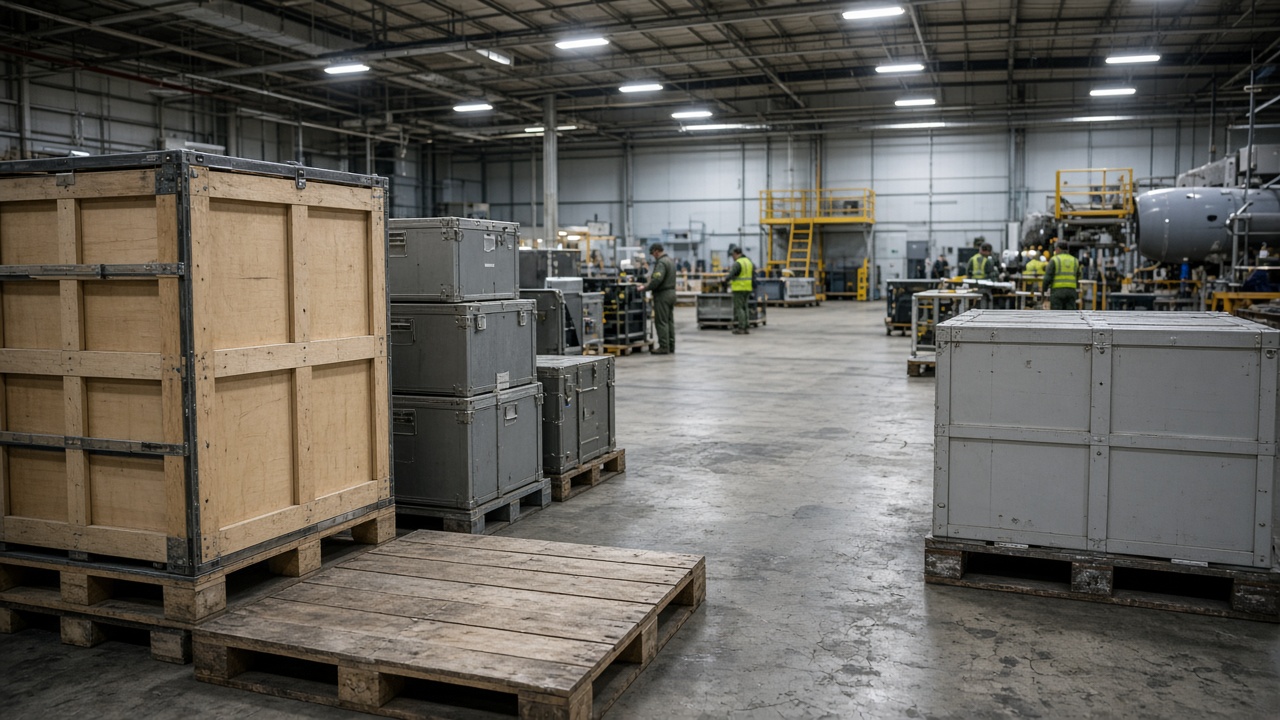
Australia’s Defence Department said Monday it takes protection of classified military technology “extremely seriously” after a media report that F-35 fighter components were diverted to Hong Kong following shipment from Australia. The statement, issued to international outlets including Al Arabiya, followed a Politico story over the weekend that said a consignment including a canopy with radar-resistant features had been unexpectedly rerouted, raising questions about whether sensitive parts from the U.S.-led Joint Strike Fighter program could be accessed by unauthorized actors.
Politico did not allege that Australian authorities caused the diversion, and it remained unclear Monday who rerouted the cargo or where the parts were held. Lockheed Martin, the jet’s manufacturer, declined to discuss specific shipments, citing security protocols. Washington operates more than 800 F-35s and shares spare-pool arrangements with several allies, including Australia, which operates 72 of the aircraft.
What Canberra confirmed
An Australian Defence Force spokesperson told reporters the government maintains a “robust export control regime” administered under national legislation, without confirming details of the Politico account. Al Arabiya noted that Australia has deepened defense cooperation with the United States through the AUKUS submarine pact and parallel efforts to streamline transfers of secret technology between allies—processes that depend on trusted logistics chains.
The reported incident lands as Canberra promotes its credentials as a reliable Indo-Pacific partner ahead of high-level diplomacy in New York and Washington. Any gap in custody of F-35 parts would be politically sensitive in Canberra, where bipartisan support for the jet coexists with scrutiny of how spare pools are tracked across continents.
Why the canopy matters
F-35 canopies incorporate low-observable materials tied to the aircraft’s survivability against advanced radars. Even partial components can attract intelligence interest because they reveal manufacturing techniques and material science. Politico’s report said U.S. officials were concerned about possible Chinese access, though Beijing was not named in Australia’s public response Monday.
Seven countries outside the United States share a global pool of F-35 spares, including Canada, Denmark, Italy, the Netherlands, Norway, and the United Kingdom, alongside Australia. Japan, Singapore, and South Korea also operate the jet in the Indo-Pacific, meaning any logistics lapse could ripple through multiple fleets’ readiness calculations.
Investigations and next steps
Neither the Australian government nor the U.S. Defense Department publicly launched a named inquiry Monday, but defense reporters said U.S. security services would routinely trace serial numbers and shipping manifests when diverted military goods are reported. Exporters and freight forwarders face heavy penalties under Australian law for unauthorized transfers of controlled goods.
For Australian readers, the immediate policy question is whether existing custody rules failed in transit or whether a third-party handler outside Commonwealth jurisdiction altered the route. Until investigators speak on the record, the story rests on a rare public acknowledgment that even tightly controlled alliance supply chains can break—and on Canberra’s insistence that it will treat any breach as a national security matter, not a paperwork glitch.