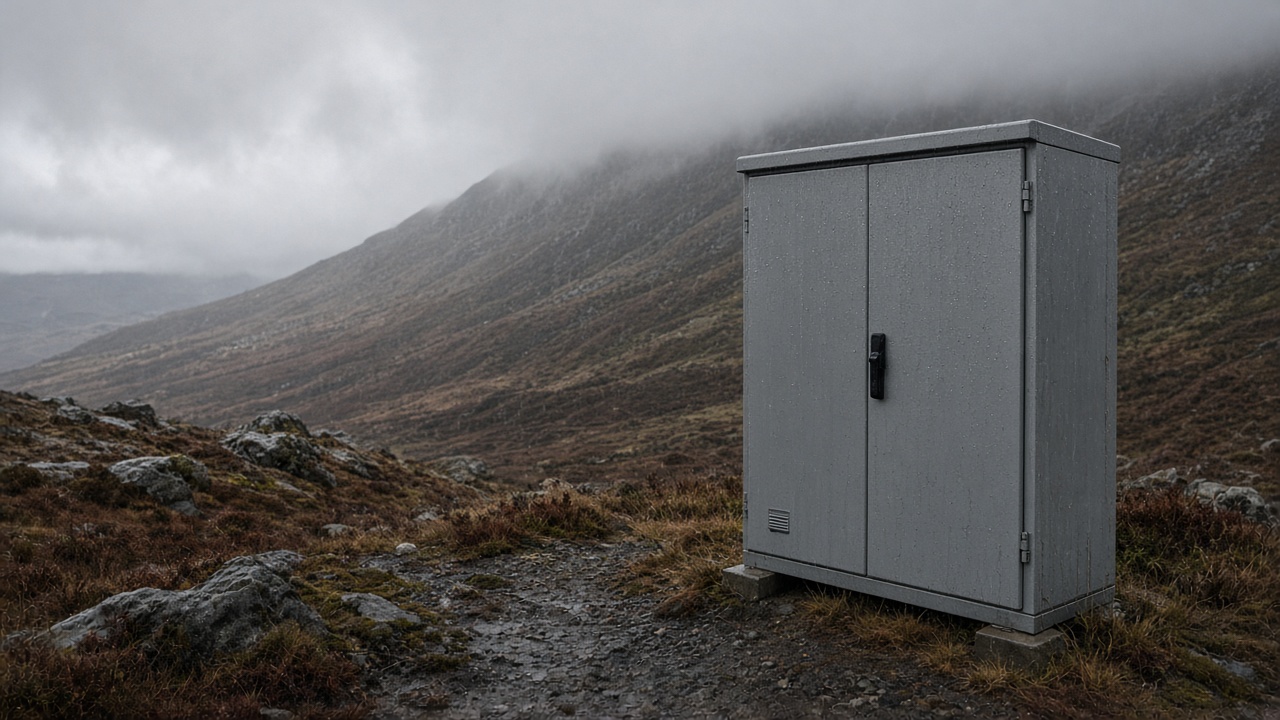
EE has mapped dedicated voice-over-5G priority lanes for emergency hubs serving the Cairngorms, a move that ties the operator’s Voice over New Radio rollout to mountain rescue coordination rooms and NHS winter clinics that still lean on patchy 4G fallbacks. Network engineers at BT Group published internal slicing templates Friday showing how VoNR bearers will pre-empt consumer traffic when hubs dial 999 or patch helicopter medevac calls, without waiting for legacy circuit-switched routes.
Why the Cairngorms first
The national park’s rescue teams answer hundreds of winter call-outs where seconds of setup time matter. EE’s earlier 4G work on Cairn Gorm itself proved demand at altitude; VoNR promises faster call establishment when standalone 5G reaches Aviemore and Glenmore corridors. Scottish Mountain Rescue representatives said they were consulted on hub lists—not every bothy gets a slice, but staffed bases with ESN backhaul do.
Home Office Extended Area Service masts upgraded under the Shared Rural Network already carry commercial 4G from all operators; EE’s update clarifies that VoNR will ride those sites where radio heads support 5G SA. DSIT-funded upgrades near Braemar and Tomintoul appear on the priority map, aligning with government messaging that rural Scotland needs reliable emergency dialling, not just tourist Instagram uploads.
What “priority lanes” mean in practice
Network slicing here is narrower than enterprise marketing slides. EE assigns a guaranteed QoS class to identified SIM ranges used by hub handsets and push-to-talk gateways, keeping VoNR sessions on 5G instead of dropping to VoLTE on congested LTE carriers. Consumer phones in the same cell still get 5G data, but during hub incidents the scheduler favours the emergency bearer set.
Ofcom’s net neutrality framework allows reasonable traffic management for public safety; EE’s regulatory affairs team filed a short notification describing the carve-out. Rivals O2 and Vodafone can attach their own hub SIMs if they roam onto EE’s rural footprint—important because mountain teams carry mixed kits.
Device and coverage gaps
VoNR requires 5G SA coverage, compatible handsets, and EE’s updated carrier profiles—iPhone 15-series and selected Samsung flagships per EE’s support pages. Hubs that still issue older rugged 4G phones will voice-call over VoLTE until replacements arrive; EE said a bulk procurement window opens with Scottish Government resilience funds in October.
Standalone 5G is not yet geographic in the Cairngorms the way 4G is; Aberdeen and Dundee already have SA, while park interiors depend on forthcoming mast swaps. EE reiterated its spring 2026 population coverage target but conceded mountain geography may miss that clock—priority lanes activate only where SA is live, preventing false confidence at trailheads.
ESN and mountain rescue choreography
The Emergency Services Network transition away from Airwave still shapes rural planning. ESN relies on 4G bearers today; VoNR is a parallel upgrade path for hub buildings with fixed antennas. Mountain rescue coordinators in Badenoch said sliced bearers could keep patch calls alive when summer festival crowds saturate Glenmore campsites—exactly the congestion VoNR marketing cites for city centres, but here the stakes are hypothermia timelines.
Police Scotland’s north division reviewed the hub list for overlap with existing TETRA fallback; sliced 5G does not replace TETRA on summits, but it stabilises valley coordination centres that dispatch helicopters.
Commercial and political context
BT investors track VoNR as a churn-reducer in cities; rural priority lanes are partly a political down payment after criticism that 5G marketing skipped Highland communities. Scottish Secretary Ian Murray’s office welcomed the hub map without new funding—operators argue SRN capital already paid for mast steel.
EE competitors grumble privately that BT gets ESN halo credit, yet all four MNOs share upgraded masts. Openreach backhaul upgrades in Aviemore exchange rooms underpin the SA core links; any fibre cut still kills slices, a limitation rescue trainers emphasise in exercises.
What teams should test now
EE is offering hub technicians a September drive-test window with loan 5G SA handsets and logging apps. Success criteria include sub-two-second ring times versus current VoLTE metrics on the same masts, and no silent drops when data-heavy social traffic spikes nearby. Failure sends hubs back to 4G-only playbooks until radio swaps finish.
For walkers, nothing visible changes yet—no new apps, no public slice signup. The operational shift sits inside coordination rooms and NHS winter pressure clinics preparing for October storms. If Friday’s maps hold, the Cairngorms become EE’s reference site for proving VoNR is not just a city convenience feature but a mountain rescue tool—provided the standalone footprint catches up before the snow line drops.