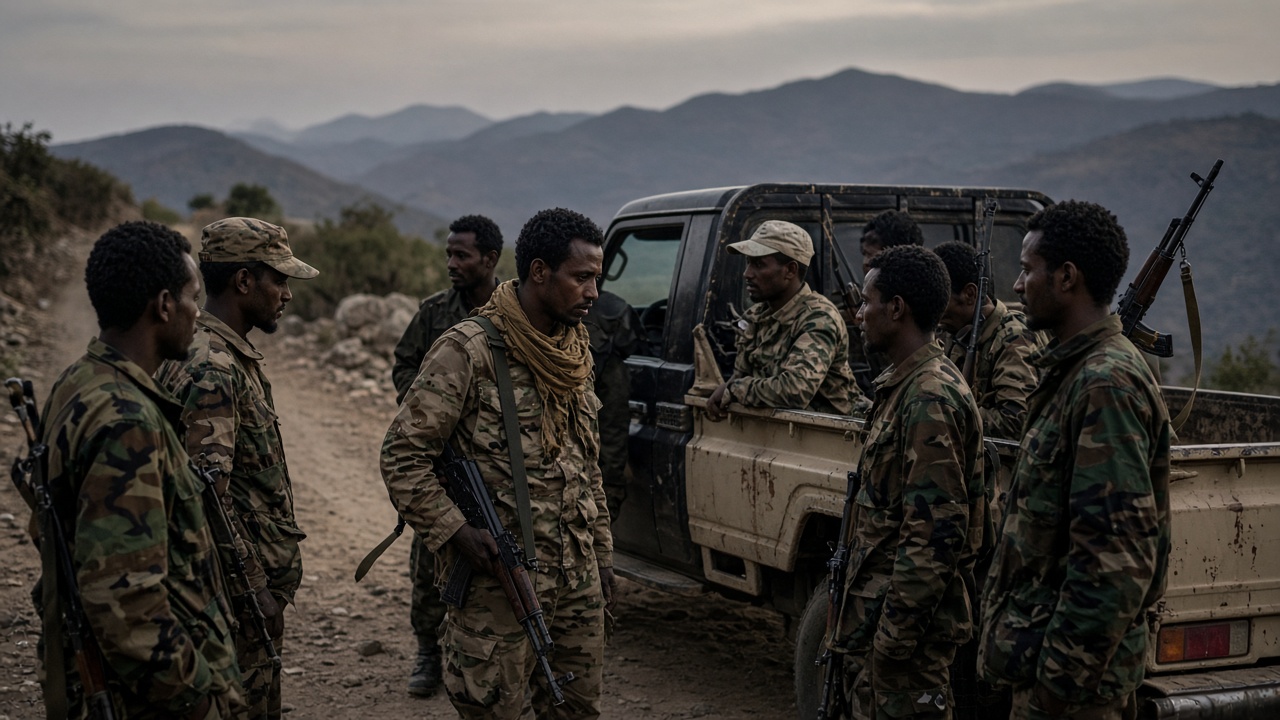
Seven Ethiopian armed and political movements announced late Sunday that they had formed the Ethiopian Peoples’ Forces Alliance for Survival, a joint front that aims to remove Prime Minister Abiy Ahmed’s Prosperity Party government and install an inclusive transitional administration under a written charter. The declaration brings together the Tigray People’s Liberation Front and Amhara Fano factions that fought on opposite sides of the 2020–2022 civil war, along with five other groups spanning Oromia, Somali, Afar, Benishangul-Gumuz and Gambela.
In a statement dated September 20, the alliance said its members would coordinate “popular and organizational capacities” to end what they called a personalist, dictatorial system and to guarantee the survival of Ethiopia’s nations and nationalities. Federal spokespeople did not immediately comment; an adviser to Abiy said last month that any such coalition would spread havoc but could not topple the central government.
Who signed and what they want
The signatories are the Amhara Fano National Movement, the Oromo Liberation Army, the TPLF, the Ogaden National Liberation Front, the Afar Revolutionary Democratic Unity Front, the Benishangul Peoples’ Liberation Movement and the Gumuz Peoples’ Democratic Movement. They said their first objective is collective self-defense against wars they blame on Addis Ababa, followed by a transitional chapter that protects human and democratic rights without “diminution.”
The charter framework they outlined would prioritize ending active conflicts, restoring security, easing poverty and displacement, and holding a broad national dialogue. Members pledged to settle their own territorial and political disputes peacefully and through the “freely expressed will” of their peoples—a significant commitment given ongoing clashes between some of the same forces in Tigray and Amhara in recent months.
Pretoria’s shadow
The alliance lands at a moment when the 2022 Pretoria agreement between the federal government and Tigray’s leadership remains only partly implemented. Disarmament, political status for the TPLF, and contested western Tigray territory still fuel distrust. Federal forces and Fano militias have traded fire in Amhara since 2023, while the OLA continues operations in Oromia. By folding these campaigns into one named bloc, the groups are signaling to donors, neighbors and their own fighters that Abiy—not each other—is the primary target.
Abiy’s Prosperity Party retained a dominant parliamentary majority in June elections the opposition boycotted or could not contest nationwide. The new front does not yet describe a military command structure, revenue sharing or a timeline for transition, leaving open how much battlefield coordination will follow the press release.
Regional stakes
Ethiopia anchors the Horn of Africa’s security and trade routes to the Red Sea. Renewed multi-front violence would complicate mediation led by the African Union and worry Egypt and Sudan, which already dispute Nile waters and border security with Addis Ababa. Western capitals have pressed for humanitarian access and a return to constitutional politics; Sunday’s alliance gives armed opponents a single political label to cite in those conversations.
For Abiy, the challenge is procedural as much as martial: holding the army and regional administrations together while opponents who once refused to sit in the same room now share a transitional blueprint. Whether the Alliance for Survival can enforce discipline among its members will determine if the announcement becomes a negotiating lever—or another spiral of war.