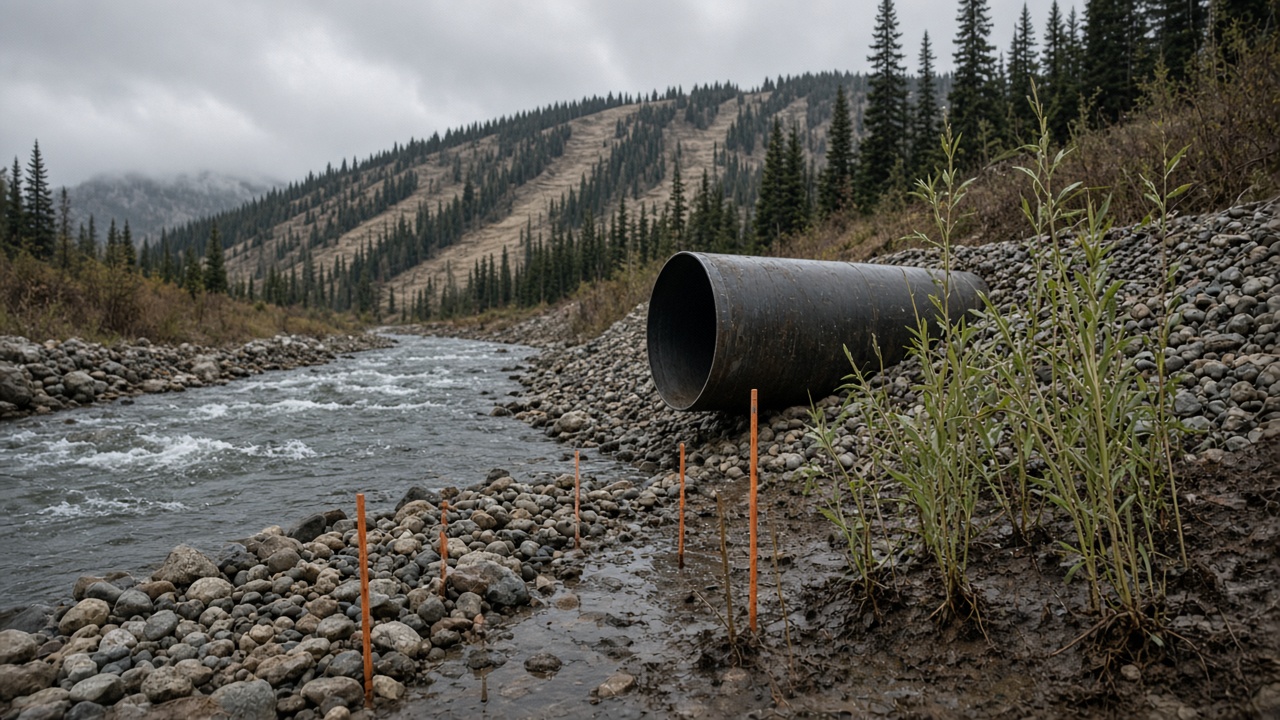
Gangwon Province’s environment office is planting native riparian buffers and placing coarse woody debris above stream intakes that feed Yongpyong-area snowmaking ponds, responding to surveys that map Korean clawed salamander streams within a kilometer of ski-run water draws. The work does not halt October snowmaking; it tries to keep cold, oxygen-rich headwaters intact while resorts race to open before natural snowfall thins.
Why salamanders and snowmaking collide here
Onychodactylus koreanus inhabits cool mountain valleys along the Baekdudaegan spine, relying on skin respiration and clear water—traits that make climate shifts and habitat disturbance acute. Species-distribution models published in peer-reviewed journals predict steep habitat loss under warming scenarios, with high-elevation Gangwon forests among the last dense pockets.
Ski resorts around Daegwallyeong already depend on artificial snow as natural snowfall days decline; geography journals documenting Yongpyong show shrinking windows when daily minimums and humidity jointly suit first-season snow guns. Intake pipes pull from the same small tributaries salamanders use for breeding movement.
What the province is planting
Contractors this month seeded sedges and willow whips on ten-meter setbacks above three intake weirs, adding root wads and boulders to slow storm runoff that previously sent sediment toward gun lines. Biologists from provincial parks joined eDNA teams who monitor limestone cave populations elsewhere on the east coast, adapting buffer widths to slopes where machines cannot enter without closing ski service roads.
Resort operators signed a memorandum to delay intake maintenance draws during documented larval movement weeks in spring; autumn work focuses on shade planting before guns test in late October.
Hydrology staff mapped intake head loss so snow guns can run at lower draw rates on test nights, trading slightly longer pump hours for steadier riffle depth below the weirs.
Regulatory and park context
Nearby Seoraksan and Odaesan national parks already protect portions of salamander range, yet modeled refugia extend beyond park boundaries. Environmental groups argued Olympic-era slope cuts never fully restored stream shade; the buffer project is a narrower, intake-specific fix rather than a lift-line rollback.
Climate projections for Daegwallyeong suggest fewer sub-minus-one-degree nights for first snowmaking and tighter humidity bands for mid-season reinforcement—pressures that push more water through the same intakes each autumn.
Provincial legislators asked for public dashboards linking gun test schedules to turbidity spikes; environment staff promised monthly PDF summaries rather than live feeds to avoid tourist alarm.
Field monitoring
Volunteers from local hiking clubs photograph buffer plantings weekly so contractors cannot claim completion before roots establish; photos feed a GIS layer park rangers use when approving slope maintenance permits.
Salamander specialists note that buffers alone cannot offset warming streams but may buy time for upstream spring protection already funded in adjacent county budgets.
What happens next
Provincial monitors will sample turbidity and conductivity above and below intakes through the first gun tests, sharing results with resort water managers before Christmas peak. If salamander eDNA drops in downstream riffles, engineers may relocate one intake screen landward. For now the story is willow whips, root wads, and Gangwon trying to keep lungless salamanders in streams that also feed snow guns.
Ski-area marketing teams agreed not to use buffer planting footage in lift-ticket ads until biologists sign off, avoiding greenwash claims while snow guns still draw from the same watershed.