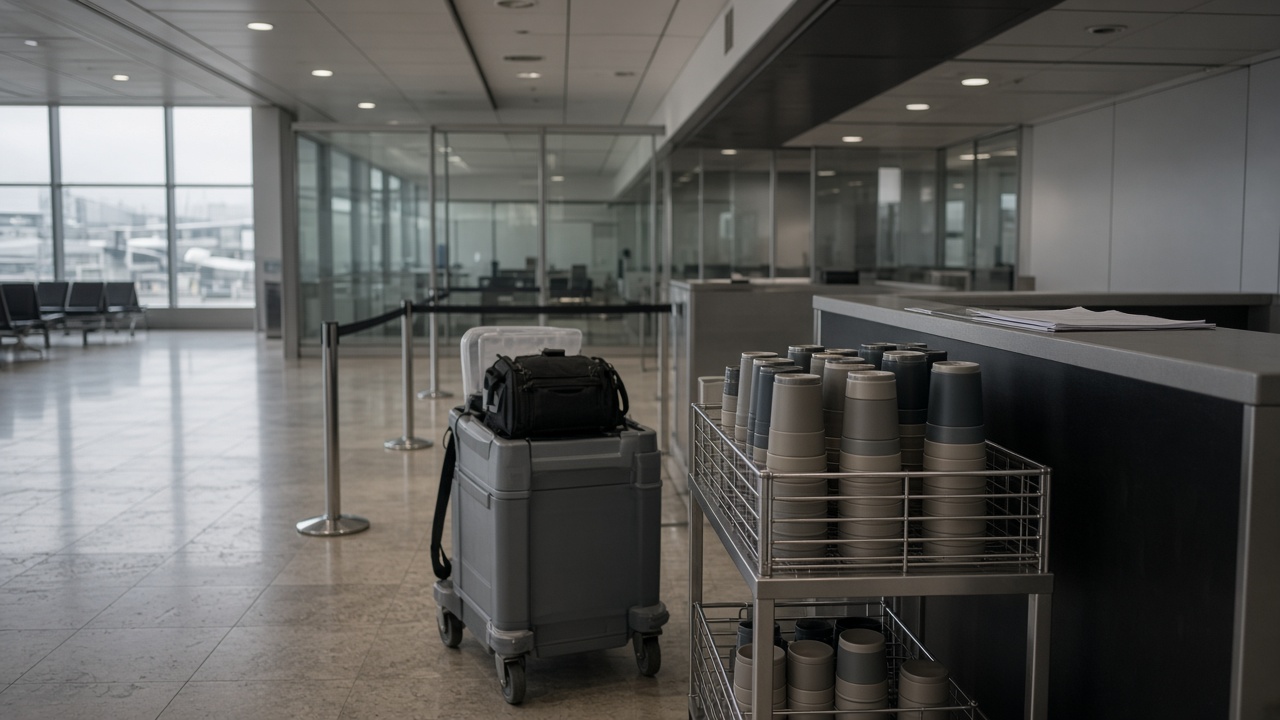
Gatwick Airport and easyJet began a four-week trial Monday on South Terminal quick-turn stands where passengers buy hot drinks in reusable cups linked to a single RFID tag on their mobile boarding pass, returning empties to racks scanned at the gate before boarding so cabin crews face fewer disposables during 25-minute turnarounds, according to a joint operations note distributed to ground handlers and reviewed by InfoHandle. Deposits are £1, refunded to the card used at purchase when the cup hits the rack reader—no app wallet required beyond the airline’s existing boarding-pass QR.
Why turnarounds drove the design
easyJet’s Gatwick waves concentrate departures before 9 a.m. and after 4 p.m.; catering trucks often skip second rubbish pulls to protect block times. Disposable cups clogged galley bins on short sectors to Edinburgh and Belfast, forcing cleaners to sprint. Reusable cups with one-tag tracking let gate staff see which passengers still hold cups when final boarding calls; the tag is not a surveillance beacon—it deactivates at pushback.
How the deposit works in pounds
Buy at participating Pret and Costa airside franchises; baristas encode the same tag used at the gate rack. Lose the cup and you lose the deposit—airport charity bins are not counted. Refunds post within three days on debit cards, seven on some credit issuers. Children’s drinks can ride on a parent’s pass; one tag per boarding pass keeps reconciliation simple for handlers.
Waste and regulation context
UK single-use plastic rules already squeeze stirrers and cutlery; airports face separate waste contracts with energy-from-waste gates. Gatwick’s sustainability report last year flagged cup contamination in recycling streams. This trial measures weight diverted per turnaround, not passenger virtue. Civil Aviation Authority guidance on cabin safety still bars loose mugs during taxi; cups must be stowed or returned before doors close.
What is open and what is not
Only South Terminal easyJet gates in the trial map published airside—not North Terminal, not long-haul. If RFID readers fail, staff fall back to paper deposit slips; Monday’s memo warned of teething errors. Disabled passengers who cannot reach floor-level racks can hand cups to gate agents for manual scan.
Airport retailers said they will not raise drink prices during the trial; the £1 deposit is separate from VAT-inclusive menu boards. Ground handlers union reps asked for a clear rule on who washes cups—central dish units at the terminal, not cabin crew—and Gatwick agreed in writing after a Monday safety briefing.
Travellers on a Tuesday easyJet hop should load the boarding pass before buying coffee, keep the cup until the gate rack beeps green, and expect refunds after the flight—not at the kiosk. Whether the trial survives winter schedules depends on seconds saved on cleaning logs. For now, Gatwick South is testing one-tag reusables with real deposits, tied to turnarounds that already run tight.