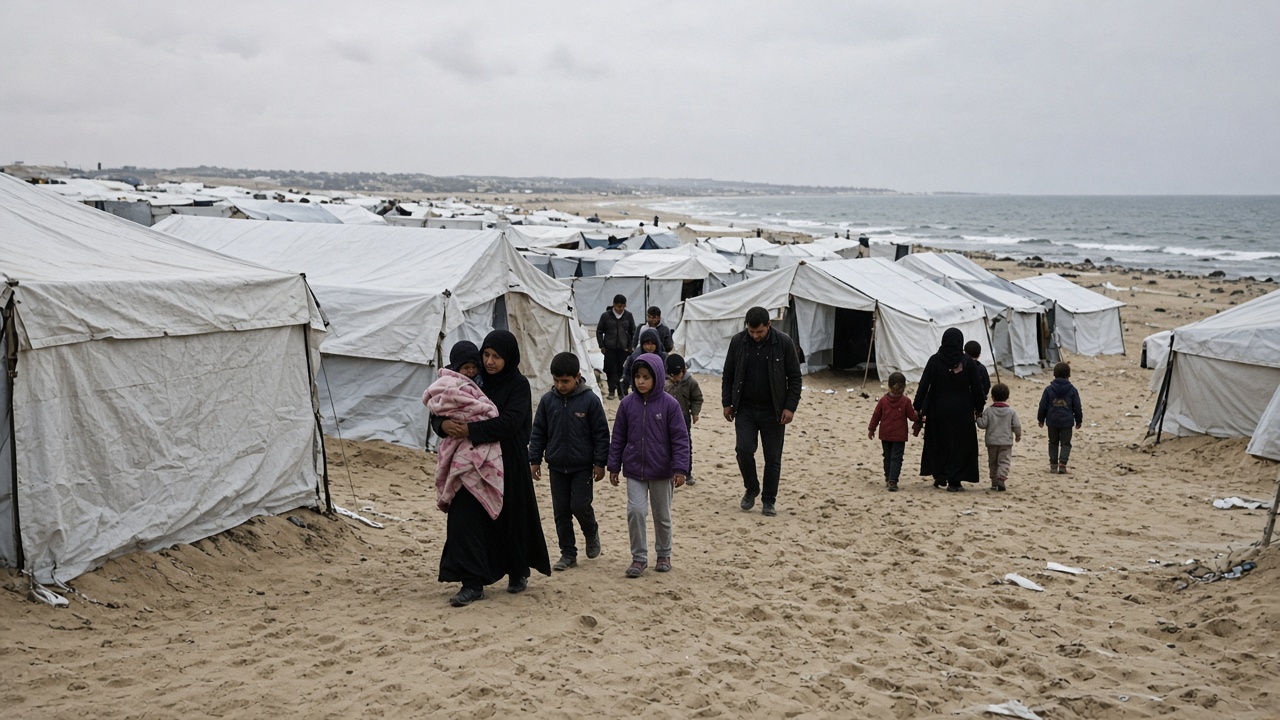
Gaza health officials said Israeli fire killed three Palestinians on Monday, including 11-year-old Ismail al-Bardawil, as gunfire and shelling across the enclave added fresh pressure to a ceasefire that has never fully stopped lethal violence. Medics at Nasser hospital in Khan Younis said the boy’s body arrived after Israeli tanks opened fire on tents for displaced families in al-Mawasi, the coastal strip west of Rafah that Israel has repeatedly described as a humanitarian zone.
Al Jazeera, citing sources at Nasser Medical Complex, said al-Bardawil was among civilians targeted in al-Mawasi while forces also fired in other parts of southern Gaza. Civil defence spokesman Mahmoud Bassal told international agencies the child was 11. Several other people were wounded in the same area, according to hospital and rescue accounts reviewed Monday.
Shootings from north to south
The day’s toll was not confined to al-Mawasi. In central Gaza, officials at Al-Awda hospital said 31-year-old Fidaa Toutah died from wounds sustained after Israeli forces shot her on Salah al-Din road east of the Nuseirat refugee camp. In the north, medics at Al-Shifa hospital reported that Mohsen Ahmed Bahjat was killed by a drone strike in Jabalia. Gaza’s civil defence agency confirmed the three identities to reporters and said teams transported nine wounded people following Israeli fire in Khan Younis and the Bureij camp.
WAFA, the Palestinian news agency, said fatalities since the October 2025 ceasefire announcement had climbed past 1,390 killed, with thousands more injured—figures that underscore how exchanges of fire have continued even when major bombing waves eased. Israeli military statements on individual incidents are often delayed; the Israel Defense Forces did not immediately publish a detailed account of Monday’s shootings in the sources reviewed by InfoHandle.
Al-Mawasi under fire
Displaced families have crowded into al-Mawasi for more than a year, living in plastic shelters within sight of the Mediterranean while Israeli units maintain positions nearby. Monday’s tank fire toward tent clusters fits a pattern aid groups have documented since the truce: shootings and localized strikes in areas where civilians were told to relocate. Rescue workers said al-Bardawil was struck in the chest before succumbing at Nasser hospital.
Parents and neighbours who brought the boy’s body described a sudden burst of fire toward people gathered between shelters, a scene repeated often enough that UN officials have warned “safe zones” provide limited protection when military vehicles operate at close range. The shootings landed on the same calendar day hundreds of thousands of Gaza children were attempting to return to improvised classrooms after nearly three years without regular in-person schooling, a milestone Reuters reported from Cairo and Gaza even as insecurity persisted.
Ceasefire strain and humanitarian risk
Nearly a year after the October 2025 agreement, OCHA said civilians still face life-threatening risks from ongoing attacks, restrictions on supplies, and the fragility of damaged infrastructure. The UN office’s mid-September reporting highlighted a collapsed residential building in Gaza City that killed 21 people, including a dozen children, while search teams lacked heavy machinery—context that explains why families in tents fear not only gunfire but also unstable ruins nearby.
Reuters noted that reconstruction has barely started and that most structures are damaged or destroyed, leaving displaced households dependent on aid corridors that remain politically contested. For mediators in Cairo and Doha, Monday’s triple fatality is another data point in negotiations over troop withdrawals and hostage releases that have stalled while localized violence continues. For al-Bardawil’s family, the immediate question is burial and shelter, not the diplomatic calendar—but each new child killed in al-Mawasi makes the ceasefire harder to defend to a population that was told the guns would quiet.