A U.S. Immigration and Customs Enforcement officer shot Wilber Rafael Garces Perez, a 28-year-old Venezuelan man working a DoorDash delivery route, during a traffic stop in north Austin on Sunday afternoon, sparking street protests and a federal use-of-force investigation led by Homeland Security Investigations. Local medics said Garces Perez was wounded once in the torso; his attorney said the bullet entered his back and remained lodged near his spine when he was later moved from hospital to ICE detention.
Austin police Chief Lisa Davis told reporters city officers were not involved in the enforcement action and arrived after the shooting to secure the scene. Texas Department of Public Safety spokesperson Sheridan Nolen said ICE requested help pursuing a blue Toyota Corolla around 12:50 p.m. local time, but state troopers reached the area only after the gunfire. Austin-Travis County EMS treated Garces Perez before he was hospitalized in serious but stable condition, according to city officials who spoke alongside the mayor Sunday evening.
Account of the stop
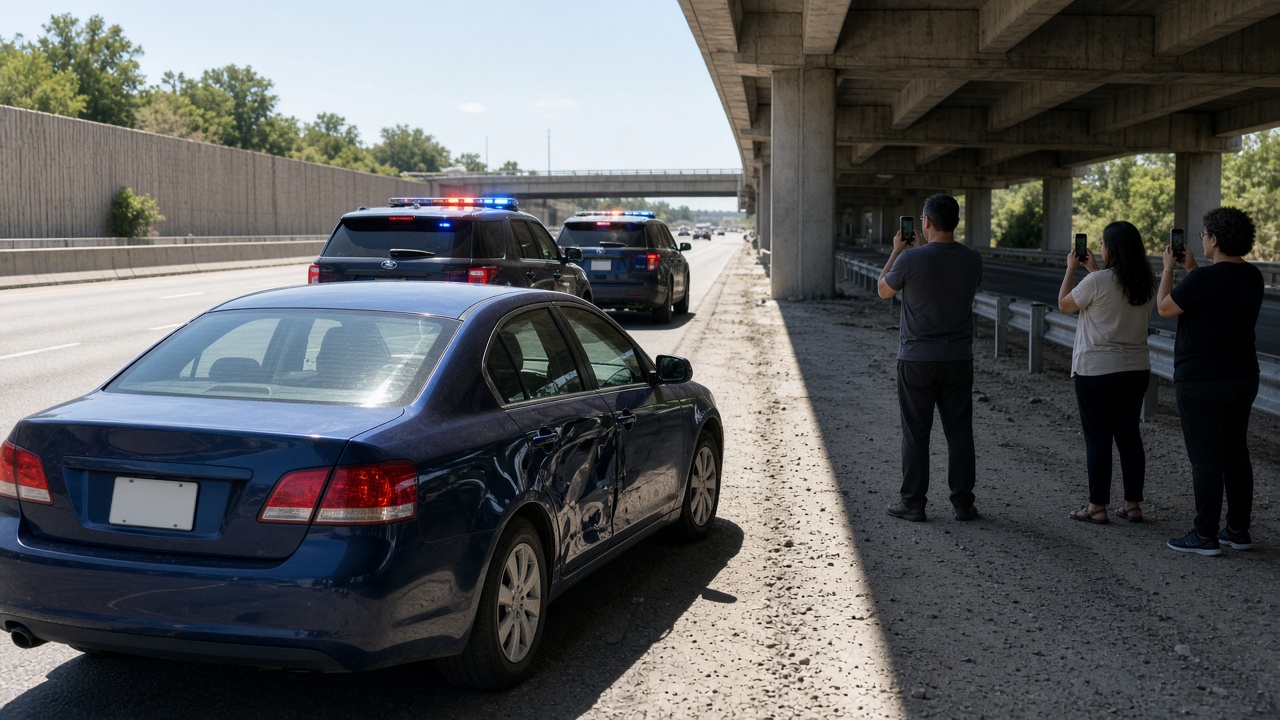
Immigration attorney Kate Lincoln-Goldfinch, who represents Garces Perez and his wife, said he was completing a delivery when an unmarked SUV sideswiped his vehicle twice before agents activated lights and sirens. Garces Perez told reporters via phone from detention Monday that he attempted to pull over under a freeway underpass, asked to move to a safer location, and was shot once in the back when he complied. Video circulated online appears to show an officer firing toward the car; The Guardian reported the vehicle later displayed a large dent on the passenger side.
The Department of Homeland Security said in a statement that Garces Perez “illegally entered” the United States during the Biden administration and had a final removal order from an immigration judge. Lincoln-Goldfinch countered that her client entered in 2024 through the CBP One appointment system at a port of entry, held a work permit, and was pursuing asylum, but missed a hearing after a notice was mailed to an old address, producing an in-absentia deportation order he learned about only after the shooting. Both narratives will be tested as HSI and the FBI gather body-camera footage, radio traffic, and witness statements.
From hospital to detention
PBS, carrying Associated Press reporting, said Garces Perez was transferred Monday to the South Texas ICE Processing Center in Pearsall, roughly 130 miles southwest of Austin, while the bullet remained in his body. His wife was not immediately informed when he left Dell Seton Medical Center, according to the attorney’s spokesperson, who said hospital lawyers called around 6 p.m. Sunday to say he had been discharged into federal custody 90 minutes earlier. Garces Perez told his lawyer he was in pain without medication while being questioned in detention.
Rep. Greg Casar, whose district includes part of Austin, wrote on social media that deporting the wounded man would remove a key witness to the shooting. Mayor Kirk Watson, a Democrat, called for Austin police to participate in reviewing evidence so the city has “clear, third-party eyes,” even though local officers did not fire the weapon. DHS said the man remained in federal custody pending removal, language that alarmed civil-rights groups monitoring whether medical clearance was adequate before the transfer.
Protests and the federal probe
Anti-ICE demonstrators gathered near the shooting site Sunday afternoon, AP reported, chanting as federal vehicles departed. Austin has seen intensified immigration enforcement for months; Sunday’s gunfire converted a routine traffic stop into a political flashpoint over whether ICE agents should conduct pursuits in dense urban corridors. HSI’s leadership of the investigation is standard when a shooting involves Homeland Security personnel, though local prosecutors may later review whether state criminal charges are appropriate once federal fact-finding concludes.
The officer involved was placed on administrative leave, according to CBS News citing law enforcement sources, while internal affairs panels review deadly force. For Garces Perez’s family, the fight is medical care and staying in the United States long enough to testify. Federal officials must decide whether the agent reasonably believed lethal force was necessary during the pursuit. Until DHS releases video, Austin weighs a deportation order on paper against a wounded driver’s account from a DoorDash route interrupted by gunfire.