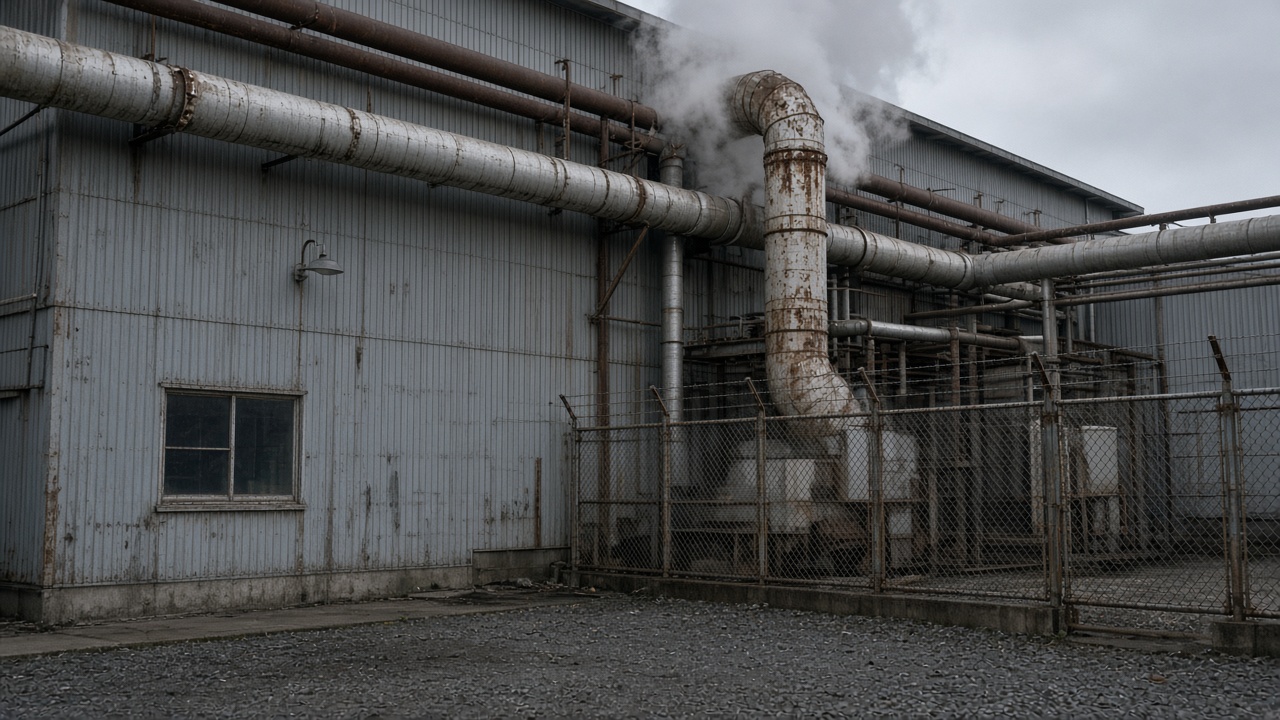
IHI Corporation’s Ishikari Works has booked a retrofit contract to supply ammonia co-firing hardware for a Hokkaido paper mill’s existing boiler, turning a shop-floor heat plant into one of the northern island’s nearer-term decarbonization pilots while national ammonia fuel policy remains mostly slide-deck for smaller manufacturers.
Who made the call
Mill executives and IHI project managers signed off this month on a phased retrofit that keeps the mill’s steam header online while burners accept rising ammonia blend ratios, according to people familiar with the shop talks. The paper maker—operating on forestry residuals and grid power for auxiliary loads—faces customer scope pressure on carbon footprints without capital for an entirely new biomass line.
Ishikari Works managers told internal teams the package combines burner modifications, ammonia skid interfaces, and safety interlocks the site already partially studied during METI-funded feasibility work. Workers on the mill floor heard a September toolbox talk emphasizing that co-firing trials will start at low ammonia percentages before any ramp toward policy targets, with overtime scheduled around planned autumn maintenance rather than peak paper runs.
What employees heard that investors did not
Union stewards at the mill asked how ammonia deliveries would interact with winter road closures on Hokkaido coastal routes; logistics planners answered that tanker slots would mirror existing heavy fuel deliveries with added scrubber checks, not a separate midnight convoy. IHI field engineers said ammonia leak detection drills would run monthly—frequency higher than for fuel oil—but did not circulate those details in Tokyo investor briefings.
Younger maintenance techs will train on ammonia valve trees at Ishikari Works before deployment, a skills transfer the paper mill cannot staff alone. IHI’s HR desk counted the contract as protected hours for Ishikari fabrication bays that lost volume when offshore module orders slowed last year.
Strategy as headcount
For IHI, the retrofit is a template fight: replicate burner packages across pulp and food plants with similar boiler vintages, or stay bespoke on each Hokkaido site. Ishikari Works leadership chose a modular skid design so duplicate orders do not require Tokyo R&D sign-off on every gasket spec—a shop-floor autonomy play James Hart’s lens tracks when “strategy” means welders have a backlog into winter.
Corporate energy segment slides mention ammonia turbines and shipping; Ishikari’s near-term margin is industrial boilers for customers who cannot wait for green hydrogen grids. Competitors pitching electrified dryers lost this round on uptime guarantees during Hokkaido’s heating season.
METI policy backdrop
METI’s fuel ammonia roadmap frames co-firing in existing thermal plants as a bridge technology, with subsidies and safety rule updates still rolling out. The paper mill’s pilot aligns with prefectural biomass promotion narratives—local forestry waste for pulp, imported ammonia for heat decarbonization—without requiring a new pipeline across Ishikari Bay.
Regulators have not finalized every onsite ammonia storage threshold for rural mills; the project team filed preliminary hazard assessments citing IHI’s prior co-firing demos at research furnaces. Environmental groups in Sapporo asked for public disclosure of ammonia sourcing; the mill committed to a community briefing after burner commissioning, not before equipment ships from Ishikari.
What the shop does next
Fabrication at Ishikari Works starts with burner assemblies and control panels, followed by site installation during a two-week outage window the mill reserved for October. If steam quality holds at ten per cent ammonia blend, engineering will request permission to test fifteen per cent—steps that must be logged for METI pilot registries even when no subsidy check arrives this fiscal year.
Failure modes are mundane: flame instability during humidity swings, or delayed ammonia cargoes when Kushiro port fog shuts berths. IHI project leads said rollback to full fuel oil must be operable within hours, a requirement paper-machine operators insisted on after 2024’s fuel price spike taught them to distrust single-fuel bets.
Quarter ahead
Investors will not see standalone revenue guidance for one Hokkaido boiler, but Ishikari order intake feeds IHI’s energy infrastructure narrative ahead of earnings calls. If the retrofit finishes on schedule, IHI sales teams will pitch two more northern pulp lines before fiscal year-end—a pipeline that only moves if shop workers at Ishikari Works keep fabrication bays staffed through Hokkaido’s early snow season.