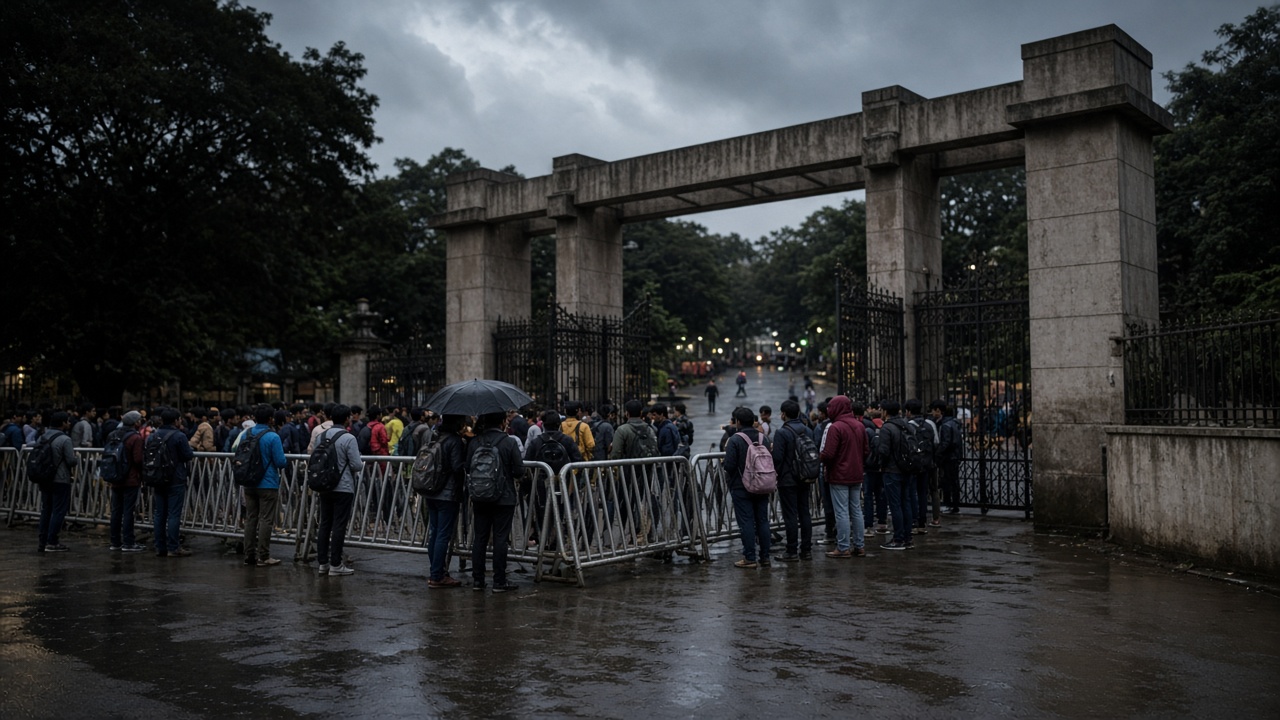
The Indian Institute of Technology Bombay removed Dean of Administrative Affairs Suryanarayana Doolla on Monday and issued a public apology for its earlier communication about the death of second-year student Sahil Wakode, as the Mumbai Police Crime Branch took over a probe that has drawn thousands of protesters to the Powai campus. Wakode, 20, was found dead in his hostel room on Friday evening hours after invigilators alleged he used a mobile phone during a mid-semester examination.
His family from Yavatmal district in Maharashtra refused for hours to claim his body, demanding arrests and alleging caste-based harassment and institutional pressure. Police eventually assigned an assistant commissioner to the case; Wakode’s final rites were performed in his home village on Sunday while demonstrations continued around the main gate, where officers deployed barricades and roughly 150 personnel.
What the institute changed on Monday
In a statement, IIT Bombay said Doolla was relieved of administrative duties “with immediate effect” pending the inquiry. The board did not confirm reports that Director Shireesh Kedare had offered to resign to protesters late Sunday, saying Kedare remained in office and would cooperate with investigators. The institute asked students and alumni to avoid speculation while the Crime Branch reviews CCTV footage and seized Wakode’s phone.
Faculty members had faced criticism for telling media that Wakode admitted cheating before his death—a characterisation his parents called defamatory without a completed inquiry. Monday’s apology acknowledged that the earlier note “caused distress” and pledged transparency with the family and police.
Legal tracks open
Police registered a case that includes provisions for abetment to suicide and, according to local reports, the Scheduled Castes and Scheduled Tribes (Prevention of Atrocities) Act. No faculty member had been arrested as of Monday afternoon; Crime Branch officers said they were interviewing examination staff and hostel wardens.
Youth Congress workers who joined the campus protest were detained outside the gate on Sunday night. Student organisers said turnout swelled to about 6,000 by evening, with chants demanding accountability and safer examination procedures for first-generation learners from rural districts.
Why the case resonates beyond Powai
IIT Bombay sits at the apex of India’s technical education ladder, and admission from a small-town Marathi-medium school is a household dream. Wakode’s death has reopened debates about how elite campuses handle academic dishonesty accusations, mental-health support and caste dynamics in hostels where few grievance officers are independent of administration.
Union Education Ministry officials have not commented publicly; Maharashtra’s higher education department said it was monitoring the investigation. For now, mid-semester exams continue on a staggered schedule while security remains tight. The Crime Branch’s findings—whether misconduct charges, procedural failures or neither—will determine if Monday’s administrative shake-up is prelude to criminal charges or the closing chapter of a tragedy that already forced one of India’s most prestigious schools into a rare public reckoning.