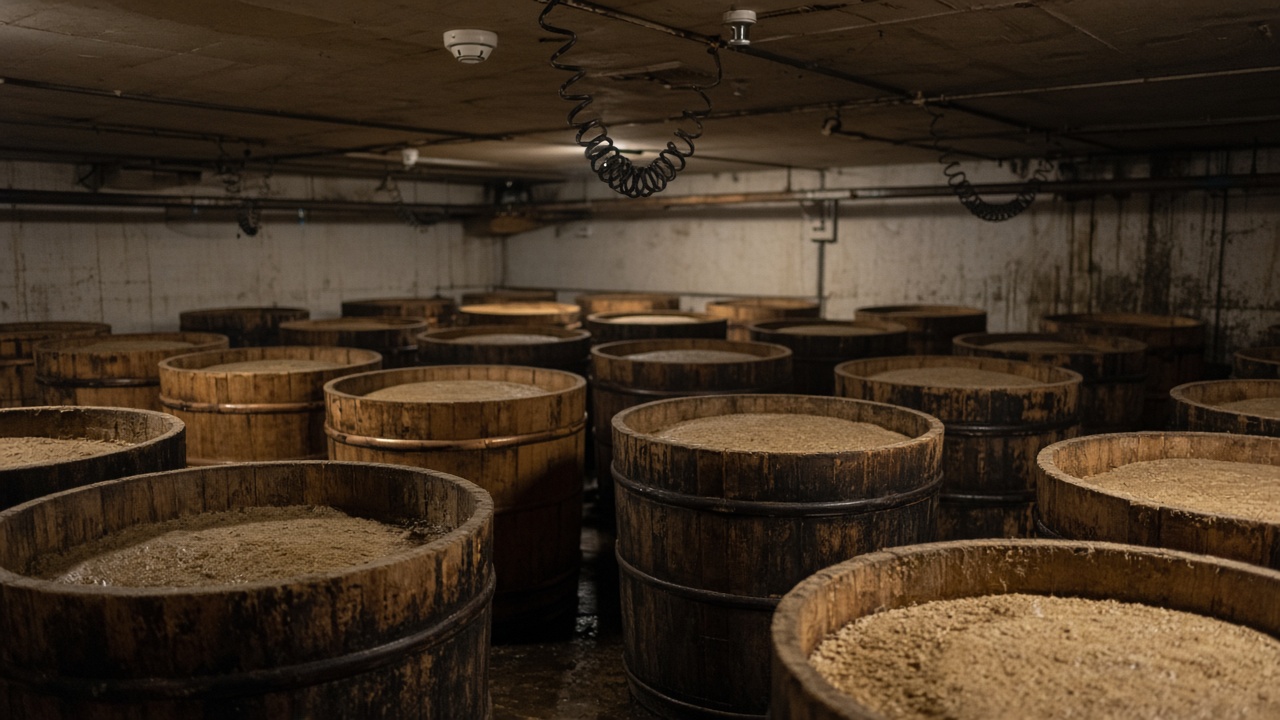
A Kanazawa fermentation lab secured an Ishikawa prefectural grant to wire miso aging warehouses with humidity telemetry for export clients, selling data subscriptions to trading houses that underwrite shelf-life clauses on overseas supermarket contracts. The round is grant-plus-revenue-share, not venture hype—and it tests whether a twelve-person team can own humidity data without getting squeezed between brewers and trading-house lawyers.
Who owns what
Founders control fifty-eight percent; Kanazawa University’s collaborative lab holds eight percent via sensor IP; a trading-house consortium took ten percent in exchange for warehouse access and prepaid subscriptions; prefectural grant covenants convert to a two percent revenue kicker if export tonnage targets hit. Angel investors from local sake families own the remainder with no board seats.
Round, rescue, or PR valuation
No headline valuation—grant funding of ¥68 million covers hardware, not salaries entirely. Trading-house prepayments act like a rescue bridge after an earlier export deal collapsed when Los Angeles retail rejected a shipment over mold anxiety. Founders call it strategic capital, not distress, but term sheets include MFN clauses rare in grant-backed labs.
The business in one sentence
Charge trading houses for humidity and temperature proofs that keep miso export contracts from triggering penalty clauses when ocean humidity swings.
What shipped technically
Wireless loggers clamp to cedar vats and steel tanks, sampling relative humidity every ten minutes with calibrated probes traceable to prefecture meteorology standards. Edge gateways push encrypted batches to a portal trading houses access; brewers see only their sites, not competitors’ curves.
Kanazawa lab scientists model aging curves tying humidity variance to amino acid profiles—models trading houses cite when negotiating shelf-life extensions with U.S. buyers.
Power between brewers and traders
Brewers feared traders would use granular data to bargain down prices; contracts now cap how finely traders can share raw traces with retailers. Founders sit in the middle as neutral log keepers—a governance role investors like because it creates switching costs.
What if the next round does not exist
Grant runway lasts eleven months; trading-house subscriptions must cover payroll by summer or founders lay off two field engineers. Expansion to soy-sauce aging is designed but unfunded—a product line slide used in grant pitches more than sales calls.
Export warehouse economics
Overseas consolidation warehouses in Kobe and Yokohama joined the pilot, bridging Japan aging data with container staging humidity. Discrepancies between inland aging and port storage caused last year’s retail rejection; telemetry aims to pinpoint which leg breached contract bands.
Dilution and grant politics
Prefecture grants forbid offshore data processing without amendment; founders host on domestic cloud regions only—a cost premium SaaS competitors skip. University IP terms require open publication of sensor schematics after two years, worrying traders who wanted perpetual secrecy.
Revenue model
Subscriptions are per vat per month, discounted for cooperatives that bundle fifty-plus barrels. Hardware is leased; brewers return loggers if they churn—a capital discipline angels insisted on after watching IoT startups drown in unreturned gadgets.
Field risks
Salt crust on probes skews readings; field techs must scrape monthly—a labor line item grant budgets underestimated. Earthquake straps on gateways passed July drills; tsunami zones still lack backup power on two Noto cooperatives rebuilding from 2024 damage.
What investors could not verify
Lab claims telemetry cut contract disputes forty percent on pilot lanes; only three trading houses participated. InfoHandle found no audited export statistics—figures came from consortium slide decks.
Regulatory and food safety context
MAFF export guidance encourages traceability but does not mandate humidity dashboards; trading houses treat data as commercial insurance, not compliance. JETRO export desks list the lab in advisor calls without endorsing accuracy.
Next milestones
December shipments to U.S. West Coast clubs must include humidity certificates generated from the portal—first real revenue test. Failure reopens down-round talks with trading houses that already own equity, blurring investor and customer roles founders once vowed to separate.
For Ishikawa brewers, success means fewer destroyed containers. For the lab, it means grant money became recurring data revenue without surrendering majority control—if trading houses do not rewrite contracts to internalize logging themselves.