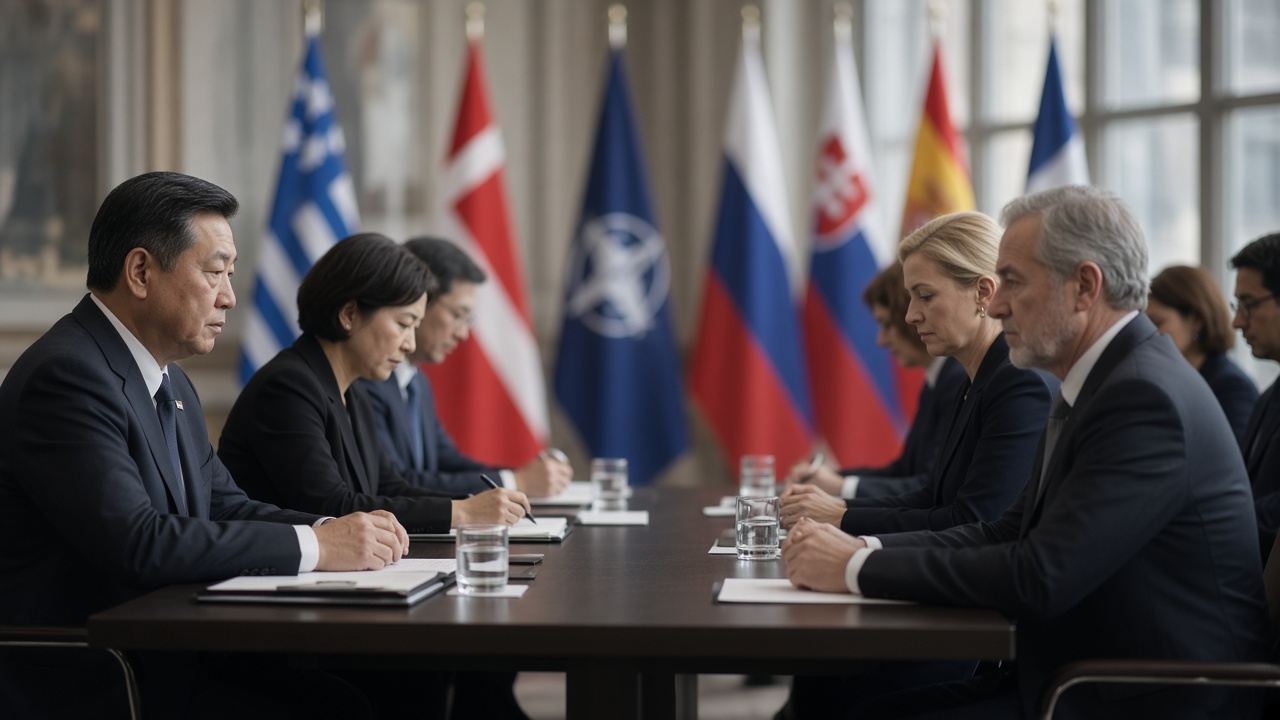
French President Emmanuel Macron said Monday that he and U.S. President Donald Trump agreed in New York to act jointly on Middle East energy security, including protecting freedom of navigation through the Strait of Hormuz and seeking a moratorium on strikes against energy infrastructure. Macron posted the outline on social media minutes after landing for the United Nations General Assembly, framing the bilateral huddle as a bid to drain tension from oil markets that have gyrated since Hormuz traffic slowed under wartime blockades and mine scares.
Parallel to the Macron-Trump readout, Qatar’s foreign ministry said mediators were shuttling proposals aimed at a short-term understanding between Tehran and Washington that could reopen formal negotiations. Iran International reported that Doha wants any pause to cover both military pressure and shipping disruption, because insurers and tanker owners will not treat diplomacy as credible while mines and missile threats still hang over the strait. The two tracks—Allied messaging from Macron and shuttle diplomacy from Doha—are not identical plans, but they share a clock: leaders begin the General Debate Tuesday with Brent still elevated and Hormuz largely closed to routine transit.
Hormuz moratorium language
Macron’s statement specified that France and the United States would “act together” to ease energy-market tensions by protecting critical infrastructure in the Middle East and safeguarding Hormuz navigation. He added that both capitals would pool efforts to secure a moratorium on strikes targeting energy assets—a line that also referenced Ukrainian civilian energy sites, linking the Gulf file to Macron’s parallel push on Russia’s war.
French diplomats told reporters that Paris is drafting a Security Council resolution to guarantee freedom of navigation through Hormuz, a follow-on to an April text Russia and China vetoed. Whether Trump will back a council product after preferring bilateral deals remains an open question; Macron described their conversation as “constructive” on both the Red Sea spillover and Ukraine interceptors. France24 noted Trump’s Tuesday UN speech is expected to defend the Iran war even as allies hunt for off-ramps—creating potential daylight between Washington’s podium rhetoric and the moratorium Macron advertised.
Qatar’s short ceasefire window
Qatari spokesperson Majed Al-Ansari said mediators had exchanged drafts for nearly two weeks, traveling between capitals to find language Iran and the United States could accept for a limited pause. The goal is not a permanent peace treaty but a breathing space: fewer strikes, calmer shipping lanes, and a table for talks that collapsed after earlier ceasefire memorandums unraveled. Iran International quoted officials saying restoring Hormuz traffic and removing the threat of new American attacks are preconditions Doha keeps raising with both sides.
Tehran’s public posture remains defiant, but back-channel traffic through Doha suggests interest in testing whether a measured pause could unfreeze Iranian assets and ease the naval standoff. Any ceasefire measured in days or weeks would still matter to Asian buyers scheduling October crude cargoes.
Rebuild fund and WSJ reporting
Separately, the Wall Street Journal reported that the Trump administration has proposed contributing $5 billion toward repairing damaged regional energy infrastructure, with eight Middle Eastern partners asked to match funds for a potential $10 billion pool. Iran International summarized regional skepticism: officials question whether reconstruction can start safely without a wider peace with Tehran, given the risk that freshly repaired terminals become targets again.
The fund idea complements Hormuz diplomacy. If Qatar secures even a short ceasefire, the fund could fold into a broader package on mines and phased reopening—though none of those details were nailed down in Macron’s Monday post.
Market and UN week stakes
Energy traders will parse whether Macron’s moratorium language translates into standing orders or aspirational text ahead of Trump’s speech. France speaks Tuesday alongside Brazil, the United States and Qatar.
For now, Macron and Trump left their first UNGA meeting aligned—at least on paper—to protect Hormuz shipping and pursue strike pauses on energy targets, while Qatar keeps working the shorter ceasefire that might make those promises enforceable. The next proof point is whether tanker trackers record unescorted transit, or whether the strait remains a talking point with no wake behind it.