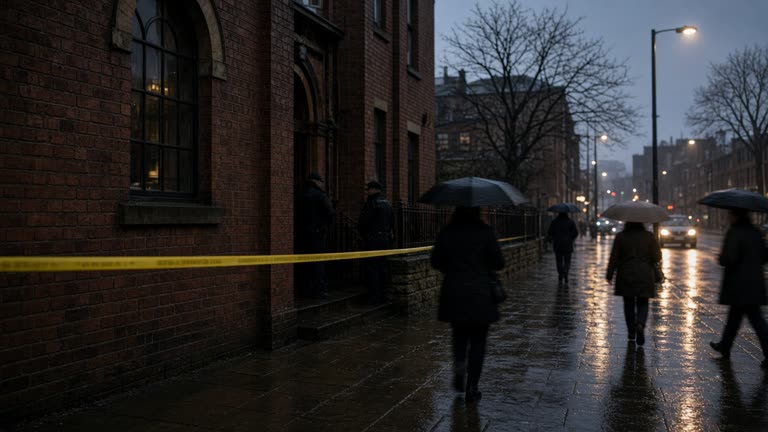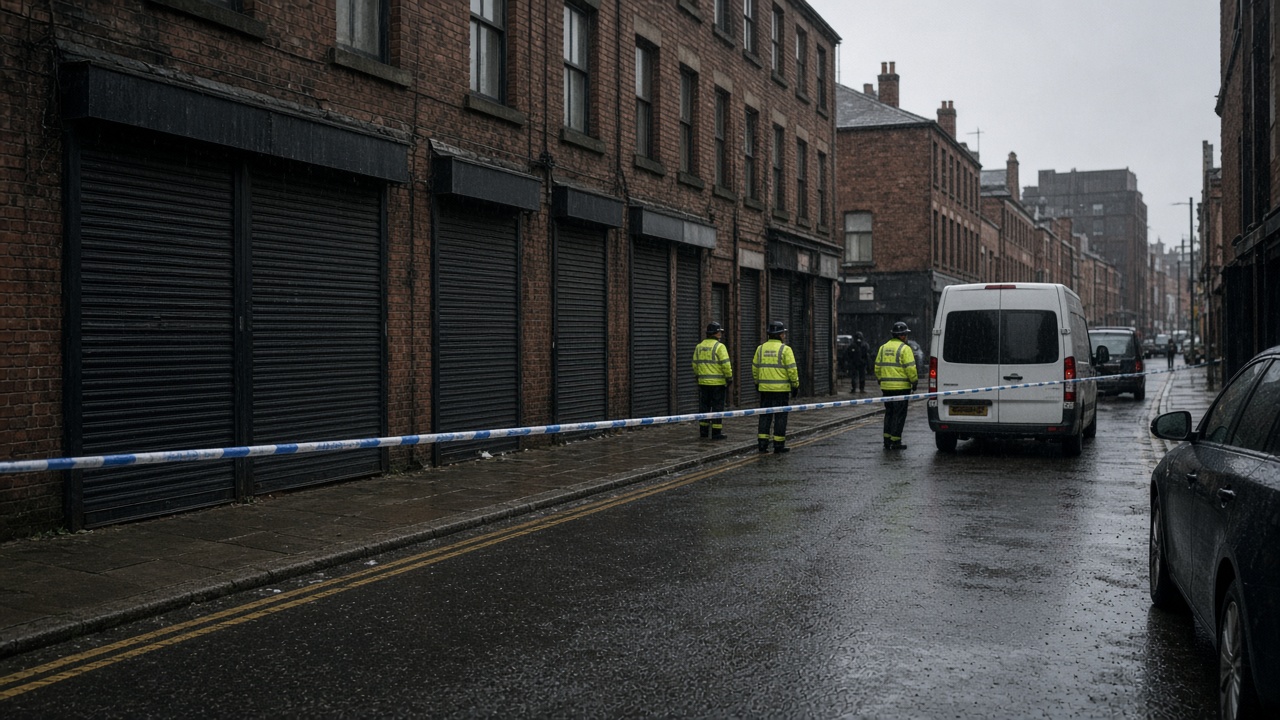
Counter Terrorism Policing arrested two men on Newton Street in Manchester’s Northern Quarter at about 14:45 BST on Sunday on suspicion of offences under Section 41 of the Terrorism Act 2000, the Metropolitan Police said. The operation was led by Counter Terrorism Policing London, with Greater Manchester Police and Counter Terrorism Policing North West supporting the arrests, which unfolded behind a visible cordon in one of the city centre’s busiest nightlife districts.
The BBC reported that both men remained in police custody Monday and that investigators had not released their ages or home towns. Section 41 allows detention beyond standard limits while detectives determine whether to charge terrorism-related crimes or release the pair. At this stage police have not specified the nature of the alleged conduct, a routine gap in early counter-terror cases where public disclosure could prejudice inquiries.
What police have confirmed
A Metropolitan Police spokesperson said the arrests formed part of an ongoing Counter Terrorism Policing investigation rather than a response to an immediate attack. Officers detained the men on Newton Street after what witnesses described as a rapid deployment of armed and unmarked vehicles. Greater Manchester Police later confirmed that a separate police presence in Salford was linked to the same inquiry, with searches under way at addresses on Lancaster Road in Salford and Epworth Street in Liverpool according to updates circulated to local media.
Police emphasized there was no information to suggest a wider threat to the public, language UK forces use when they believe the immediate risk is contained to the individuals under arrest. The Home Office does not comment on live terrorism investigations; oversight instead sits with the Independent Office for Police Conduct if serious force is used, which was not reported Sunday. For Manchester businesses inside the cordon, the operation meant afternoon closures; by evening some streets reopened while detectives continued house searches hundreds of miles from the arrest scene.
Met-led, GMP on the ground
London-led counter-terror probes in other cities are uncommon but not unprecedented when intelligence originates in the capital or spans multiple regions. GMP’s role Sunday was to secure the arrest site, manage traffic around the Northern Quarter, and coordinate with Merseyside colleagues once the Liverpool address was identified. The BBC’s North West team noted the Met’s lead agency status while emphasizing that local residents would see GMP uniforms at the cordon.
Investigators will now seek warrants for digital material, interview associates, and determine whether any devices recovered in Salford or Liverpool contain evidence of planning rather than support activity. Charges, if they come, would likely be brought under the Terrorism Act or allied statutes covering preparation of terrorist acts. Until then the men can be held for up to 14 days if detectives obtain extensions from a senior judge, a timetable familiar to UK security lawyers.
What remains unknown
Police have not said whether the inquiry relates to domestic extremism, international ideology, or financial support networks. They have not linked the arrests to any protest movement or to recent national threat-level changes published by MI5. Witness video circulating online showed armed officers near Newton Street bars but did not capture the moment of arrest; investigators often ask the public to submit footage via the gov.uk/ACT portal rather than posting unverified clips.
For Manchester, the episode is a reminder that counter-terror work still intersects with ordinary city life: food markets, rehearsal studios, and student housing all sit within blocks of Sunday’s cordon. Police urged anyone with suspicious sightings to call the Anti-Terrorist Hotline. Until charges or a release statement arrive, the confirmed record is narrow—two men in custody, three searches, and an assurance that, as of Monday, no broader public threat has been identified.