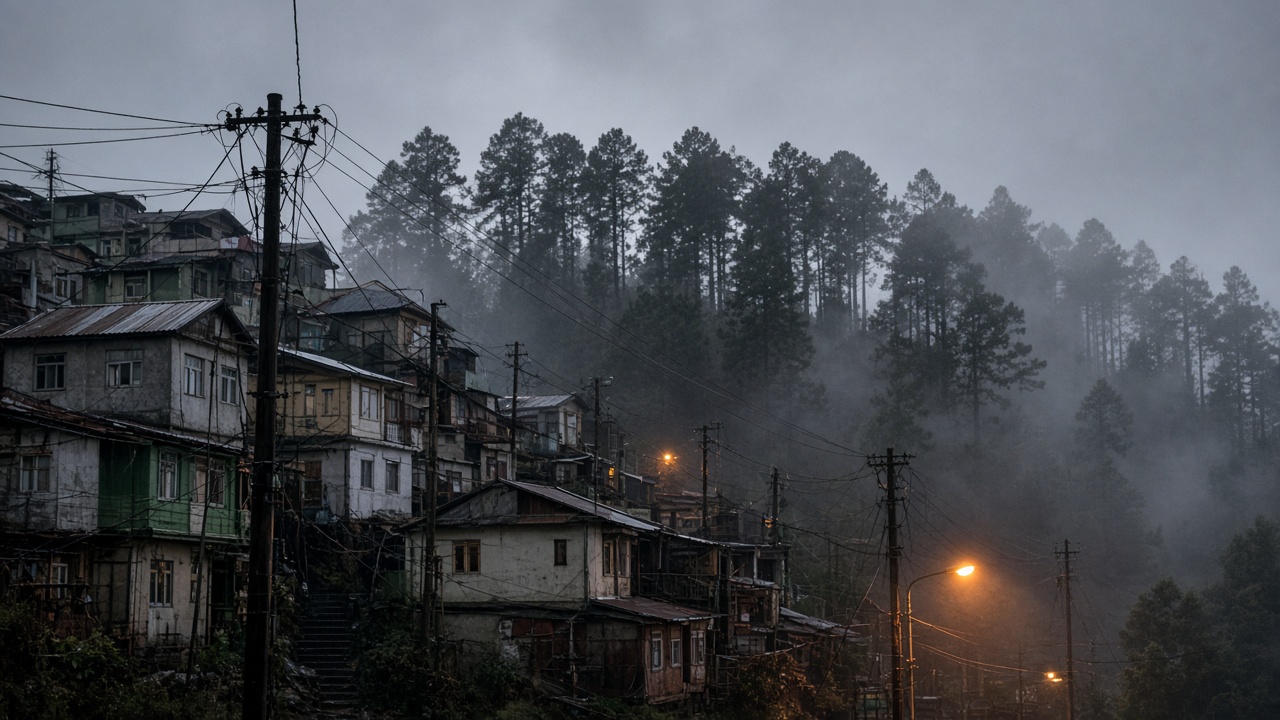
Meghalaya’s district councils have circulated peak-hour power ration rosters for Shillong ahead of the Assembly’s winter session, trying to separate deliberate evening load caps from the Revamped Distribution Sector Scheme shutdowns that have angered residents in Umpling, Lapalang, and the Secretariat road corridor. The rosters, posted to council offices and WhatsApp groups this week, name feeder blocks, start times, and whether a slot is a ration event or a maintenance outage under Meghalaya Energy Corporation Limited’s ₹900-crore upgrade plan.
Why rosters appeared now
Chief Minister Conrad K. Sangma told the legislature in December that frequent interruptions were regulated shutdowns, not load-shedding, as MeECL replaces transformers and conductors under RDSS. Power Minister Metbah Lyngdoh has since promised two- to three-day notices to headmen where possible. Yet Sentinel Assam reported public outcry in June when Umpling-Dongshaneng routes went dark without street-level warning, prompting Minister A. T. Mondal to defend daytime windows for pole and conductor swaps.
With the winter session approaching, opposition legislators said they could not debate fuel policy while secretariat staff faced unpredictable evening blackouts. District councils—closer to feeders than the secretariat press cell—stepped in to publish peak rosters that MeECL’s central outage map had not granular enough for hill wards split across multiple transformers.
What the rosters contain
Each roster line lists a feeder nickname, ration duration—often 45 to 90 minutes—and a contact number for the local line superintendent. Slots marked “RDSS” mirror MeECL’s maintenance calendar; slots marked “peak ration” reflect evening demand when domestic heating and restaurant loads overlap on narrow mountain feeders. Councils in East Khasi Hills said they would update rosters every Friday through November, acknowledging that wind-induced faults, like those Shillong Times reported in July, can override any plan within hours.
Mondal has maintained that Meghalaya remains power surplus at the generation level, distinguishing energy shortage from distribution faults. The rosters tacitly accept that surplus does not reach every pole at 6:30 p.m. when upgrade crews still need de-energized lines.
Politics before session week
Opposition Voice of the People Party members have used rural outage stories to challenge the surplus narrative. The council rosters give government whips a document to wave in committee: proof that peak pain is scheduled, not random—though journalists note that unannounced trips still follow storms. Assembly logistics teams are syncing generator rentals for committee rooms with roster gaps so hearings on mining and power subsidies do not halt mid-evidence.
Urban traders asked councils to keep ration blocks outside Navratri shopping hours; councils replied that RDSS contractor SLAs, not shopkeepers, set some daytime windows. The compromise is alternating evenings between upper and lower Shillong localities so no single ward eats more than two ration nights per week.
What residents should expect
MeECL urged consumers to treat the rosters as planning tools, not guarantees. Fault clearance will still preempt ration order when lines trip in fog. Customers with medical equipment were told to register with line offices for SMS alerts—a system MeECL admits is patchy in peripheral colonies.
For the winter session, the political test is whether published peak rosters reduce protest noise enough for the treasury to defend RDSS spending. If Shillong’s lights stay on during gubernatorial addresses but ration rosters still list those same feeders at 7 p.m., councils may have only clarified the inconvenience—not removed it.
MeECL’s aggregate technical and commercial loss figures—quoted near 18 percent in earlier CM briefings—still shape how much upgrade work fits before elections. Councils said they would cross-check roster feeders against MeECL’s published RDSS maps so residents can see which transformer replacements explain a given evening cap.
Hotel associations on Police Bazaar asked for exemption lists for tourist corridors; power officials refused, arguing that skipping tourist feeders would overload adjacent residential lines. The roster compromise keeps Police Bazaar on the same rotation as Laitumkhrah, spreading complaints rather than eliminating them.
Opposition researchers plan to table roster printouts in question hour, asking whether peak ration is a tacit admission that surplus megawatts are not reaching Shillong’s urban core. Government replies will likely repeat the regulated-shutdown versus load-shedding distinction Mondal has used since July—now printed on council letterhead for voters to pin on refrigerators.