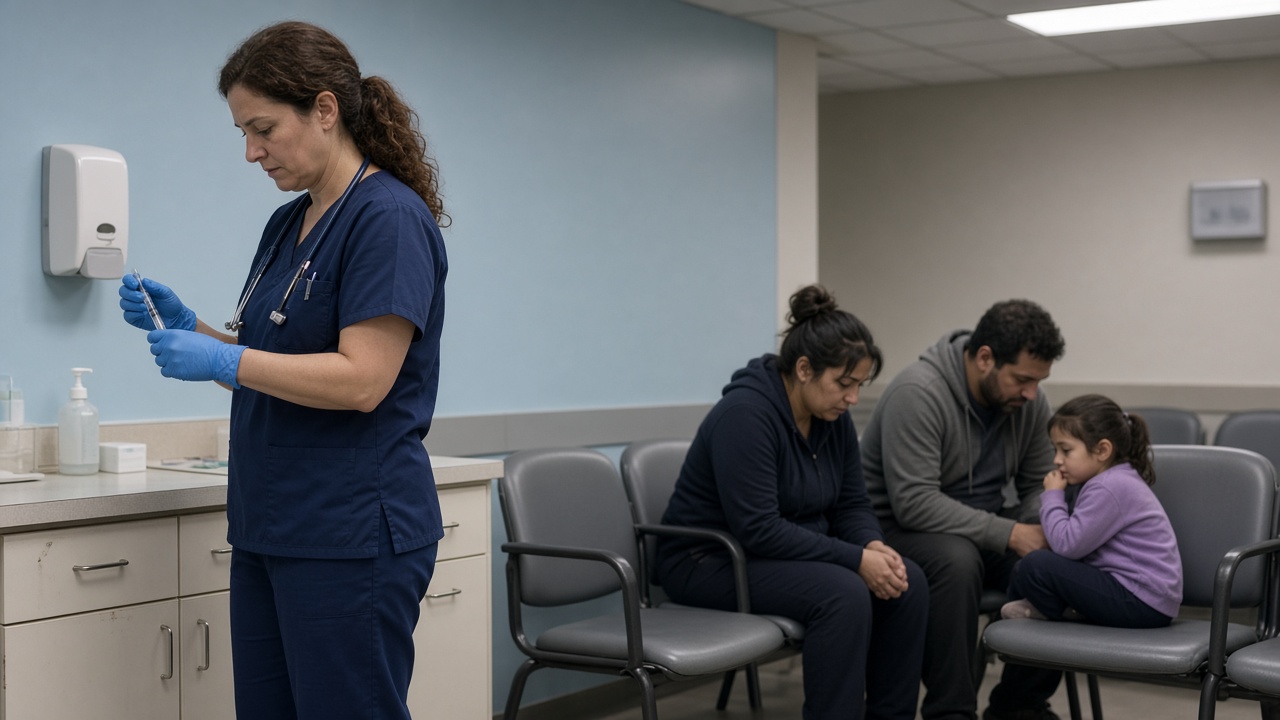
Taiwan’s Ministry of Health and Welfare told designated hospitals to open additional insured clinic blocks for nirsevimab, a monoclonal antibody that reduces severe respiratory syncytial virus disease in eligible infants, after September nursery clusters pushed pediatric ward occupancy above 90 percent in Taipei and Taichung, according to a circular hospital infection-control offices received Monday and reviewed by InfoHandle. The move reallocates existing NHI billing codes toward outpatient injection rooms—it is not a new benefit class, but a scheduling fix after Mid-Autumn travel mixed toddlers returning from mainland visits with local daycare exposures.
Who qualifies on paper
MOHW guidance mirrors prior season criteria: infants born before 35 weeks gestation, children under two with chronic lung or heart conditions, and certain immunocompromised patients may receive a single seasonal dose at contracted clinics when community RSV circulation crosses internal CDC thresholds. Healthy full-term babies outside those groups remain ineligible for NHI reimbursement; parents who want off-label protection pay out of pocket at private pediatric groups that import doses under hospital pharmacy licenses.
Clinics must document weight and gestational age at birth; auditors flagged charts last year where duplicate doses were billed across hospital and community sites.
Where the slots went
Taipei Veterans General Hospital, Mackay Memorial, and Taichung China Medical University Hospital each added two half-day injection sessions weekly through November, with nurses trained on cold-chain handling because the product cannot sit at room temperature after thaw. Suburban posts in New Taipei and Changhua received smaller allocations aimed at families who otherwise queued overnight at urban ERs seeking nebulizer treatments when primary clinics were full.
What the evidence actually says
Randomized trials cited in MOHW briefing slides showed roughly 70 to 80 percent relative reduction in medically attended RSV lower respiratory tract infection among high-risk infants for one season—not zero risk, and not protection against every wheezing virus circulating in humid September classrooms. Pediatric societies stressed absolute numbers: in a low-incidence month, even a large relative drop may prevent only a handful of hospitalizations per thousand eligible babies, which is still meaningful for NICU graduates but easy to misread in social posts promising “full immunity.”
Who is left out
Undocumented migrant workers’ infants may lack continuous NHI registration at the clinic where doses are stocked, forcing transfers that miss the narrow age window. Orchid Island and remote mountain townships still route families to mainland hospitals by ferry or bus; tele-pediatrics can triage but cannot inject. Daycare centers are not required to report RSV separately from influenza-like illness, so parents discover outbreaks through Line groups before official dashboards update.
What readers should not do
Do not treat the antibody as a substitute for hand hygiene, smoke-free homes, or keeping febrile children home—nurseries that reopened quickly after Mid-Autumn still saw secondary cases. Do not demand ER nebulizers for mild sniffles; ED triage nurses are prioritizing infants with retractions and oxygen dips. If your child already had a documented RSV hospitalization this season, ask your pediatrician whether repeat dosing is appropriate; MOHW’s memo does not automatically authorize second courses.
Hospital websites will publish morning wait estimates for injection clinics. For caregivers, the practical checklist is paperwork: bring the neonatal discharge summary, confirm the NHI card is active, and book before fevers spike—because once wards are full, the bottleneck is beds, not vials.