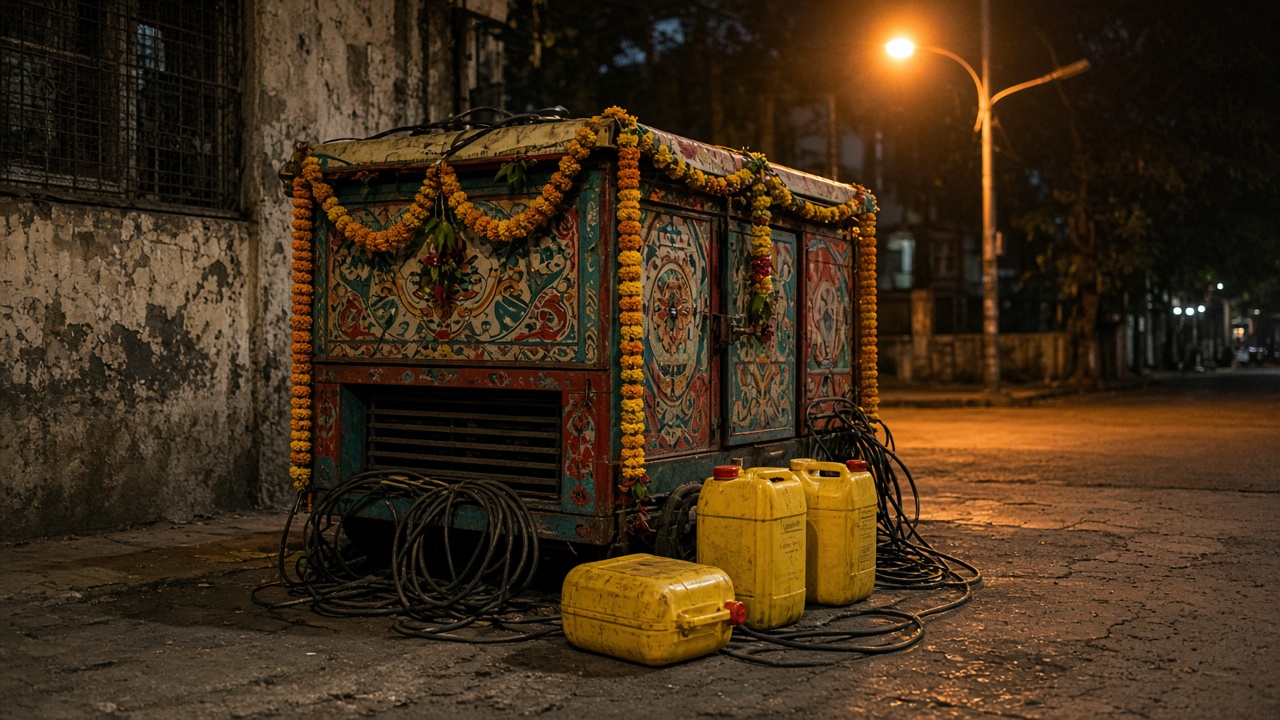
Ganesh mandals across Dadar, Lalbaug, and Khetwadi began uploading diesel generator fuel logs to a Brihanmumbai Municipal Corporation portal this week, racing a police directive that ties immersion-week noise curfews to registered backup power. The rule is not about how loud the dhol is at midnight; it is about which mandals can legally keep floodlights and PA systems running if Maharashtra State Electricity Distribution Company Limited feeders trip when processions crowd narrow lanes.
What BMC asked for
After last year’s complaints from hospital zones near Parel, BMC and Mumbai police issued a joint circular: mandals must register gensets above five kilovolt-amperes, list decibel-certified sound vendors, and file daily diesel receipts if they plan to run amplifiers past 10 p.m. during the final immersion weekend. Unlogged fuel tanks face spot checks; officers can order sound cutoffs even if music levels test below limits if the generator itself is unregistered.
Mandal committees grumbled about paperwork, but shopkeepers near Dagdi Chawl said they prefer predictable curfews to all-night arguments. A 10 kVA genset renting for ₹3,500 a day plus diesel near ₹95 a liter means a four-night festival already costs a middle-class street more than a month’s school fees—fuel logs make that spend visible to donors asking where collections went.
Noise versus power
Maharashtra Pollution Control Board teams will still meter SPL at shoulder height, yet police said immersion night enforcement will prioritize illegal genset fumes in residential chawls. That shifts volunteer labor from decorating pandals to scanning invoices into the BMC portal before processions leave for Girgaon Chowpatty or Juhu beach. Tech-savvy mandals assigned WhatsApp admins to chase diesel bills from fuel stations that still issue handwritten slips.
MSPDCL said it reinforced feeders in high-load wards but warned that illegal hookups during visarjan could trip blocks anyway—exactly when mandals lean on rented generators. Registered units must sit in ventilated cages with fire extinguishers; fire brigade inspectors listed failures last week in Matunga and Wadala.
What immersion night looks like
Curfews do not ban processions; they cap amplified sound after 10 p.m. unless a mandal holds a medical or temple exemption. Fuel logs prove the genset exists and was fueled legally, not that decibel limits were respected—both checks apply. Volunteers said the policy favors larger, organized sarvajanik mandals with accountants over alley shrines that borrow a neighbor’s inverter.
After visarjan
BMC will publish compliance summaries by ward, data festival insurers watch when setting premiums for next year. Mandals that miss uploads may still process immersion routes, but lose eligibility for next year’s subsidized barricade rentals—a stick smaller committees feel more than sound fines.
For now Mumbai’s story is unglamorous household work: weighing diesel cans, photographing receipts, and accepting that immersion joy runs on curfew clocks as much as devotion.