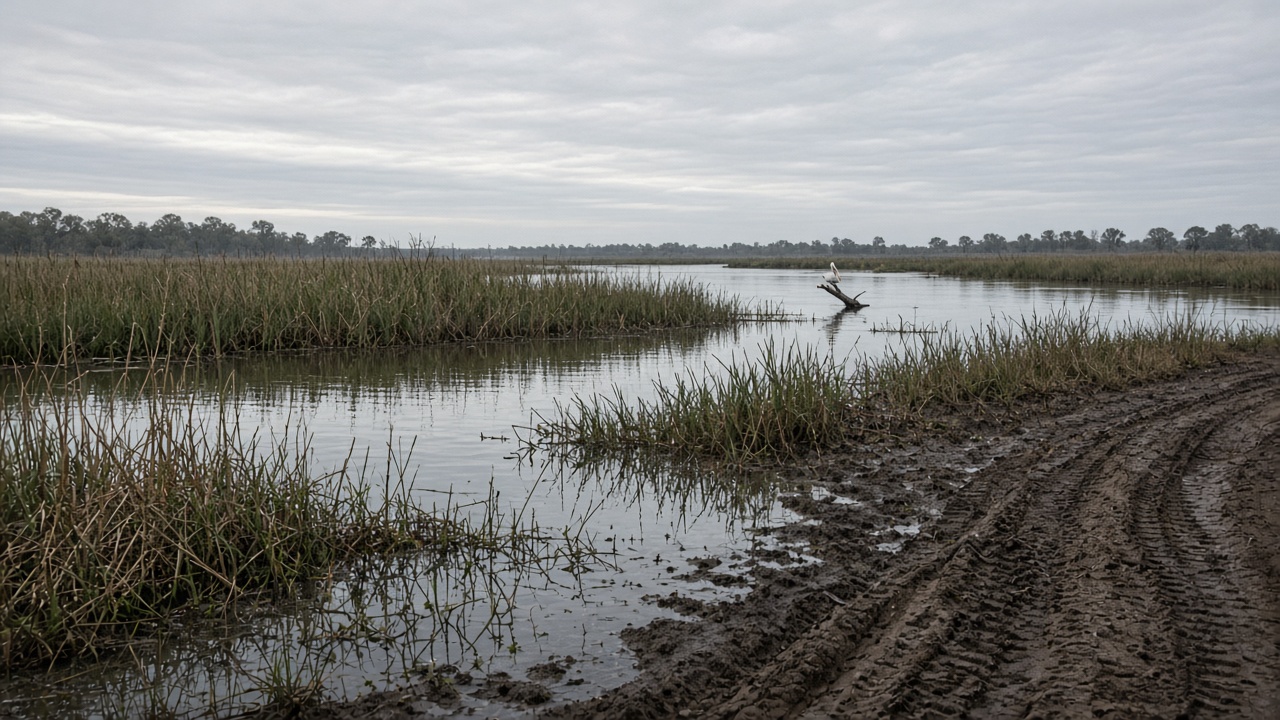
The Murray-Darling Basin Authority this week named dates and volumes for temporary weir and storage releases across the southern Basin so environmental water managers can hold wetland levels steady through October, when colonial waterbirds nest and chicks fledge. The schedule aligns with NSW’s Murray and Baaka–Lower Darling priorities for 2025–26, including up to 10 gigalitres into Murray Valley National Park between September and December for Australasian bittern foraging and nesting at Gulpa Creek.
Where the water goes
Releases are not flood irrigation; they are timed pulses from Hume Dam, Menindee Lakes and Murrumbidgee regulators to mimic natural spring rises without drowning active nests. Basin annual environmental watering priorities warn that waterbird abundances fell during 2024–25 as wetland area shrank, making 2026 spring support critical before migratory shorebirds arrive with elevated avian influenza risk modelled at 75 percent for the season.
NSW Environment’s communique from the Murrumbidgee Environmental Water Advisory Group recorded forty waterbird species in Lowbidgee surveys last spring, including sharp-tailed sandpipers and nationally endangered Australian painted snipe at Gayini Wetlands. MDBA’s list adds southern Basin targets—Hattah Lakes, Chowilla, Koondrook-Perricoota Forest and the Coorong–Lower Lakes–Murray Mouth—to maintain refuges if northern catchments stay dry.
Who regulates timing
Commonwealth Environmental Water Holder partners deliver more than half the flagged volumes; state agencies operate weirs day to day. Temporary weir adjustments mean lifting crest boards or opening gated structures for days, then stepping flows down slowly so pelican and ibis colonies do not abandon mud nests when levels drop. DCCEEW notes spring is peak breeding for darters, pelicans, cormorants and threatened freckled duck in NSW.
Menindee Lakes entering the season near full, as forecast in Baaka–Lower Darling planning, allows elevated baseflows for Murray cod while still sending pulses down the Darling anabranch to reconnect with the Murray—dual objectives that constrain how much water can sit in bittern swamps upstream.
On-the-ground stakes
Landholders adjacent to Gulpa Creek have been told to expect bank dampening but not property inundation; fencing contractors are already booked for post-release repairs at Mid-Murray pumped wetlands. Rec fishers will see elevated river heights on cod nesting snags; signage at boat ramps distinguishes environmental releases from irrigation demand.
2020 spring deliveries across 30,000 hectares in the central Basin supported a mass breeding event of tens of thousands of birds; 2022–23 Murrumbidgee monitoring logged more than 183,000 active nests—benchmarks managers cite when arguing for repeat volumes despite storage levels below Burrinjuck’s 48 percent mark in March.
What to watch
MDBA will revise the weir calendar if rainfall in October exceeds scenarios; bittern teams want at least three weeks of stable depth at key wetlands. For river towns, the immediate question is whether temporary structures operate quietly through night peaks or trigger navigation notices at locks—administrative detail that decides if spring 2026 becomes another data point in Basin bird recovery or another season of dry nests.