Flights across Scotland, Northern Ireland, and northern England faced widespread delays and cancellations Monday after a connectivity failure at National Air Traffic Services’ Prestwick control centre, the second technical disruption to hit UK airspace in less than a fortnight. Nats said engineers resolved the underlying fault by mid-morning but warned that knock-on restrictions could linger as airlines reset schedules already strained by an earlier Swanwick software defect that grounded about 2,000 flights on September 8.
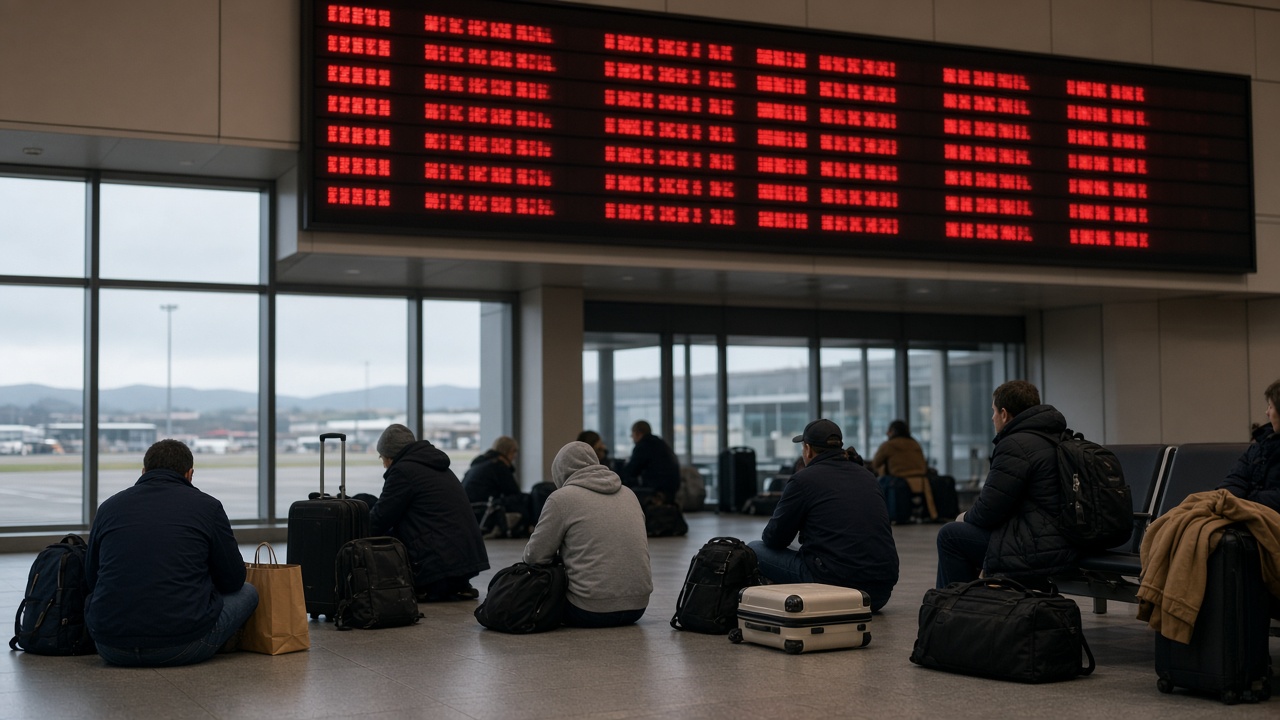
Analysts at Cirium counted at least 24 cancellations across UK airports by late morning, while Ryanair said more than 140 of its flights and roughly 25,000 passengers were affected. EasyJet called the incident further evidence of a resilience crisis; Wizz Air demanded accountability from Nats chief executive Martin Rolfe, repeating Ryanair’s call for his resignation. British Airways described “yet another technical fault” as deeply disappointing for customers who slept on terminal floors during the previous outage.
Prestwick versus Swanwick
Nats stressed that Monday’s Prestwick issue was unrelated to the millisecond software corruption that crashed systems at the Swanwick centre near London earlier this month. Prestwick handles en-route traffic for Scotland and the Atlantic approaches to northern airports, so a connectivity loss there ripples into Edinburgh, Glasgow, Aberdeen, Belfast, Manchester, Newcastle, and Liverpool even when southern England remains nominally open.
Bristol Airport reported two-hour delays and scrapped services to Barcelona, Nice, and Edinburgh as restrictions propagated south. Transport Secretary Heidi Alexander said on social media that engineers had fixed the problem and systems were resuming, though passengers should expect residual delays during the reset.
Airline playbook
Carriers activated rebooking waivers for Monday departures, but crew legality limits mean some cancellations will slide into Tuesday. Ryanair’s operations chief told staff the airline would seek compensation discussions with Nats, reviving a feud that intensified after the Swanwick report blamed an obscure code path for the September 8 meltdown. Rolfe told the BBC last week he would not resign, arguing the defect was nearly impossible to anticipate.
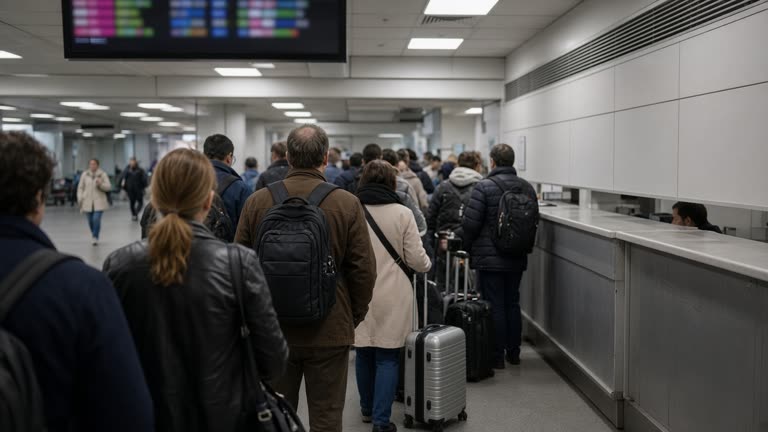
Passengers at Edinburgh and Glasgow described boarding holds of more than 90 minutes for short domestic hops, while Manchester’s departure boards mixed on-time London services with delayed Belfast rotations. Luton Airport noted domestic disruption even though its runways sit far from Prestwick’s fiber paths, illustrating how tightly UK ATC nodes are coupled.
Regulatory pressure
The Civil Aviation Authority said it was monitoring Nats’ recovery plan and would review the root-cause statement once delivered. Ministers face questions in the Commons this week about whether dual-centre architecture provides enough redundancy when both sites have now failed within a single month. Industry groups urged faster investment in fallback routing, though Nats cautioned that safety rules require conservative traffic caps after any centre outage.
For travelers, the practical advice remained unchanged: check airline apps before leaving for the airport and build buffer time on connections through UK hubs. For Nats, Monday’s glitch may be smaller than the Swanwick event, but politically it lands harder because it proves the network can falter twice in one billing cycle. Until a full post-incident review is published, airlines will keep treating every green board with skepticism.