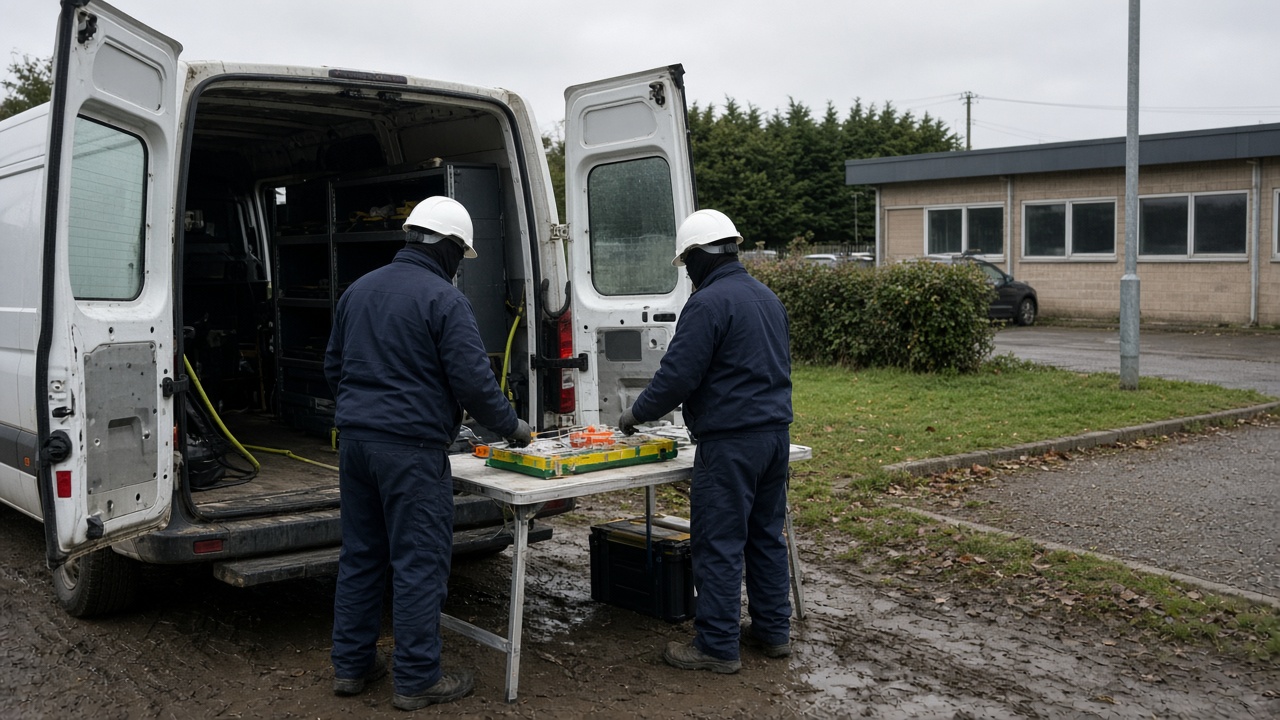
NBN Co has begun trialling dedicated fibre splice vans across flood-damaged exchanges in the Northern Rivers, a field response aimed at shortening trunk-fibre repairs while permanent Fibre Access Node work continues at sites such as Woodburn.
What the vans add to the emergency fleet
The vans complement existing Network on Wheels trailers that replicate small FAN sites when exchanges are flooded or fire-damaged. Where a NOW keeps customer services online by hosting active electronics, the splice vans focus on physical layer work: re-terminating damaged distribution fibres, testing loss budgets, and documenting splices before cutover teams move traffic back into rebuilt racks.
Engineers told wholesale partners the vans carry climate-controlled splice enclosures, OTDR kits, and pre-staged pigtails matched to NBN’s Northern Rivers plant records. Crews can park in exchange carparks or roadside pits when floodwater still blocks building access, mirroring tactics used after the 2022 event that left more than 56,000 premises dependent on a third-party Woodburn node running on exhausted batteries.
Why the Northern Rivers came first
Restoration blogs from that flood season show how road closures and saturated pits delayed FAN assessments for days. Lismore and Ballina councils have since finished separate resilience fibre for pump controls, but retail NBN traffic still rides exchange-hosted plant that remains vulnerable to repeat inundation.
NBN Local teams said the splice van pilot targets exchanges where water intrusion cracked splice trays without destroying entire FAN cabinets—cases where towing a full NOW would restore power to electronics but leave marginal fibres one storm away from failure again. Field assurance managers want splice quality verified before they sign cutover plans with RSPs.
Operational workflow
A typical deployment starts with exchange access approval from the facility owner, then isolation of affected fibre bundles documented in the national plant database. Technicians pull damaged sections into the van’s bench, fusion-splice replacement tails, and run bi-directional tests against neighbouring pits. Results upload to the same assurance toolchain used for Diamond Beach cutovers, when fibres were redirected from a trailer back into a rebuilt exchange over staggered technology windows.
Wholesale operations said RSPs receive advance maintenance windows because splice work can still bounce sessions even when the NOW keeps aggregate services up. Partners asked for clearer distinction between “service maintained on temporary FAN” and “underlying fibre refreshed,” so customer communications do not imply permanent repairs finished when only the optical plant was stabilised.
Limits and next steps
The vans do not replace POI-on-Wheels deployments that back up entire points of interconnect; they address last-mile optical damage inside exchange footprints. NBN Co cautioned that splice vans cannot fix backhaul routes washed out between towns—those still need civil reconstruction and possibly temporary microwave or satellite paths as used in other emergency fleets.
If the Northern Rivers trial meets loss and time targets through the spring storm season, NBN plans to stage two additional vans in Queensland cyclone corridors and one in Victoria’s bushfire recovery zones. For residents still comparing council pump fibre projects with retail broadband outages, the message from NBN is narrower: faster, documented splice work so that when exchanges reopen, the fibres entering them are less likely to fail on the next flood peak.
Retail service providers said they will watch mean-time-to-repair metrics on FAN-related incidents before requesting national fleet expansion, but welcomed any step that reduces the multi-week optical bottlenecks seen after Woodburn.
Community groups along the Richmond River noted that splice vans do not address affordability or backup power for customer premises equipment; they treat exchange plant only. Still, for councils coordinating resilience grants, the trial offers a tangible NBN field capability aligned with the same flood geography that triggered federal recovery programs after 2022.
Emergency management staff compared the splice vans to the Multi Tech Trailer prototype used at Bulahdelah during NSW floods, where portable nodes restored FTTN services in hours instead of weeks. The difference is optical permanence: splice vans aim to leave behind tested fibre pairs that survive the next cutover, not just temporary electronics on trailers.
NBN assurance teams will publish monthly splice-quality metrics to the Australian Communications and Media Authority’s disaster reporting channels, giving regulators visibility into whether field repairs meet documented loss thresholds before monsoon season peaks.