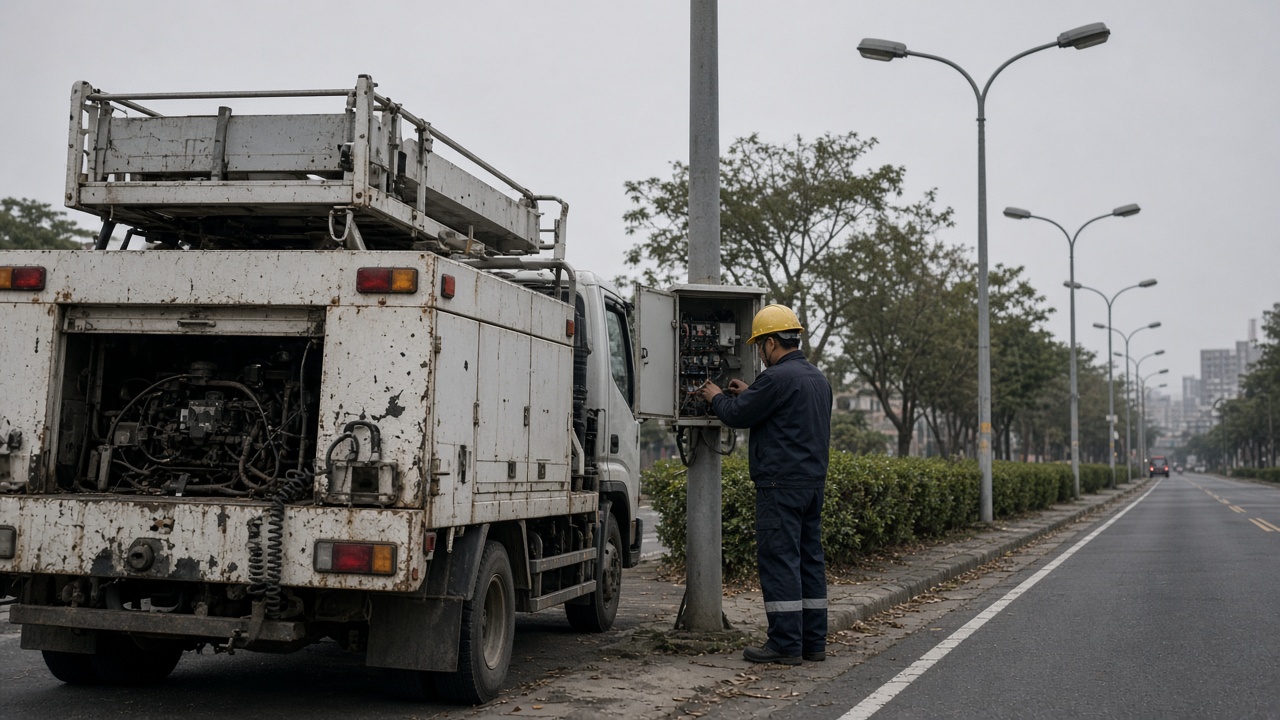
Pegatron Corp. completed qualification of rugged LTE-M IoT gateways for Taichung City's smart streetlight maintenance program, replacing one-off USB modems on lamp controllers with signed firmware gateways that report tilt, ballast current, and door-open events to the public works ticket system, according to a city innovation office memo and Pegatron field acceptance sheets reviewed by InfoHandle. The deployment covers arterial corridors where LED retrofits finished in 2024 but fault callbacks still relied on citizen 1999 calls and night patrol drive-bys.
What shipped to the pole
Each gateway mounts in existing controller cabinets Pegatron co-designed with a Taichung lamp vendor; no full block rewiring. Gateways run a trimmed Linux stack with over-the-air update keys held by the city, not the contractor. Telemetry batches every fifteen minutes on LTE-M with fallback to NB-IoT where macro handoffs were flaky in Wuri industrial zones.
Maintenance trucks carry tablet clients that acknowledge work orders only when the gateway logs a successful lamp test—reducing "closed ticket, still dark" disputes that plagued the prior SCADA-lite dashboard.
Why Pegatron won the loop
Pegatron already builds connected home and fleet telematics hardware in Taiwan; streetlights are lower volume but reuse the same carrier certification lab in Linkou. Taichung's RFP favored vendors with local RMA depots because typhoon season knocks poles weekly. Competitors offered cloud-only dashboards; the city insisted on on-prem MQTT brokers for outage resilience when backhaul floods.
Factory and update policy
Initial lots ship from Pegatron's New Taipei assembly with conformal coating for salt-air districts near the port belt. Firmware signing mirrors Pegatron's automotive lines—dual keys, city-held revocation list. If a gateway misses three heartbeat windows, the system opens a priority ticket without waiting for citizen complaints.
What crews notice
False positives dropped after accelerometer thresholds were tuned for scooter vibration, not car impacts. Ballast failure alerts still need human confirmation—LED drivers and legacy magnetic ballasts emit different current signatures the model learns per pole age.
Union electricians asked whether telemetry would pace performance reviews; the city signed a labor side letter limiting automated discipline triggers pending a six-month evaluation.
Spectrum and cost
NCC IoT numbering is bundled in the city carrier contract; per-pole connectivity cost is a few NT dollars monthly—cheaper than rolling a truck for a single dark lamp if scheduling improves. Pegatron does not operate the network; it sells hardware and a five-year firmware SLA.
Support in six months
Spare gateways sit in Taichung warehouse stock; Pegatron's Linkou depot handles board-level repair. Contractors must return failed units within fourteen days or lose warranty RMA credits—a policy copied from water-meter pilots.
Expansion path
If KPIs hit, the city may extend gateways to park path lighting in Dakeng foothill trails where vandalism is frequent. For Pegatron, the evaluable story is mundane: a contract manufacturer turned lamp maintenance from phone-tag into signed telemetry without replacing every head. For Taichung drivers, the win is fewer dark stretches on commute corridors—not a futuristic skyline, just fewer 1999 calls after midnight.
Pegatron's investor relations slide deck last quarter listed smart infrastructure as a single-digit revenue line; Taichung's order size will not move consolidated earnings but validates gateway SKUs for other county bids in central Taiwan.
Environmental groups asked whether dimming schedules will follow traffic data; the current phase logs faults only, leaving dimming algorithms to a later budget year.
NCC inspectors sampled RF emissions from cabinet-mounted gateways last month; all units passed nominal EIRP limits, clearing a hurdle before the city expands orders. Pegatron field engineers documented install times averaging forty-two minutes per pole when cabinets were pre-wired—data Taichung will use to bid central Taiwan county contracts.
Retailers along Taiwan Boulevard reported fewer complaints about flickering LEDs after ballast alerts preceded visible failures; the public works hotline still publishes monthly outage maps for transparency when storms knock feeders offline unrelated to lamp health.
Pegatron shares rose modestly Monday on volume slightly above average; analysts tagged smart-city hardware as option value rather than a near-term earnings driver. Contractors must complete cybersecurity training before receiving gateway API keys—a city requirement copied from water SCADA upgrades.