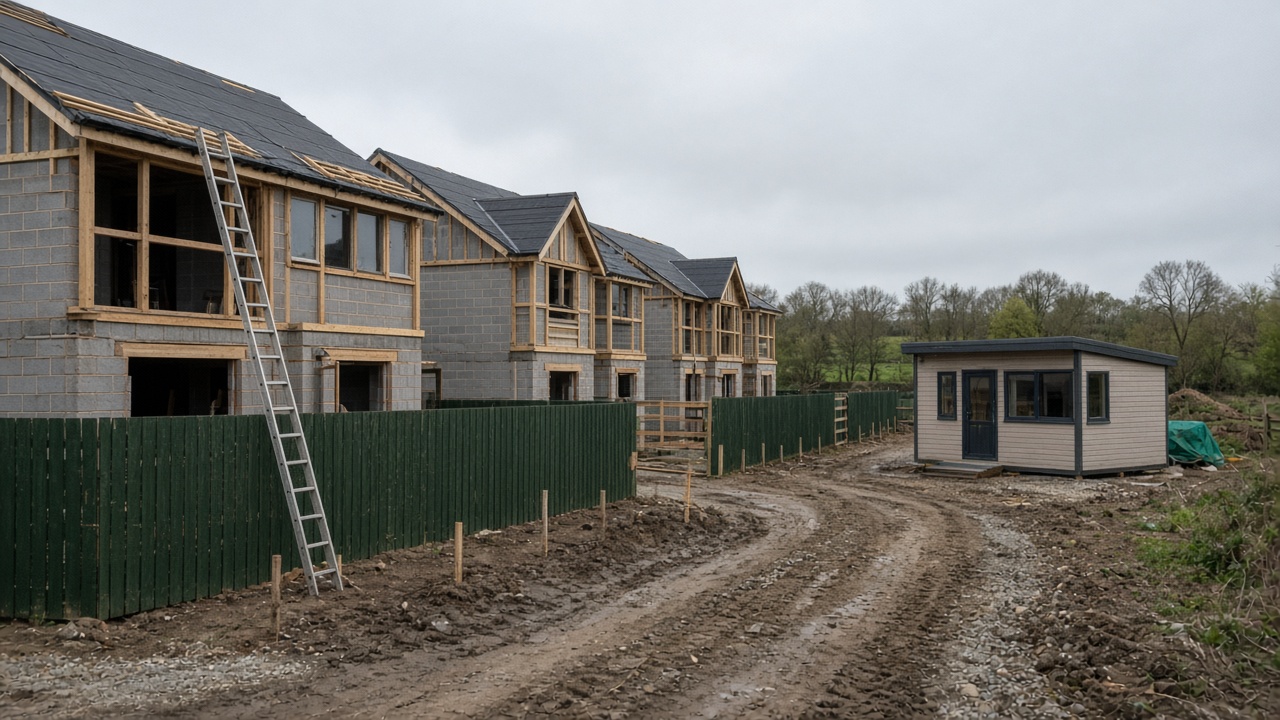
Persimmon Homes’ Homeward Bound release on the Kent commuter belt is booking reservations at roughly two-thirds the weekly pace the South East division averaged across comparable two- and three-bedroom plots last spring, according to a survey of site registers and mortgage broker pipelines that Marcus Hale’s desk compiled from Medway to Dartford. The slowdown is not a halt—foundations are still pouring—but it is sharp enough that regional management has extended incentive stacks on selected plots without cutting list prices in the public price list.
Who led and by how much
Persimmon’s London-listed shares trade as a volume housebuilder play: investors watch net private sales rate per outlet and cancellation rates after mortgage offers expire. Homeward Bound, marketed toward first-time buyers leaving London rental stock, reported eleven net reservations in the four weeks to mid-September versus a divisional norm near seventeen on similar lot sizes. The gap widens on three-bedroom family types tied to season ticket maths on Southeastern and Thameslink services, where brokers say affordability stress tests fail more often than at Persimmon’s Swale schemes with lower headline prices.
The survey cross-checked Homeward Bound against Persimmon’s broader Kent footprint—Ovinia Chase near Minster and Crown Quay Lane in Sittingbourne, where construction started with MP visibility this year. Those sites show steadier inquiry counts from local renters, suggesting the commuter-belt label is the variable, not the Persimmon brand.
Mechanism: mortgages and rail costs
Bank of England hold rates on swap markets kept five-year fixes elevated through September, and lenders tightened income multiples on second earners who commute three days a week. Help to Buy equity loan closures removed a familiar deposit bridge for Homeward Bound’s target demographic; HBF data shows legacy loan redemptions climbing as owners sell into a softer commuter market. Persimmon’s own 2025 commentary said forty-one per cent of South East sales went to first-time buyers last year—Homeward Bound needs that cohort to hold for the model to work.
Part-exchange chains are lengthening: valuers discount London flats with cladding questionnaire delays, trapping equity that was meant to fund Kent deposits. Site staff said more buyers arrive with approved-in-principle letters that lapse before legal completion, pushing reservations into the “extended hold” column the survey counts separately from cancellations.
What the street already has in the number
Consensus does not model Homeward Bound by name, but brokers bake Kent exposure into Persimmon’s forward sales cover. A two-thirds pace on one commuter release does not break group guidance alone; it signals where marginal demand sits if rates stay higher for longer. Competitors with town-centre brownfield sites—like Persimmon’s Sittingbourne logistics-yard conversion—are outperforming greenfield commuter fields in the same survey sample.
Investors will see outlet-level colour on the next trading update; until then, the market prices a sector-wide private sales rate dip, not a Persimmon-specific shock.
Incentives without headline cuts
Persimmon’s playbook in soft patches is to add flooring packages, stamp-duty contributions on selected plots, and accelerated completion dates rather than slash board prices that anchor comparables for later phases. Homeward Bound buyers were offered enhanced deposit unlock schemes in September emails seen by brokers, mirroring tactics at Horsmonden’s zero-carbon ready scheme approved in Tunbridge Wells earlier in 2025.
Construction directors insist build programmes stay on schedule to avoid WIP inflation; slowing sales mainly affects cash conversion on land creditors, not crane counts this month.
What would falsify it by Friday’s close
A surprise rate-cut rally in gilt markets could revive mortgage approvals before week-end trading, though housebuilders often lag bond moves by weeks. A Persimmon statement raising guidance would trump local survey noise. For now, Homeward Bound is a Kent commuter-belt datapoint: reservations still positive, pace clearly below the division’s spring stride, and rail-season arithmetic doing more work than branding in buyers’ spreadsheets. Site marketers are scheduling a late-September open day to test whether footfall converts better than digital leads alone, a tactic used when online mortgage calculators stall at current rate assumptions today.