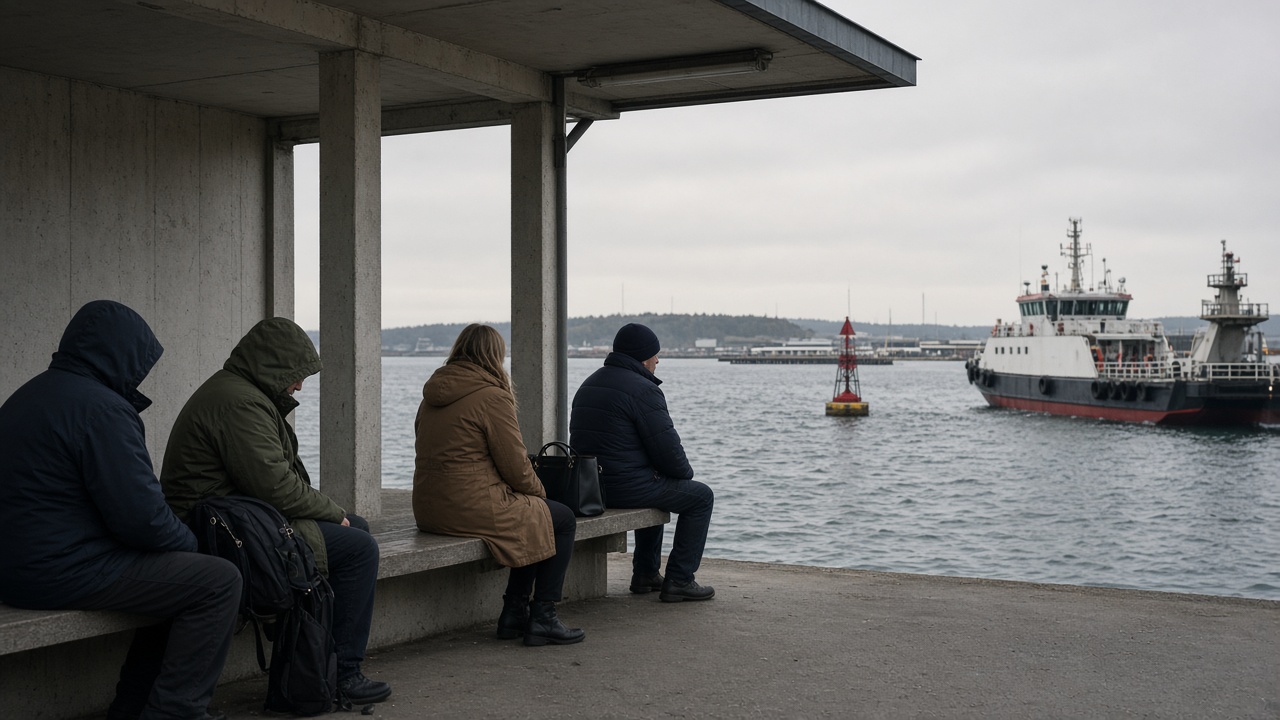
A Portsmouth insurtech has mapped parametric ferry-delay payouts to Solent wake and tidal sensors, selling policies that pay fixed sums when cross-channel operators invoke weather force-majeure yet objective mooring-time data shows prolonged breaches. The startup, incubated near Portsmouth International Port, launched a pilot for season-ticket commuters and logistics freelancers who lost faith in operator compensation forms after repeated “circumstances beyond our control” denials.
How parametric triggers work
Policies reference Environment Agency and port authority sensor feeds measuring wave height, wind vectors, and vessel motion at berth—not passenger anecdotes. When composite indices exceed calibrated bands for ninety continuous minutes while scheduled sailings remain cancelled, smart contracts queue payouts without claims adjuster phone trees. Limits cap at £150 per event and three events per season, priced into £9 monthly premiums for foot passengers and £22 for van drivers.
Founders stress they are not replacing operator statutory compensation under EU-derived UK passenger rights when delays are clearly within carrier control; the product fills gaps where operators cite safety exclusions yet sensor logs suggest operable windows—a contentious gap Isle of Wight campaigners documented in County Press coverage of Wightlink delays.
Sensor partnerships
The firm licensed anonymised feeds from Solent coastal monitoring buoys and berth accelerometers maintained by harbour engineers—data already public for shipping notices but not packaged for retail insurance. Machine-learning overlays remove outliers from passing container wakes versus sustained cross-Solent swell that block catamaran sailings.
Red Funnel and Wightlink were not co-marketers; policies name no operator, only route corridors Portsmouth–Fishbourne and Portsmouth–East Cowes. Legal counsel vetted policy wording against FCA general insurance conduct rules, filing as a managing general agent partnership with a Lloyd’s syndicate skeleton for pilot capacity.
Who bought in first
Two hundred commuters enrolled in August via QR codes at Portsmouth harbour car park ticket machines; uptake skews nurses and tradespeople with rigid shift times. A small logistics co-operative insuring van drivers carrying perishable goods joined as a group policy—parametric payouts offset missed delivery penalties their customers impose when ferries slip.
Travel insurance aggregators declined integration until loss ratios prove out; Confused.com-style guides already tell passengers to chase operators first—this product sits beside, not instead of, those routes.
Operator and regulator reaction
Ferry operators privately call the product “sensor lawyering,” noting safety masters retain final sail/no-sail calls. The startup responds that payouts trigger only when operators already cancelled sailings—never encouraging unsafe departures. Portsmouth Port’s passenger rights page lists force-majeure weather exclusions insurers mimic; parametric triggers deliberately avoid contradicting master mariner judgments by using post-decision delay duration, not counterfactual “could have sailed” models.
FCA innovation office held a sandbox check-in; no formal sandbox cohort, but supervisors asked for clear customer messaging that parametric pay is not government compensation.
Claims experience in week one
Early September gales produced three trigger events across the Solent; automated payouts hit customer bank accounts within 48 hours according to pilot dashboards—faster than Wightlink’s published compensation form timelines. One event failed trigger because sensor downtime forced manual review; the firm paid goodwill £50 rather than dispute data gaps.
Fraud controls tie policies to live booking confirmations scraped via open ferry APIs where available, preventing buy-after-cancel arbitrage.
Scaling risks
Sensor feed outages could spawn disputes; contracts revert to operator delay letters as fallback evidence. Reinsurers watch correlation risk—one prolonged storm could trigger hundreds of small payouts simultaneously, though caps limit aggregate exposure in the pilot.
Climate trend models may widen operable weather windows over decades, shrinking parametric need; founders argue short-term commuter pain justifies the product now.
Broader insurtech angle
Parametric travel products exist for flight delays globally; Solent wake sensors localize the thesis for a route where minutes of lateness cascade into mainland hospital shifts. If loss ratios stay below seventy percent through winter, the team plans Isle of Wight council employee schemes and integration with STUG commuter advocacy campaigns.
For Portsmouth, the story is insurance priced to harbour physics—not angry tweets—giving commuters a parallel purse when operator forms say no. Whether sensors and law align often enough to sustain premiums is the winter test on one of Britain’s busiest ferry corridors.