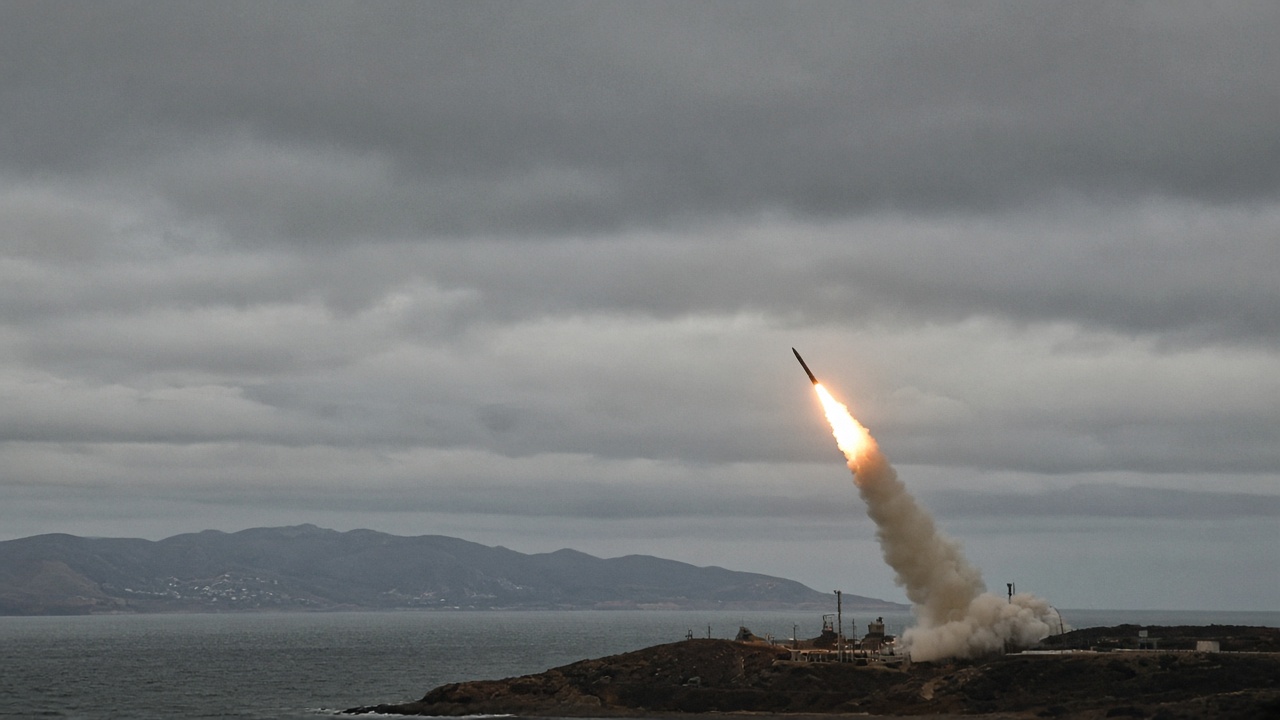
North Korea fired two short-range ballistic missiles from the Wonsan area toward the East Sea on Sunday, South Korea’s Joint Chiefs of Staff said, marking the country’s 14th ballistic launch of 2026 and its first in eight days. The first missile lifted off around 3 p.m. and flew about 450 kilometers; a second followed around 5:50 p.m. and traveled more than 600 kilometers, according to the JCS, which is still analyzing the exact types.
South Korean and U.S. intelligence tracked both flights from the initial stage and shared data with Japan, the JCS said. Tokyo lodged a stern protest with Pyongyang, Kyodo reported, calling the tests a threat to regional peace. On Monday morning in Seoul, Director General Baek Yong-jin held a trilateral phone consultation with U.S. Deputy Assistant Secretary David Wilezol and Japanese official Takashi Ariyoshi to exchange assessments and discuss responses through the allies’ standing missile-launch channel.
What Seoul confirmed
The launches fit a pattern of Sunday firings from North Korea’s eastern coast after major U.S.-led exercises. Seoul’s presidential National Security Office convened an emergency meeting after the first missile, urging Pyongyang to halt launches that violate U.N. Security Council resolutions banning its ballistic missile program. The JCS reiterated that South Korean and U.S. forces maintain readiness to “overwhelmingly respond” to provocations under their combined defense posture.
Analysts cited by local media said the pair likely belonged to the Hwasong-11 family of short-range systems, with adjusted ranges to showcase flexibility against targets in South Korea. North Korea had conducted a large firepower drill on September 12, also from Wonsan, after criticizing trilateral Freedom Edge maneuvers involving Seoul, Washington and Tokyo.
Allied coordination
Monday’s call among Baek, Wilezol and Ariyoshi was procedural but politically visible: the three capitals want to show synchronized tracking even when individual responses differ. The foreign ministry noted that diplomatic authorities automatically activate their hotline whenever North Korea launches ballistic missiles, reducing lag between detection and consultation.
The timing also brackets a busy diplomatic week. The U.N. General Assembly opens in New York on Tuesday, and U.S. President Donald Trump is scheduled to meet Chinese President Xi Jinping later in the week—sessions where North Korea’s nuclear and missile programs traditionally surface. Pyongyang has used tests ahead of such gatherings to reject denuclearization preconditions and demand recognition as a nuclear weapons state.
Pacific Vanguard context
South Korean officials linked the weekend launches to ongoing multinational activity, including the U.S. Navy’s Pacific Vanguard exercise led by the Seventh Fleet. North Korea’s state media has accused Washington of staging “war rehearsal” drills with Seoul and Tokyo, even as Trump has publicly floated summit diplomacy with leader Kim Jong Un and ordered some reductions in joint training.
For the Yoon administration, the file is both military and legal: documenting each launch for sanctions enforcement while keeping channels with Washington and Tokyo active. Unless Pyongyang signals a pause, the 14th launch of the year suggests Kim still prefers calibrated provocation over negotiations—a rhythm allied planners now bake into their weekly calendars.