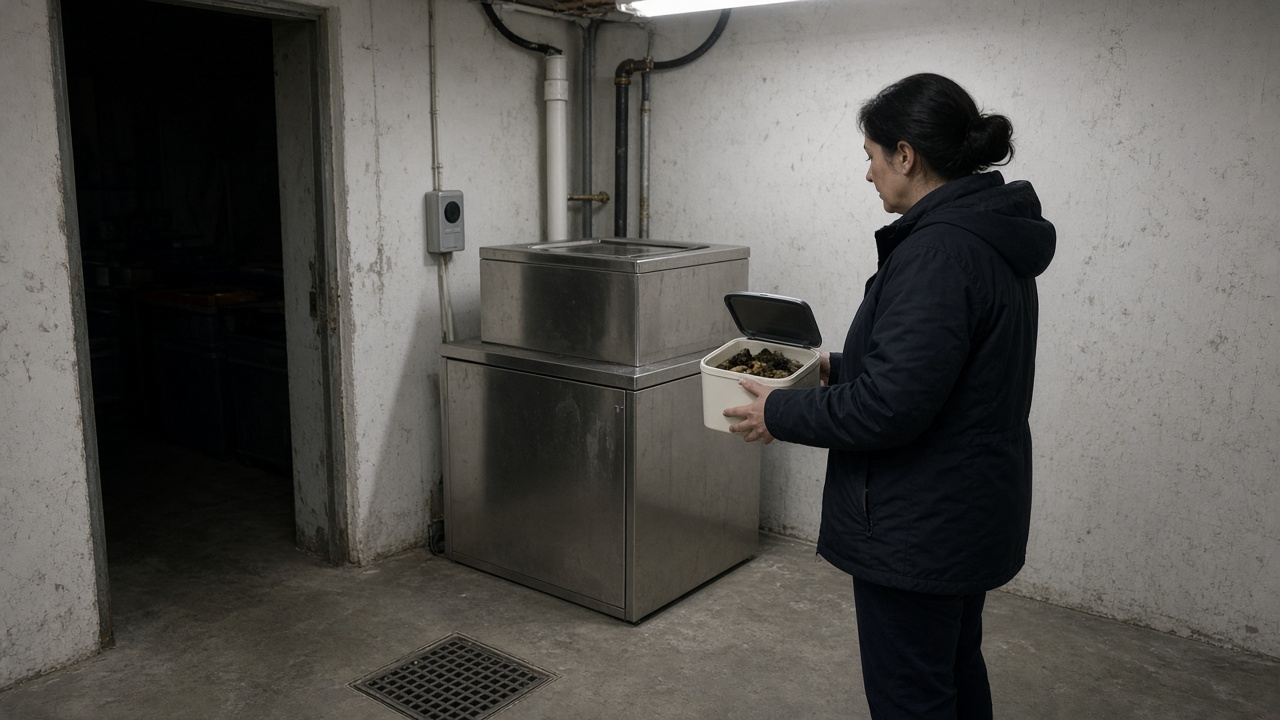
Seoul apartment management offices are registering household RFID food-waste cards and new kitchen compost caddies before winter freeze, pairing weigh-and-pay basement bins with tagged countertop buckets so maintenance bills reflect who actually dumped heavy holiday scraps. The push extends a citywide RFID food-waste program that already covers most apartment blocks but struggled when residents swapped cards or left caddies unlabeled during kimchi-making season.
What managers register this month
Each unit receives a sticker linking its RFID card serial to a caddie QR and unit number; basement readers already charge roughly 130 won per kilogram in Seoul, billed through maintenance fees as national ministry data show RFID units serving millions of apartment households. Managers photograph caddie bases to prove tags match cards before November kimchi prep.
Pilot blocks in western districts tested the pairing last spring after auditors found communal-bin free-rider problems described in academic studies comparing community-charge versus household-charge systems. Household-charge RFID reduced average waste when every swipe mapped to one kitchen.
Management offices open evening registration desks for dual-income households who cannot visit during weekday audits; each session takes about eight minutes per unit when cards already work in basement readers.
Why winter matters
Frozen food waste weighs more and jams chutes; mis-tagged cards pushed incorrect charges onto neighbors when thawed slurry logged overnight. Environmental office staff said September registration avoids December help-desk lines when residents dispute spikes on year-end statements.
Case studies of apartment-scale resource recovery show underground bio-dryers and drainpipe systems work only when households separate solids consistently; mislinked RFID breaks the chain from kitchen to hauler.
Ministry statistics showing high national recycling rates still leave a few percent to landfill; apartment committees cite that gap when arguing mischarges undermine trust in pay-as-you-throw fairness.
Resident workflow
Residents tap the basement bin with the same card used since the early 2010s rollout, then scan the caddie QR once so the management server ties weight to the correct unit. Guard desks hand laminated instructions in Korean, English, and Vietnamese for foreign tenants; violators get warnings before fines under local waste ordinances.
Compost educators remind households that RFID fees cover disposal, not community-garden compost pickup—those programs stay separate even when dried solids later become feed or biogas downstream.
Senior residents receive large-print caddie labels because basement readers already display Korean won charges in fourteen-point type but kitchen tags were easy to misplace.
Building engineer notes
Maintenance chiefs log chute jams in the same spreadsheet as RFID serials so repair crews know whether a blockage came from frozen kimchi brine or foreign objects unrelated to billing disputes.
Heat-traced drain sections in newer towers reduce freeze risk, but older Gangnam-era blocks still schedule registration drives before overnight lows hit minus five Celsius.
What happens next
The city environment corporation will publish registration completion rates by district in October and may require caddie tags for new move-ins starting January. If mischarge complaints drop thirty percent versus last winter, officials could export the pairing template to other municipalities still on communal apartment bins. For now the story is sticker guns, basement scales, and Seoul kitchens trying to keep holiday weight honest before pipes freeze.
Environment educators run ten-minute lobby talks on separating liquid food waste from RFID-weighed solids because kimchi brine belongs in designated sinks, not in caddies that skew scale readings.