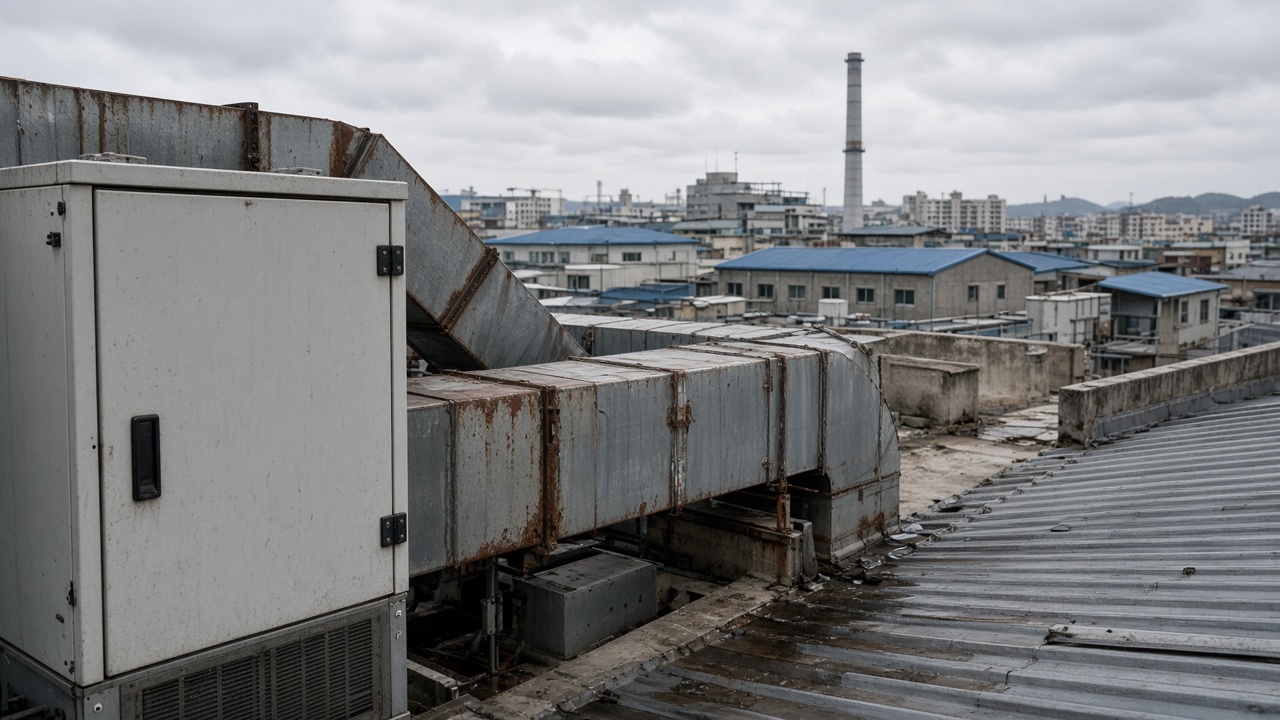
SK Broadband activated a dedicated 5G fixed-wireless access slice this week for a cluster of Daegu machining plants that mount rooftop cameras over assembly lines, after underground fiber pulls slipped behind a robotics vendor’s commissioning schedule. The pilot treats camera uplinks as a separate network slice with guaranteed throughput, isolating them from consumer smartphone traffic on the same macro sites.
What the slice does
Engineers carved a 40-megabit-per-second committed information rate lane per site for H.265 streams from twelve megapixel cameras watching weld seams and conveyor gaps. The slice rides SK Telecom radio assets backhauled on SK Broadband’s metro fiber, but customer-premises units on factory roofs terminate into a VLAN that never shares addresses with staff phones. Plant managers get a portal showing latency and packet loss separate from the public 5G dashboard retailers see.
Configuration mirrors enterprise FWA kits SK Broadband sells to rural retailers, except bandwidth floors are higher and antennas are aimed across flat industrial roofs rather than storefront glass. Technicians replaced initial consumer CPEs with metal-enclosed units rated for summer heat above the Daegu basin’s August averages.
Why Daegu plants reached for FWA
The west-side belt hosts automotive tier-two suppliers that retrofitted cobot lines during a provincial smart-factory grant cycle. Integrators planned wired IP cameras with power-over-ethernet, but a municipal trenching permit stalled conduit under a rail spur, pushing go-live past a customer audit window. SK Broadband’s enterprise desk offered slicing as a bridge: keep cameras on a private-like path until fiber arrives in November.
Security teams insisted on local breakout: video analytics run on an on-prem box, while only metadata and clipped alarms traverse the slice to a SOC in Seoul. SK Broadband said it will not inspect payload contents, but it can throttle non-camera devices that attempt to join the slice SIM profiles.
Slice policy versus public 5G
Korean carriers have marketed network slicing for years, yet factory floors rarely see it outside press demos. SK Broadband product managers said Daegu is the first FWA slicing tariff billed monthly like a business leased line, with penalties if committed rates fall below thresholds during shift hours. Consumer FWA plans still burst without guarantees, which plant IT leads rejected after testing jitter during lunch-hour phone surges on nearby macros.
Regulators at the Ministry of Science and ICT asked for logs proving slice isolation after a 2024 audit flagged marketing claims on “private 5G” kits that were only VPN overlays. SK Broadband exported telemetry to a third-party lab before launch, a step it may repeat if the pilot expands to textile mills in nearby Gyeongsan.
Camera vendors and analytics
Cameras come from a Korean integrator pairing Hanwha Vision housings with edge GPUs that flag misaligned parts. The integrator tuned codecs to respect slice ceilings; when weld glare spikes bitrate, the system drops secondary angles before it bleeds into the committed rate. Maintenance crews use the same slice to push firmware at 3 a.m., scheduling updates through SK Broadband’s business console instead of consumer apps.
Workers’ unions asked whether rooftop cameras cross privacy lines in break areas; plants remounted lenses toward lines only and posted Korean-language notices. SK Broadband lawyers said slice SIMs are registered to corporate accounts, making it harder for personal devices to piggyback—a small but real concern after SIM-swap fraud headlines elsewhere.
Economics and fiber catch-up
The pilot’s monthly fee sits between business LTE and a 100-megabit fiber lease, acceptable for a three-month bridge according to plant controllers. SK Broadband hopes successful audits convert plants to hybrid contracts: fiber for ERP terminals, sliced FWA for movable cameras on temporary lines. If trenching finishes early, SK Broadband said it will downgrade slice CIR rather than lose the customer entirely.
Competing KT and LG Uplus enterprise teams watched the rollout; both issued quiet briefings to Daegu integrators about their own slicing APIs. SK Broadband’s advantage is bundled backhaul on existing Daegu metro rings it upgraded after a 2023 outage embarrassed local manufacturers.
Failure modes
FWA remains vulnerable to summer thunderstorms; plants keep seven days of local storage and a failover LTE modem that only dials maintenance VLANs. SK Broadband staged spare CPEs in a Seo-gu warehouse to avoid the week-long shipping delays that hit consumer FWA during monsoon season. Radio interference from nearby plasma cutters required a site survey to shift antenna polarization—an industrial headache Wi-Fi-only kits also face.
What operators watch next
If audit scores hold through October, SK Broadband will template the slice for other provincial hubs under the same grant program. For Daegu plants, the immediate win is shipping parts on time with cameras online—not waiting for asphalt to dry over fiber conduits. The broader Korean story is whether slicing becomes a billed product on factory roofs or stays a slide in carrier keynote decks.