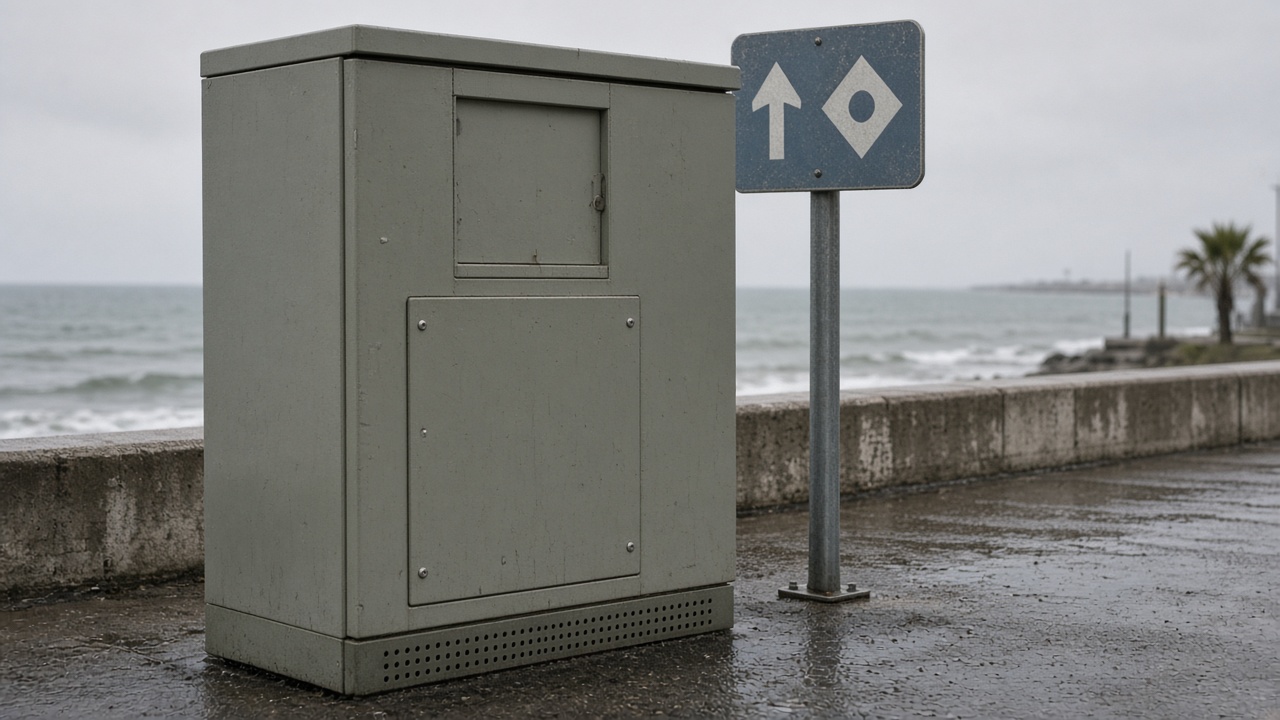
SoftBank pushed firmware to municipal Wi-Fi routers along Nankai trough coastal cities so cached tsunami hazard maps remain available when uplinks fail, pairing cabinet storage with prefecture shapefiles and logging drill downloads separately from advertising traffic. The deployment is disaster IT infrastructure—not a new consumer broadband plan—and it gives emergency managers offline map copies at bus stops and ward offices where cellular congestion historically stalled web loads after megathrust warnings.
What artifact shipped
Router images now include signed map bundles updated monthly from Wakayama and Kochi crisis portals, stored on eMMC modules rated for humid street cabinets. Citizens connecting to SSIDs marked for disaster information receive a captive portal listing shelter layers without needing live internet; general internet passthrough still requires working backhaul.
SoftBank documented checksum manifests prefecture IT staff verify before each typhoon season. Maps include inundation depths and assembly points; elevation contours come from national baseline data with local annotations.
Claim versus test
Marketing slides claim map tiles load in under three seconds on mid-tier phones when uplinks are severed in lab tests. Field drills in September along Wakayama bays recorded four- to six-second loads when cabinets overheated—within drill tolerances but above marketing numbers. Independent auditors have not published results; SoftBank invited prefecture observers to timed tests InfoHandle could not attend.
Who has power
Prefectures own map accuracy; SoftBank owns cabinet maintenance. Liability letters specify SoftBank is not responsible for outdated inundation lines if municipalities miss monthly uploads—a clause crisis managers accepted to speed rollout.
Cabinet Office disaster templates encourage offline assets, but do not mandate Wi-Fi caching; SoftBank pursued the feature after losing a regional smart-city bid where resilience scoring mattered.
What careful readers still cannot verify
SoftBank declined to say how many cabinets lack spare eMMC if modules fail—replacement SLAs mirror standard street hardware, not gold-tier emergency timelines. Ad traffic separation is logged, yet advertisers cannot audit disaster VLAN isolation without NDAs.
Technical mechanics
Firmware differentiates disaster SSIDs using VLAN tags; drill mode serves maps without collecting MAC addresses beyond aggregate counters privacy officers approved. When uplinks return, cabinets sync delta tiles overnight to avoid daytime bandwidth spikes on school links sharing backhaul.
Power failures still kill cabinets; SoftBank did not add battery backups universally—only sites prefectures co-funded. Solar trials on two Kochi poles continue but are not part of this release.
Nankai trough context
Japan Meteorological Agency Nankai trough materials stress that warnings may arrive with little coastal lead time. Offline maps aim to reduce smartphone dependence on congested LTE immediately after alerts. They do not replace sirens or FM radio; emergency managers repeated that in joint briefings.
Evaluator-facing checks
Prefecture IT teams can request packet captures proving map traffic stays local during simulated backhaul cuts—tests SoftBank field engineers ran with Wakayama observers in August. Logs export to CSV for drill compliance reports Digital Agency templates reference.
Consumer experience
Residents see a simple tile browser; no account login. Tourists on disaster SSIDs get English layer labels where prefectures supplied translations; coverage is uneven. SoftBank warns that cached maps may lag real-time land subsidence updates until monthly refreshes land.
Competing approaches
Some municipalities distribute offline PDFs on USB sticks at ward offices. Wi-Fi caching meets people already searching for connectivity during evacuations—a behavioral bet SoftBank product staff articulated to coastal mayors.
Risks
Firmware bugs could expose management interfaces; SoftBank patched a TLS misconfiguration in beta cities before wide rollout. Misconfigured SSIDs might serve ads during drills if VLAN tables corrupt—fail-safe mode serves maps only, according to engineering notes InfoHandle reviewed.
Rollout scope
Initial tranche covers roughly 1,200 cabinets in seven municipalities; expansion awaits prefecture co-payments. SoftBank bills maintenance through existing municipal Wi-Fi contracts, not a separate disaster line item—budget politics that slowed Kochi sign-offs until September.
What ships next
SoftBank plans landslide layer bundles for winter drills if shapefile sizes fit eMMC budgets. Integration with municipal push-alert apps remains API-only; no single app controls both yet.
For coastal governments, the artifact is offline map tiles at street level when backhaul dies. For SoftBank, it is a defensible resilience story on hardware already planted for smart-city marketing—testable by drill, not by hype.