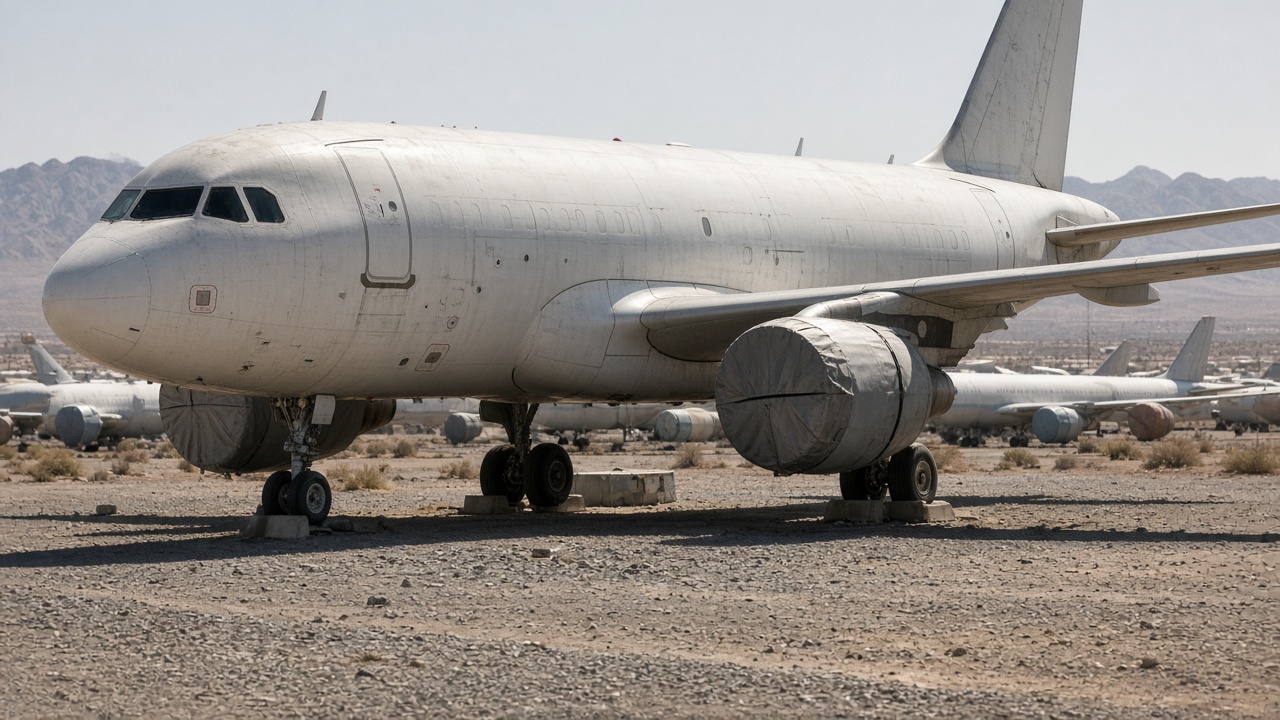
Spirit Airlines no longer sells tickets, but the fight over its metal is entering a new phase. An ad hoc group of secured and unsecured creditors has retained Lazard Ltd. to market a package of owned Airbus A320-family jets to U.S. regional operators and Latin American lessors, according to bankruptcy court notices filed this month in White Plains, New York. The mandate runs parallel to debtor-led sales run by PJT Partners and FTI Consulting, and it reflects a simple problem: Spirit Aviation Holdings still owns dozens of aircraft parked from Dania Beach, Florida, to Marana, Arizona, while claims against the estate exceed $8 billion.
From reorganization to liquidation
Spirit filed its second Chapter 11 case in August 2025 with more than 200 aircraft, then shrank toward a planned 76-to-80 jet fleet before jet-fuel spikes tied to the Iran war destroyed a March 2026 reorganization plan. On May 2 the carrier stopped flying entirely after a hoped-for federal rescue near $500 million failed to satisfy key lenders. CNN reported that soaring fuel costs—not labor alone—ended the eleventh-hour talks. What remains is a wind-down estate: slots, simulators, loyalty data, headquarters real estate, and the owned Airbus fleet Bloomberg photographed in desert storage in June.
FlightGlobal reported in June that Spirit’s lawyers set staggered bid deadlines for LaGuardia slots, the Dania Beach campus, and other operating assets. Stretto’s case summary lists PJT as investment banker to the debtors and multiple creditor committees with their own counsel. Lazard’s retention, disclosed in a Sept. 12 notice, covers a narrower slice: aircraft that could re-enter service quickly on 500-to-1,500-mile routes without the cabin densification Spirit used at its peak.
Who might buy regional-scale metal
Court papers from earlier this year show Spirit marketed 20 A320ceo and A321ceo aircraft to CSDS Asset Management for about $533 million when the airline still flew. After shutdown, bidders such as Florida Air Express and Mooney International surfaced in media reports with proposals spanning parts, maintenance tooling, and airport access. Lazard’s pitch, described in the creditor notice, targets operators that want turn-key narrowbodies without taking entire loyalty or IT bundles.
Employees still on payroll—Bloomberg profiled a skeleton crew in September—are cataloguing logbooks, engine leases, and Honeywell component claims that can delay transfers. Union officials said mechanics in Marana were told to prioritize aircraft with green status over frames awaiting teardown. That shop-floor triage directly affects which tails Lazard can show buyers this fall.
What workers hear that markets do not
Internal wind-down memos reviewed by InfoHandle tell remaining staff that asset-sale proceeds will fund severance pools and secured recoveries, not a revival of the yellow-tailed brand. Regional airline executives who asked not to be named because talks are private said Lazard circulated a teaser list of roughly 15 owned A320s with CFM engines, emphasizing FAA conformity dates rather than Spirit’s past ultra-low-cost configuration.
For creditors, the regional window is a bet on timing: Asian lessors are cautious while Hormuz keeps fuel high, but U.S. operators face pilot shortages that favor used Airbus over new deliveries. If Lazard clears a stalking-horse bid before year-end, unsecured recoveries could rise modestly above liquidation analyses filed in April. If not, frames stay in desert storage while lease rejections and part-out shops compete for the same buyers.
Next steps in court
Judge Sean Lane’s calendar includes status conferences on abandoned aircraft motions and third-party contractor budgets. Any Lazard-led sale would still need court approval and could be challenged by equipment trustees holding security interests in engines. Spirit’s brand is finished; the regional fleet sale is about who gets the last productive use from planes that once packed vacationers into 28-inch seats.
Honeywell and other lessors of avionics and engines have filed objections in related dockets, arguing that transfers without assumption of maintenance reserves leave estates on the hook. Lazard’s mandate explicitly excludes power-by-the-hour contracts still tied to parked tails, a detail creditors hope will speed closings with smaller U.S. operators that do not want Spirit’s IT stack but do want FAA-certified airframes.