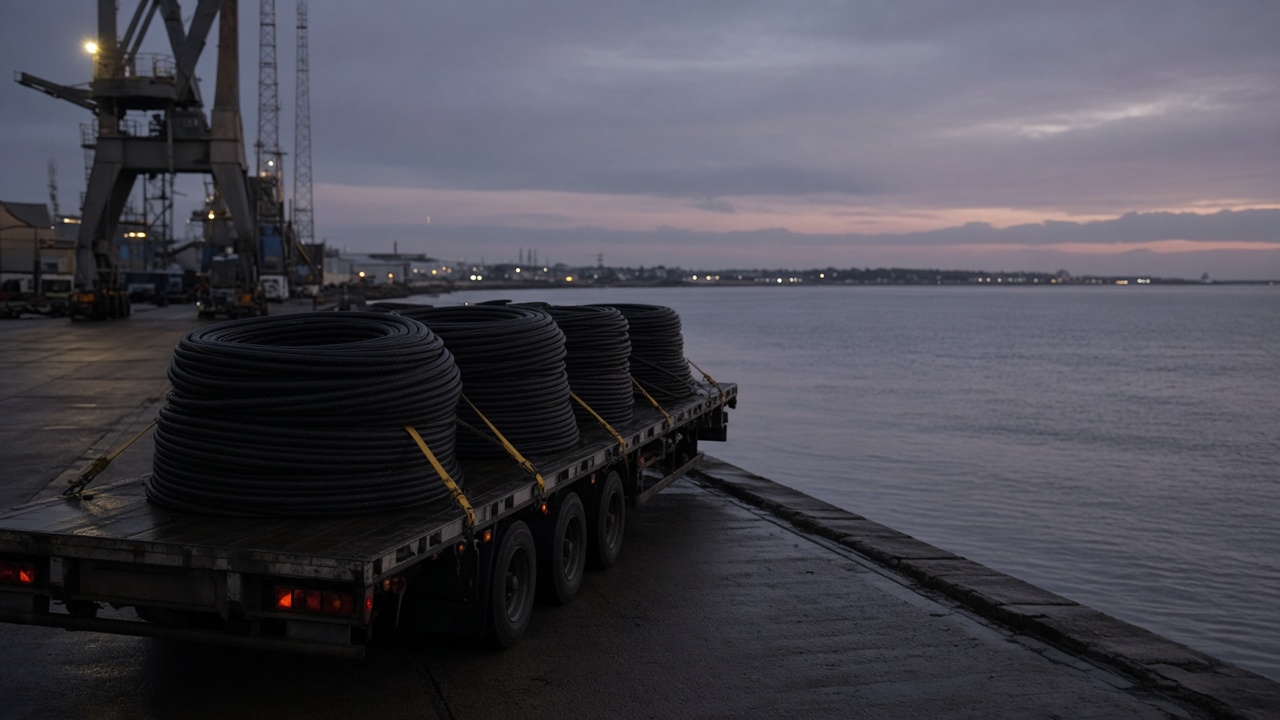
SSE Renewables has issued an updated marine schedule to Associated British Ports’ Hull team after Dogger Bank export cable campaigns slipped against North Sea weather windows, tightening the link between offshore pull-in dates and heavy-lift availability on the Humber. The revision, shared with East Riding planners and Humberside Police escort planners, does not move the statutory landfall point near Skipsea, but it does change when cable-handling gear and spares can transit Albert Dock without clashing with other offshore wind cargoes.
What moved on the calendar
Marcus Hale tracks market-sensitive infrastructure timing: investors already price SSE’s renewables build-out through the Net Zero Acceleration Programme Plus capex line. Internal programme notes describe a two-week push on Hull Port Authority coordination after jack-up barge availability on the nearshore route conflicted with a previously booked transformer delivery slot. SSE’s joint venture with Equinor on Dogger Bank phases—and the parallel Dogger Bank D consent work—means multiple cable corridors compete for the same marine contractors.
Dogger Bank’s operational landfall for phases A and B remains at Ulrome, north of the Humber, with onshore HVDC routes toward Beverley converter stations documented on the project website. Hull enters the story as logistics, not as beach landfall: transformer movements from Albert Dock to the A1079 corridor were celebrated milestones when Hitachi Energy convoys required police escorts. The September update extends that relationship to cable accessories, jointing compounds and contingency spools that must be near the coast when NKT or successor vessels restart nearshore pulls.
Why Hull Port Authority cares
ABP’s March 2025 heavy-lift guidance, cited in Dogger Bank D transport appendices, flags geotechnical limits at Albert Dock for abnormal indivisible loads above three hundred tonnes. Cable campaigns are lighter but more weather-sensitive: a delayed offshore pull can strand expensive deck gear in port demurrage. SSE’s revised notice gives the port authority sequential berthing windows rather than overlapping requests from Dogger Bank operations and Dogger Bank D preparatory teams.
Hull and Humber stakeholders view offshore wind as employment infrastructure; the Humber Freeport pitch leans on marshalling quays. When SSE shifts a marine window, local hauliers and pilot boat crews rebid shifts. None of that trades on the London Stock Exchange hourly, but it feeds sentiment on SSE Renewables’ execution risk premium ahead of half-year results.
Mechanism for shareholders
SSE Group’s renewables division is valued on gigawatts commissioned and on construction float—the gap between forecast and actual energisation dates. Cable landing slips have cascading effects on CfD milestone payments and on joint-venture cash calls with Equinor. The Hull schedule change is a float item, not a scope change: turbines offshore are still slated to connect through the approved landfall geometry described in the Planning Inspectorate’s June 2025 Dogger Bank D application notice.
Analysts who model Dogger Bank often treat onshore civils as de-risked after Ulrome ducting completed; marine coordination is the residual volatility. SSE’s transparency with the port authority reduces the tail risk of two projects fighting for the same pilot exemption on a spring high tide.
East Riding interface
East Riding of Yorkshire Council’s planning inbox already carries Dogger Bank D statutory consultation responses about the fifty-five-kilometre onshore export corridor toward Birkhill Wood substation north of Hull. SSE’s marine update cross-references those civils timelines so HDD landfall crews are not waiting on spools stuck in Humberside traffic. Community liaison teams were told to keep messaging distinct: Skipsea beach works are not Hull dock works, even if both appear in the same newsletter.
What would falsify the trade by Friday
A fresh North Sea storm window could erase the revised Hull slots and force another notice. Regulatory news on Dogger Bank D consent would matter more than port diaries for the equity story. For now, the market’s read is operational discipline: SSE Renewables aligning Albert Dock with a cable programme that remains the world’s largest offshore wind construction story—and proving the Humber is a scheduling partner, not an afterthought. Port pilots said the revised diary should be visible on this week's harbour notices once tides are confirmed.