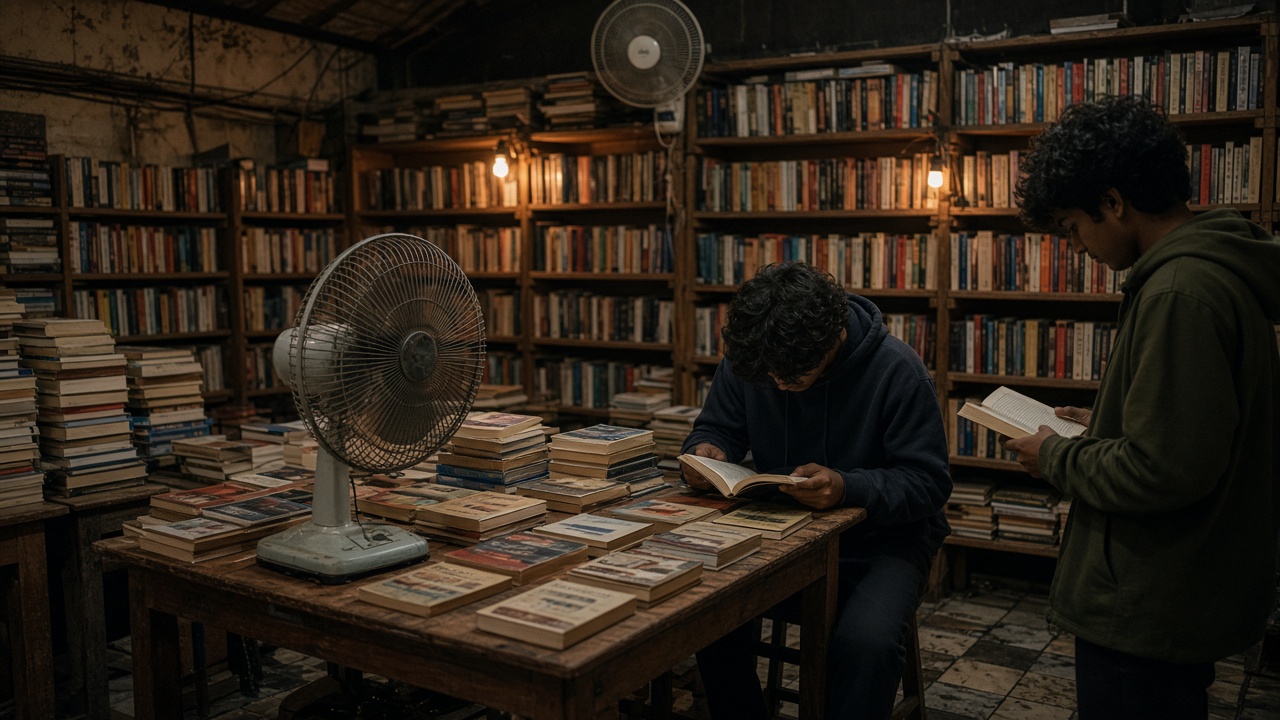
A cluster of Taichung second-hand bookstores in the West District and near National Taiwan University of Sport extended evening hours to 10 p.m. as students without air-conditioned rentals study past sunset during a lingering September heat wave, according to shop owners who posted schedules on Facebook and inventory logs InfoHandle reviewed Monday. The shift is commercial empathy, not a city subsidy—owners bet beverage sales and membership stamps offset extra electricity when outdoor temperatures still read 31 degrees Celsius at 8 p.m.
Who shows up
Junior-high exam cram students share tables with university athletes balancing morning practice and night classes. Landlords in older walk-ups often cap AC hours or charge per kilowatt-hour; MRT stations close before libraries reopen after Mid-Autumn maintenance. Bookstores offer Wi-Fi, extension cords, and tacit permission to annotate purchased used texts—rules stricter in chain cafes that evict lingerers after one drink.
Jennifer Lee’s desk watches these patterns because they map how lifestyle retail becomes infrastructure when public cooling centers sit far from student housing belts.
Store rules
Shops ask for whisper voices but allow grouped problem-solving if aisles stay clear. One owner stocks electrolyte packets beside cash registers; another partners with a bubble-tea stall next door for combo discounts. Fire codes limit occupancy to 28 bodies; when queues form, staff issue numbered cards like dim-sum lines.
Heat and health
CWA data show Taichung logged twelve days above 36 degrees Celsius this month; indoor fans move air but do not drop wet-bulb risk for dehydrated readers. Owners posted signs urging water breaks and not blocking emergency exits with backpacks. City health bureau circulated nonbinding guidance on indoor CO₂; bookstores have not installed monitors, citing cost.
Economics
Used margins are thin; extended hours work only where landlords waive night security fees. A shop near the art museum said September textbook purchases rose 18 percent versus August, offsetting slower tourist foot traffic. E-commerce competition still siphons reference titles; these stores compete on climate and community, not inventory depth.
How to use the hours wisely
Call ahead—some owners close early if fewer than five customers by 9 p.m. Bring your own cup; disposable cup surcharges apply after city waste rules tightened. Respect photography bans on rare editions. If you live in a cooled dorm, do not hoard seats; staff remember faces and will gently redirect regulars who treat couches as storage.
When October breaks the heat, hours may snap back to 8 p.m. Until then, Taichung’s evening book corridors function as quiet, fan-cooled study halls—a lifestyle story about merchants filling a gap libraries cannot stretch without budget lines.
Parents dropping off younger siblings during cram sessions asked shops to tape outlet maps near restrooms; owners complied, noting fewer squabbles over charging phones. A loyalty stamp card now grants one free hour past closing for students who bought three used novels that month—a promotion that sounds quaint but keeps lights on without turning aisles into overnight shelters.