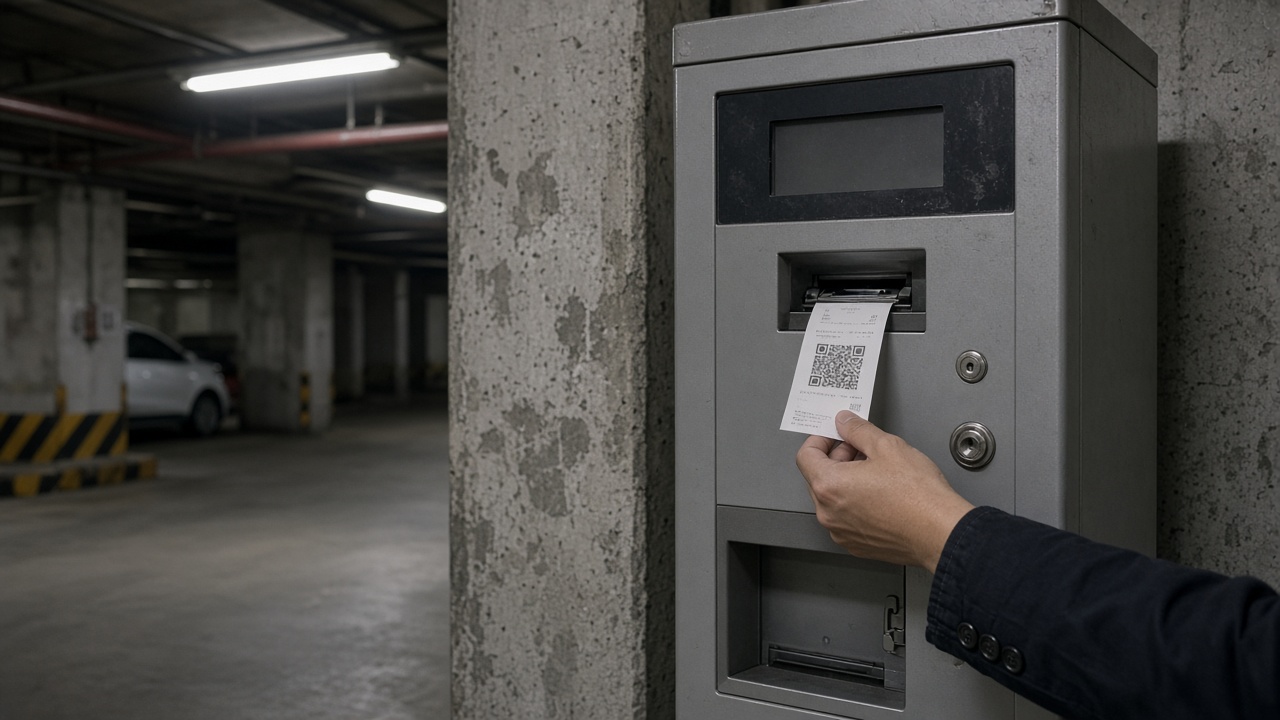
Taoyuan City Government launched a parking QR receipt API that lets freelancers batch-export municipal garage charges into e-invoice spreadsheets matching National Taxation Bureau templates for gig earners, according to a finance bureau circular and API documentation the city's digital affairs office published Friday. The project is not a new tax—it reduces friction for designers and tutors who deduct client-meeting parking from declared business expenses but previously retyped paper slips.
What the round and build actually are
Development was funded through a NT$12 million smart-city line item, not a venture round; a Taoyuan-born fintech contractor built the API under a fixed-price contract with source escrow to the city. Parking operators under municipal leases must expose QR-encoded transaction IDs by January; private malls opt in voluntarily for marketing credits.
Freelancers authenticate with Taiwan's digital citizen certificate or bank-linked OAuth; the API returns CSV and JSON rows with VAT breakdowns where garages issue e-invoices.
Who owns what
The city owns the API spec and audit logs; the contractor holds maintenance SLA for eighteen months then must transfer keys. Parking vendors keep transaction data; the city middleware stores only hashed receipt IDs and export timestamps—no travel pattern analytics sold to advertisers, per the privacy impact assessment.
The business in one sentence
Taoyuan gives gig filers a machine-readable parking paper trail so tax prep software stops treating municipal garages like cash-only night markets.
Why freelancers pushed
NTB guidance encourages substantiation for mixed personal-business vehicle use; parking near Taoyuan's aerotropolis corridors is expensive enough to matter on annual filings. Accountants reported hours re-keying slips from Zhongli and Guishan garages; the API targets those high-traffic structures first.
Governance and PR valuation risk
City press releases cite "thousands of hours saved" without baseline surveys—a Jordan Ellis desk flag. Measurable KPIs in the contract: fifty percent of participating garages live by Q1, five hundred registered freelancer accounts in six months, and error rates below two percent on VAT fields.
If the contractor misses SLA, penalties cap at ten percent of contract value; no equity upside for missing dates.
What if adoption stalls
Without freelancer sign-ups, the API becomes a vendor compliance checkbox—still useful for municipal audits, not a startup exit. The city retains budget to hire a replacement integrator; escrowed code prevents lock-in.
Competitive landscape
Private receipt-scan apps exist; Taoyuan bets official QR roots reduce NTB challenge rates. Taipei and Kaohsiung watch pilots before funding clones; MODA e-invoice standards make cross-city aggregation plausible later.
Freelancer takeaway
Register once, link garage QR scans monthly, and export before filing season—miss a slip and you are back to photos. For startup watchers, this is civic infra, not cap-table drama: fixed contract, public ownership, modest KPIs. For Taoyuan gig workers, it is one less Sunday spent typing parking fees into Excel while wondering if the auditor will accept a smudged thermal printout.
Accountant associations in Taoyuan offered a webinar on mapping API exports into popular filing tools; attendance was capped at two hundred seats.
The contractor declined interview requests; city spokespeople said pricing for private mall participation remains under negotiation.
Startup Terrace Taoyuan hosted a sandbox day for accountants testing CSV imports into local filing packages; three vendors committed API adapters by December. Privacy advocates praised hashed receipt storage but asked for annual deletion audits—the city agreed to publish aggregate retention reports without exposing individual trips.
Freelancer unions noted the API does not cover highway tolls or private lot apps yet; finance bureau staff said toll e-tags may integrate in a second phase if NTB templates expand.
Tax bureau officials emphasized the API does not auto-file returns—it only supplies substantiation rows freelancers must still approve before submission, preserving liability with the earner rather than the city middleware.
City council members asked whether airport parking structures will join the API before the Lunar New Year travel peak; digital affairs staff said fiber backhaul upgrades at Terminal-adjacent garages must finish before QR readers go live.