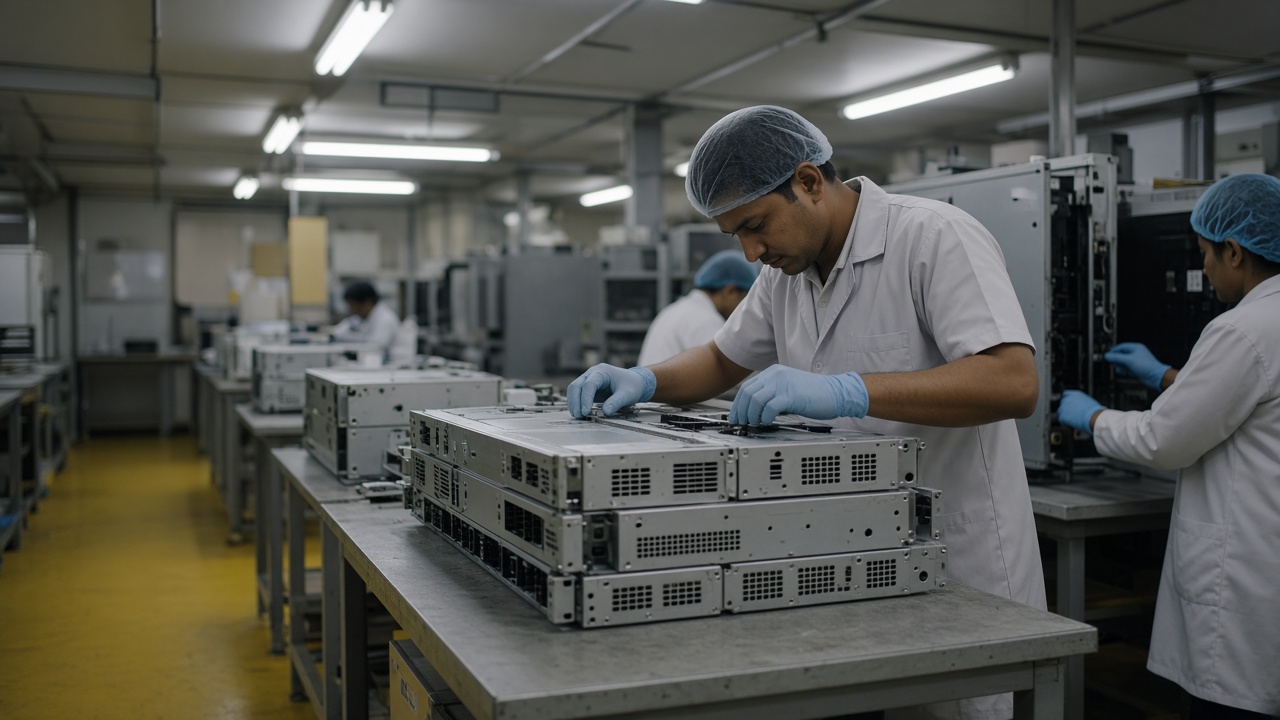
Tejas Networks started delivering MPLS core routers from its Bengaluru manufacturing campus this quarter for Bharat Sanchar Nigam Limited’s nationwide core refresh, according to procurement notices and vendor statements reviewed by InfoHandle. The shipments are among the first tranches where BSNL’s own acceptance labs score Indian-built control planes against legacy imports that have anchored the operator’s MPLS mesh for more than a decade.
What BSNL is replacing
BSNL’s MPLS core still carries enterprise VPNs, government circuits, and backhaul toward thousands of rural exchanges where fiber rings terminate on older packet cores. When those nodes fail, districts lose not only broadband but also the signaling paths that mobile roaming partners expect to stay up. The refresh program—tied to the government’s revival package—prioritizes hot-swappable line cards, unified timing, and power envelopes that match exchange buildings with limited cooling.
Tejas won categories that emphasize made-in-India content and domestic support desks. Competitors argued on price in some lots, but BSNL’s technical evaluation weighted spares logistics from Karnataka warehouses and the ability to push security patches without flying foreign engineers through monsoon-delayed visas.
Bengaluru plant throughput
On the factory floor, Tejas runs parallel lines for chassis assembly, burn-in, and optical module pairing. Workers stage routers with the same rail kits BSNL uses in tier-3 cities so field teams do not re-drill cabinets. Quality engineers sample each lot for MPLS fast-reroute convergence under synthetic link flaps—metrics BSNL’s Bengaluru lab publishes back to headquarters on a weekly cadence.
Supply chain managers said component lead times for certain switch fabrics improved after Tejas dual-sourced packaging domestically, though high-speed serdes parts still arrive on air freight from fabs in East Asia. The company discloses the India value-add percentage in filings; BSNL’s purchase orders reference those disclosures when auditors ask about public-sector procurement rules.
Field deployment rhythm
Initial nodes are slated for circle-level hubs before the core migrates outward. BSNL circle chiefs received playbooks that sequence cutovers during low-traffic windows, with rollback images stored on local TFTP servers in case BGP sessions oscillate. Tejas field support sits in war rooms with BSNL’s transmission teams—relationships that deepened during earlier GPON and 4G backhaul contracts.
Rural activists watch these deployments because MPLS stability determines whether freshly laid BharatNet fiber actually delivers Mbps at panchayat offices. When core routers choke, last-mile fiber looks like a expensive ornament. BSNL’s public statements tie the refresh to “service quality,” but engineers talk in terms of mean time between failures on power-supply modules that survived prior summers only with desk fans pointed at racks.
Security and sovereignty checks
Department of Telecommunications circles have pushed operators toward auditable software bills of materials. Tejas publishes hash-signed images and works with C-DOT on interoperability tests where government traffic must stay on approved cryptography. BSNL’s security operations center requested centralized logging hooks so anomalies on MPLS VPNs surface in the same SIEM panes that track mobile core alarms.
Foreign vendors still supply parts of India’s telecom stack, but every core tranche BSNL awards domestically shifts the political narrative on atmanirbhar networks. Opposition MPs ask whether performance matches incumbents; BSNL’s answer is to publish latency benchmarks from live pilots before mass cutovers.
Financial and capacity risks
Tejas revenue recognition depends on acceptance signatures, not factory exit scans. Delays in BSNL’s civil upgrades—rack space, diesel genset fuel contracts—can push revenue rightward even when routers sit palletized in circle warehouses. Investors on the NSE track order book commentary each quarter for hints on how much of the revival package converts to shipments versus paperwork.
If circle teams miss training windows, spares sit unused while legacy cores age past vendor end-of-support dates. Tejas is staffing more Tamil and Hindi-speaking support leads so circle NOCs do not wait on Bengaluru callbacks during night shifts.
What changes for enterprise customers
Large government VPN customers will see gradual re-homing of CE peers onto refreshed PE nodes. BSNL enterprise sales sent templated notices asking clients to widen maintenance windows and to validate QoS markings before cutover weekends. Banks on MPLS pseudowires care about microburst buffering; Tejas claims newer silicon handles buffer credits more predictably, though proof will be in ticket counts after the first monsoon season.
For Tejas, the BSNL MPLS core is both anchor tenant and reference architecture for other public-sector bids. For BSNL subscribers, the deliverable is dull but essential: when the grid flickers in a district town, the packet core should stay up long enough for calls and UPI sessions to finish.
Spares and circle warehouses
Each circle received a spares matrix listing which line cards must sit within four-hour truck distance of hub sites. Tejas ships foam-packed replacements from Bengaluru to circle depots with the same barcodes BSNL’s inventory system already uses for optical line terminals. Circle auditors scan arrivals against purchase-order lines to close the loop on government audit trails.
Training modules for circle engineers moved to a blended format: virtual labs for MPLS VPN troubleshooting, then mandatory on-rack sessions in Bengaluru for leads who will sign acceptance forms. BSNL said the format reduced travel costs but extended the calendar—another reason shipments can outpace live installations.