Britain has fired a heavyweight torpedo from an uncrewed underwater drone for the first time, the Ministry of Defence announced Monday, in a test the government said marks a breakthrough for Euro-Atlantic security and NATO’s undersea edge. The weapon, jointly developed by the United States and Australia, was launched from the Royal Navy’s 12-metre autonomous submarine XV Excalibur during trials in UK waters last week, according to statements reported by iNews and France 24.
Officials framed the exercise as both a technical milestone and a signal to Moscow at a moment when Russian submarines and shadow fleets worry planners responsible for North Sea cables and pipelines. The Excalibur vessel was built in Plymouth, can be operated remotely from nearly 10,000 miles away, and is undergoing extensive sea trials after being unveiled in 2025.
What made the test historic
France 24 noted that neither Britain nor the United States had previously test-fired a torpedo from an uncrewed undersea platform rather than a crewed boat. The AUKUS partnership with Australia is developing next-generation submarine capabilities alongside AI and autonomous systems; Monday’s announcement ties the live firing to that wider pillar rather than to a one-off experiment.
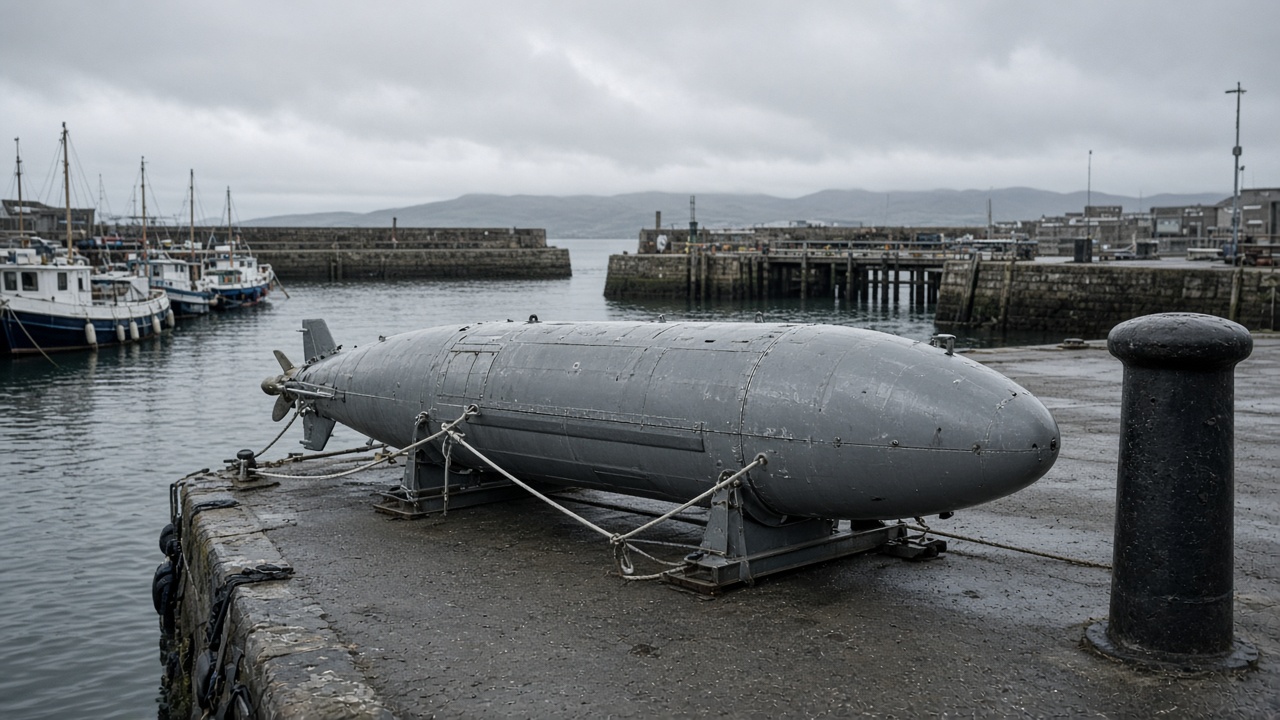
iNews reported that the torpedo is designed to sink surface ships and deep-diving submarines, and that the government linked the trial to protecting seabed infrastructure—a priority after repeated NATO warnings about cable cuts and suspicious vessel activity in European waters. Gulf News republished MOD imagery of Excalibur at the Kyle of Lochalsh quayside near the British Underwater Test and Evaluation Centre, underscoring how much of the program’s public footprint remains in Scottish test ranges.
Operational implications
For the Royal Navy, autonomous undersea vehicles offer a way to extend reach without committing crewed submarines to every patrol box. Excalibur’s 19-tonne displacement and 12-metre length place it between portable drones and full-size boats, a class planners hope can scout, linger, and—now—strike if rules of engagement allow.
Politically, the test gives Defence Secretary John Healey and Prime Minister Keir Starmer a tangible deliverable ahead of autumn spending debates, at a time when the UK is also negotiating AUKUS submarine basing and industrial workshare with Washington and Canberra. Critics will ask about cost, command authority, and escalation risks when torpedoes can be released without sailors aboard; proponents argue Russia’s hybrid maritime campaign leaves few conventional options.
What comes next
The MOD said Excalibur remains in trials, meaning Monday’s announcement documents a milestone rather than declaring initial operating capability. NATO allies will watch whether the U.S. Navy integrates similar launches from its own experimental hulls, and whether Australia’s torpedo co-development translates into Pacific deployments.
For now, the confirmed record is narrower: one live firing, one drone, one allied weapon in home waters—and a public claim that the Euro-Atlantic undersea fight just acquired a remotely operated sting it did not have last month.