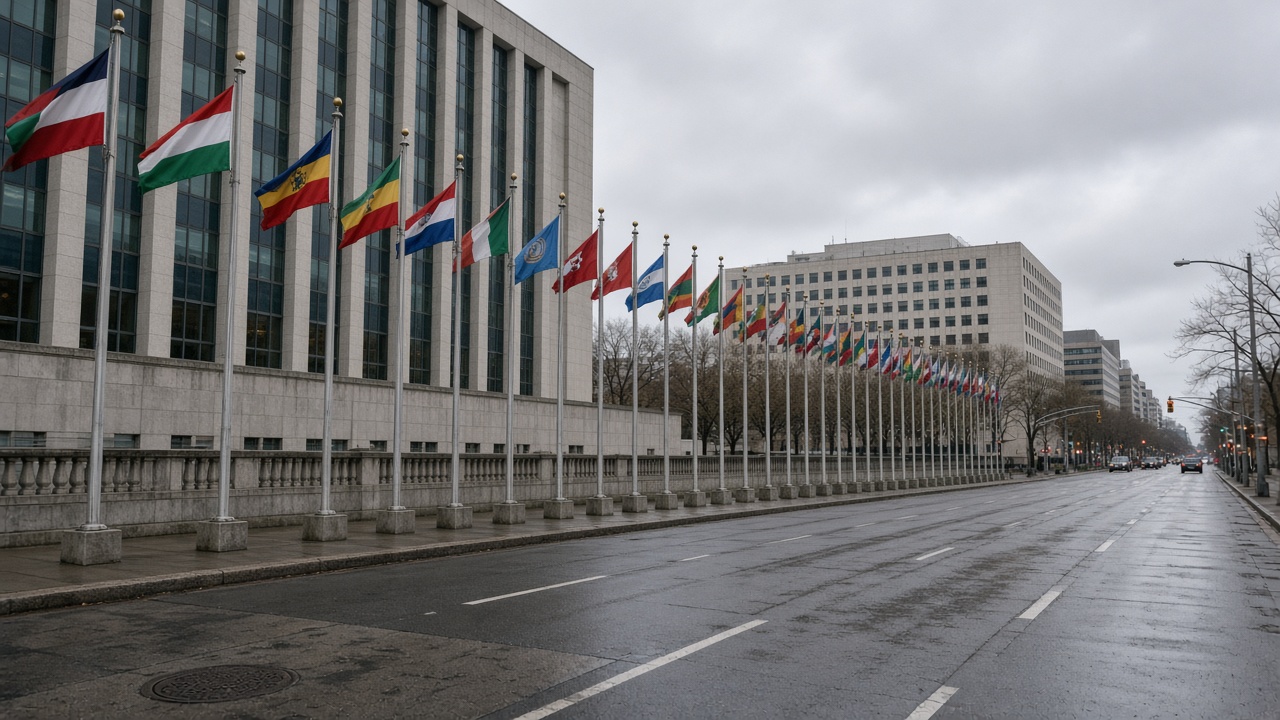
World leaders begin arriving in New York on Monday for the United Nations General Assembly’s high-level week, a diplomatic marathon that will test whether the 193-member body can still broker compromise when wars in Iran, Gaza, Ukraine, Sudan, and Myanmar are burning at once. Secretary-General António Guterres is expected to use Tuesday’s opening address to warn that unchecked advances in artificial intelligence and accelerating climate shocks are compounding the human toll of those conflicts, even as many capitals treat the UN as a stage rather than a courtroom.
The General Debate opens Tuesday with speeches from presidents and prime ministers who rarely share a room. U.S. President Donald Trump and French President Emmanuel Macron are scheduled for the first day, while Ukraine’s Volodymyr Zelenskyy and Iran’s Masoud Pezeshkian are slated for Wednesday. Israeli Prime Minister Benjamin Netanyahu is set to speak Thursday; Palestinian President Mahmoud Abbas will address the assembly by video after Washington declined to issue him a visa for a second consecutive year, a reminder of how access to Turtle Bay itself has become politicized.
AI moves from tech panels to the Security Council
Diplomats said the Security Council added a high-level meeting on artificial intelligence for Wednesday afternoon, alongside a morning session on Ukraine that Zelenskyy is expected to attend. The pairing reflects a shift in New York: AI is no longer relegated to side events hosted by companies and foundations, but treated as a strategic risk on par with ballistic missiles and sanctions regimes. Briefing papers circulated to missions cite fears of autonomous weapons, deepfake-driven election interference, and energy-hungry data centers straining grids already stressed by heat waves.
Channel News Asia reported that nearly 130 heads of state and government will participate in the debate running through September 28, with additional council meetings possible on the Middle East, including sessions involving Arab leaders. Those conversations arrive as Qatar continues shuttling proposals to restart U.S.–Iran talks and as European and Asian importers watch Hormuz shipping data for signs of another military escalation.
Wars crowd out everything else
Reuters noted that leaders are returning to the UN under a cloud of Middle East fighting that has fed inflation and complicated humanitarian corridors from Gaza to Sudan. PBS, citing Associated Press reporting, said the central question hanging over the week is blunt: can governments end wars they have been unable—or unwilling—to stop on the battlefield? Guterres has repeatedly argued that impunity in one conflict encourages copycats elsewhere, yet veto-wielding permanent members remain split on how to enforce cease-fires they themselves will not uphold.
For developing countries, the assembly is also a venue to press debt relief, food security, and climate finance ahead of a special summit on global warming. Analysts at the International Crisis Group told reporters that U.S. resistance to certain climate language in General Assembly resolutions could foreshadow fights in committee rooms even when leaders strike conciliatory tones at the podium.
What success would look like
Seasoned UN watchers caution against expecting breakthrough communiqués. More realistic deliverables include renewed mandates for aid agencies, side agreements on grain exports, and bilateral meetings on the margins—Trump’s schedule alone includes encounters with British and Japanese counterparts, according to U.S. Ambassador Mike Waltz. Still, the mere density of leaders in Manhattan gives mediators a narrow window to align positions before many delegations pivot to Washington for a separate U.S.–China summit later in the week.
By Monday evening, security perimeters were tightening around the UN complex and hotels on the East Side, with motorcades rehearsing routes and protest permits filed for both anti-war and climate demonstrations. Inside the building, translators were testing headsets for a debate that will unfold in dozens of languages but hinge, as always, on a handful of powers willing to pick up the phone when the speeches end.